Leave Your Message
Engineered for agile aerospace prototyping facilities, instrument laboratories, and precision flight hardware workshops requiring micron-level accuracy without overwhelming capital expenditure.
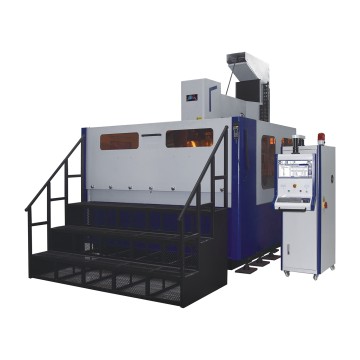
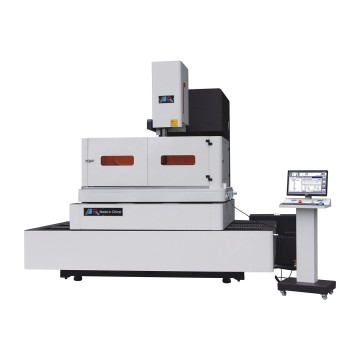
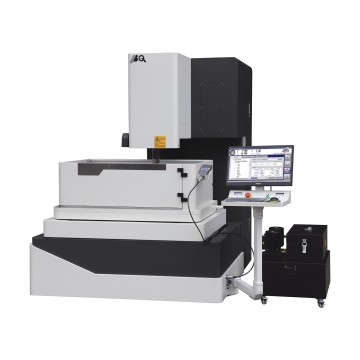
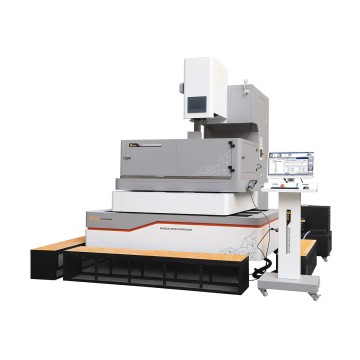
From commercial airliners to commercial space launch startups, the modern aerospace supply chain requires decentralized micro-precision machining that bypasses mechanical stress and excessive tooling wear.
The aerospace and defense industrial base is undergoing a monumental paradigm shift. For decades, multi-million dollar machining centers controlled exclusively by prime contractors dictated aircraft component turnaround. However, the rise of private space exploration, unmanned aerial vehicles (UAVs), regional urban air mobility (UAM), and aggressive decarbonization thrust goals has forced supply chains to become significantly more agile, responsive, and distributed.
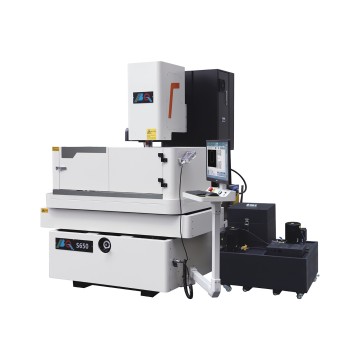
In this dynamic landscape, the demand for a dedicated Starter CNC Machine for Aerospace & Aviation has accelerated exponentially. Unlike consumer hobbyist routers, an industrial "starter" CNC machine for aviation refers to entry-level high-precision CNC Wire Electrical Discharge Machining (EDM) and multi-axis spark erosion platforms. These systems enable Tier-2 and Tier-3 sub-contractors, rapid prototyping labs, and specialized aerospace research facilities to manufacture mission-critical airframe fixtures, intricate propulsion nozzles, and high-temperature turbine components with zero cutting force and ultra-fine finishes.
Thermal electro-discharge technology eliminates cutter pressure entirely, ensuring ultra-thin aerodynamic fins and fragile honeycomb walls do not bend or deform during machining.
Standard CNC endmills experience extreme tool chatter and rapid wear on nickel-chromium alloys like Inconel 718 and Rene 41. CNC wire EDM cuts these ultra-hard materials with uniform high efficiency regardless of hardness.
Multi-cut medium-speed molybdenum wire spark erosion achieves surface roughness values down to Ra ≤ 0.6μm, minimizing microscopic crack propagation sites that cause premature fatigue failure in flight.
How precision CNC Wire EDM units solve extreme thermal, geometric, and metallurgical challenges across airframe, engine, satellite, and launch systems.
Jet engines and turbopumps operate under tremendous centrifugal forces and exhaust temperatures exceeding 1,200°C. Securing turbine blades into the main rotor disk requires intricate "fir-tree" or dovetail slot geometry with micro-radii that mechanical broaching tools struggle to maintain economically on small-batch production runs.
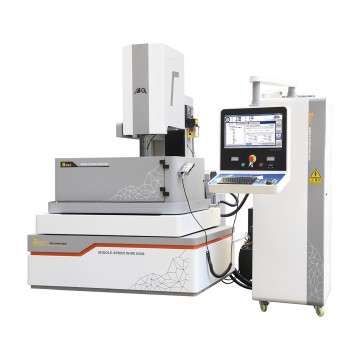
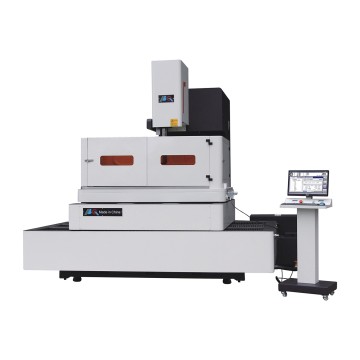
Using medium-speed molybdenum wire cutting technology (such as the BQ2015 and BQ1280DYB), flight workshops dramatically curtail operating costs compared to single-pass brass wire systems while maintaining repeatable positioning accuracy (±0.005 mm). This makes starter CNC machines ideal for low-rate initial production (LRIP) defense contracts.
Aerospace engineering standards (such as AMS 2628 and ISO 9001/AS9100) enforce strict limitations on recast layers. Contemporary starter CNC EDM equipment utilizes multi-stage pulse energy circuits that shave off rough white layers in skim cuts, reducing the remelt zone to under 3 microns prior to final electropolishing or chemical etching.
In orbital spacecraft, payload weight is directly tied to launch costs (frequently exceeding $2,500 per kilogram). Generative design and topology optimization yield intricate organic web structures in Titanium Grade 5 (Ti-6Al-4V) and 7075-T6 Aerospace Aluminum.
Small satellite chemical thrusters and commercial rocket engine pintle injectors demand ultra-precise orifice dimensions to achieve stoichiometric fuel-oxidizer mixing. Any microscopic machining burr or ragged edge causes unstable combustion dynamics.
High-frequency radar and missile guidance systems utilize copper and aluminum millimeter-wave electromagnetic channels. Spark EDM achieves sharp internal corners without rounding radiuses, ensuring zero signal attenuation and perfect RF hermetic sealing across aviation electronics.
Evaluating vital performance metrics when processing aerospace refractory metals and complex aerodynamic shapes.
| Evaluation Parameter | High-Precision Starter CNC Wire EDM | Conventional 3/5-Axis CNC Milling | Aerospace Operational Impact |
|---|---|---|---|
| Mechanical Cutting Stress | Zero (Non-contact Spark Discharge) | High mechanical shearing loads & chatter | Guarantees zero warping on paper-thin flight webs |
| Workpiece Hardness Limit | Up to 70+ HRC (Titanium, Inconel, Tungsten) | Tool degradation spikes above 50 HRC | Allows heat treatment BEFORE final geometry cut |
| Internal Corner Radii | Down to R0.08 mm (Wire diameter dependent) | Limited by physical endmill radius (≥R0.5 mm) | Crucial for interlocking aerospace splines & fir-trees |
| Tooling & Consumable Costs | Recyclable molybdenum wire & deionized fluid | Expensive coated carbide cutters (frequent scrap) | Reduces shop-floor prototype operating overhead by up to 65% |
| Surface Roughness (Ra) | Ra 0.6μm – 1.0μm (Uniform multi-cut) | Ra 1.6μm – 3.2μm (Tool scallop marks) | Dramatically reduces post-machining manual polishing time |
| Unattended Machining Time | High (Automatic wire tensioning, wire-break sensors) | Moderate (Risk of broken tools damaging stock) | Enables 24/7 lights-out prototyping for flight hardware |

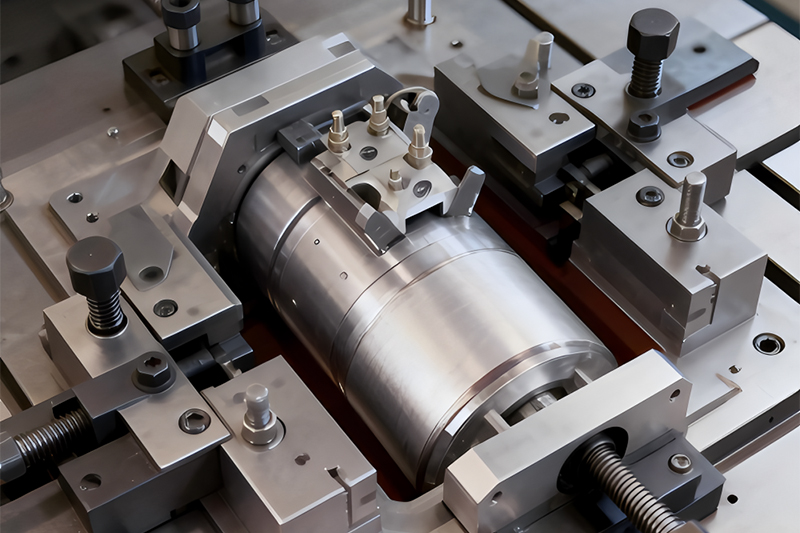
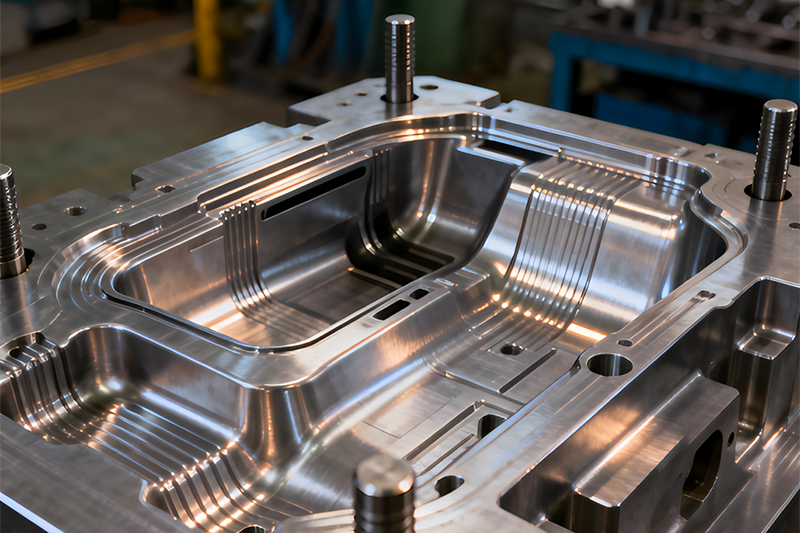

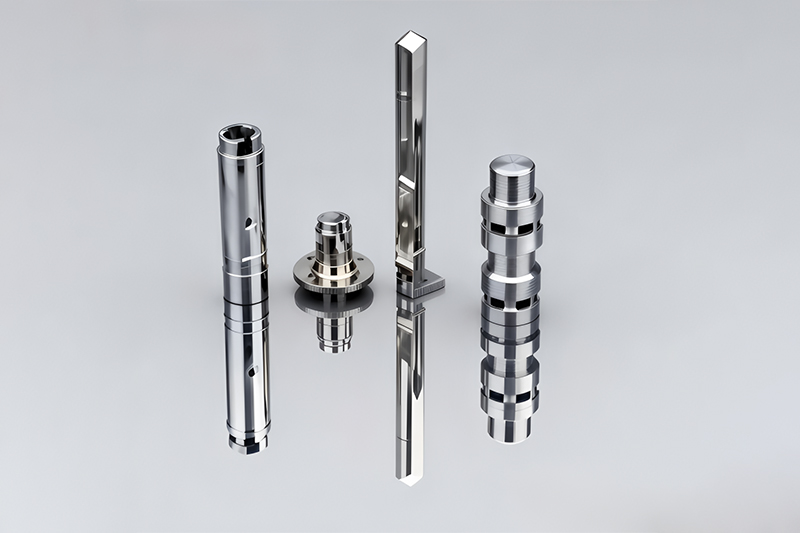

Key technical criteria to evaluate before deploying an entry-level wire EDM or spark erosion system into AS9100-certified flight manufacturing environments.
Procuring a starter CNC machine for aerospace components requires careful balancing between machine footprint, dynamic axis linkage, generator pulse stability, and total lifecycle ownership costs. When evaluating starter machines from BAQIEDM, plant managers and lead manufacturing engineers should focus on four primary pillars:
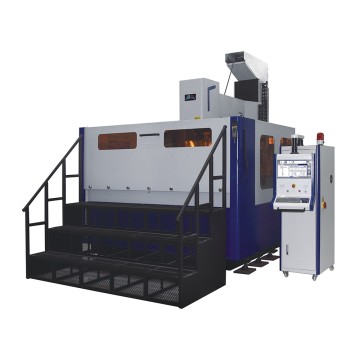
Aerospace impellers and variable stators necessitate compound draft angles. High-grade machines like the 10-Axis Linkage BQ1280DYB Big Swing enable synchronized XY-UV-Z rotary movements to process steep tapers without mechanical binding.
Modern FPGA-based pulse generation regulates microsecond spark discharge energy. This intelligence suppresses continuous arcing, minimizes thermal stress fractures, and ensures uniform grain boundaries on exotic aerospace titanium alloys.
Maintaining consistent water resistivity (>100k Ω·cm) prevents erratic discharge sparking. Multi-stage filtration canisters guarantee micro-debris is thoroughly evacuated from narrow kerfs, preventing wire breakage.
As Industry 4.0 penetrates the aviation supplier base, modern starter CNC machines are incorporating edge-computing algorithms. Sensors monitor gap voltage drop, pulse frequency fluctuations, and wire tension at 10,000 samples per second. When the system detects abnormal conductivity—often caused by internal voids or alloy segregation in sintered additively manufactured aerospace blanks—it automatically modulates pulse width and servo feed rates. This eliminates wire breaks and guarantees flawless surface conformity on high-value flight hardware.
Clear, engineer-level answers addressing technical inquiries regarding wire EDM precision, materials, maintenance, and flight certification.
Review the comprehensive line of 5-axis, 10-axis, big-swing, and integrated medium-speed CNC wire EDM machining centers built for demanding aviation and defense production.