


1. Introduction: The Critical Need for Precision in Surgical Instrument Fabrication
The production of modern surgical instruments demands an unprecedented level of precision, clean execution, and metallurgical integrity. From complex endoscopic forceps and laparoscopic shafts to customized orthopedic implants, surgical tools must perform flawlessly under intense stress and maintain absolute biocompatibility. Among the emerging manufacturing technologies addressing these demanding requirements, the Rotary Plasma Cutter for Surgical Instruments has established itself as an indispensable asset.
By integrating advanced rotary axes with high-definition plasma arcs, this system allows manufacturers to cut, slot, and contour cylindrical and tubular medical-grade materials with extreme speed and accuracy. The technology overcomes many historical challenges associated with traditional mechanical milling, EDM, and conventional laser systems, offering a balanced combination of high throughput, geometric flexibility, and cost efficiency.
2. Understanding the Mechanics of Rotary Plasma Cutting
At its core, a rotary plasma cutter combines a highly concentrated thermal arc with a synchronized rotary chuck (often categorized as the 4th, 5th, or even 11th axis in advanced multi-linkage setups). The plasma arc is generated by forcing an inert gas through a constricted nozzle at high velocity, creating an electrical arc that ionizes the gas into plasma. This plasma stream reaches temperatures exceeding 20,000°C, instantly melting the target metal while a high-pressure gas stream blows the molten material away.
What makes this system uniquely suited for surgical tools is the incorporation of the rotary axis. Rather than moving the cutting head around a stationary tube, the machine rotates the raw cylindrical stock (such as medical-grade titanium or stainless steel tubing) in perfect synchronization with the linear axes of the plasma torch. This allows for seamless helical slots, spiral grooves, and compound angle cuts essential for flexible endoscope components, cannulas, and bone screws.
"The integration of multi-axis rotary movement with plasma technology allows for continuous, non-contact cutting of ultra-thin walls without structural deformation—a critical advantage when fabricating delicate laparoscopic instruments."
3. Key Technical Advantages for Medical-Grade Alloys
Surgical instruments are predominantly constructed from tough, heat-resistant alloys such as Titanium (Grade 5/Ti-6Al-4V), Cobalt-Chromium, and 316LVM Stainless Steel. These materials are notoriously difficult to machine using conventional methods. Rotary plasma cutting offers distinct advantages here:
Minimal Heat-Affected Zone (HAZ)
Modern high-definition and micro-plasma torches concentrate thermal energy into an incredibly narrow beam. Coupled with rapid rotary speeds, the exposure time of the metal to extreme heat is minimized. This restricts the Heat-Affected Zone (HAZ) to a microscopic level, ensuring that the surrounding metal retains its original crystalline structure, corrosion resistance, and mechanical strength—properties vital for autoclave sterilization survival.
Zero Mechanical Contact and Stress
Since the plasma arc cuts without physical contact, there is zero tool wear and no mechanical load applied to the workpiece. This prevents micro-bending or wall collapse in fragile, thin-walled surgical tubes, ensuring high yield rates and consistent dimensions across large production batches.
High Aspect Ratio Slotting and Perforating
Rotary plasma cutters can achieve extremely fine kerf widths, enabling the creation of micro-slots and complex geometric patterns on small-diameter tubes. This is critical for manufacturing steerable catheters and flexible surgical shafts that require varying degrees of lateral flexibility.
4. Deep-Dive Applications in Surgical Tool Manufacturing
The application of rotary plasma cutters spans various medical sectors. Below are the primary fields where this technology is driving innovation:
Laparoscopic and Minimally Invasive Surgery (MIS) Tools
MIS instruments require long, narrow shafts with complex distal tips capable of gripping, cutting, or suturing. Rotary plasma cutters are utilized to cut the internal push-rod linkages, outer protective sleeves, and flexible joints. The precise rotation ensures that the slots align perfectly, preventing friction during operation.
Orthopedic Implants and Bone Screws
Bone plates and intramedullary nails often feature complex locking mechanisms and custom threads. A rotary plasma cutter can quickly machine the outer profiles and internal slots of titanium implants. The resulting surfaces require minimal finishing, speeding up the post-processing phase.
Trocars, Cannulas, and Biopsy Needles
Creating the sharp, multi-faceted bevels required for surgical needles and trocars demands extreme control over the cutting angle. Multi-axis rotary plasma systems can adjust the cutting head angle relative to the spinning tube dynamically, producing clean, burr-free bevels that reduce patient trauma during insertion.
5. Industrial Trends: The Rise of AI and Digitalization
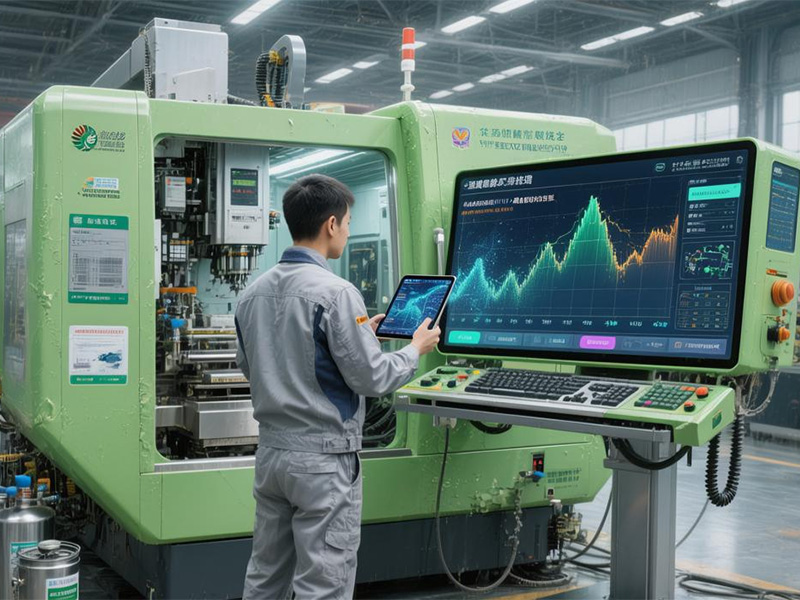
The surgical instrument manufacturing sector is undergoing a massive transformation driven by Industry 4.0. The integration of AI-powered intelligent CNC systems is a prime example of this evolution. These systems leverage real-time sensor feedback to monitor arc stability, electrode wear, and thermal expansion during the cutting process. By dynamically adjusting cutting parameters, AI-driven rotary plasma cutters can self-correct deviations before they lead to defective parts.
Furthermore, the shift toward green and digital manufacturing has pushed equipment manufacturers to optimize energy consumption and reduce gas waste. Today's rotary plasma cutting systems utilize advanced digital power supplies that modulate energy output based on the instantaneous thickness and curvature of the workpiece, aligning with global carbon-neutrality initiatives.
6. Future Outlook: Overcoming the Micro-Cutting Frontier
As surgical techniques trend toward robotic-assisted surgeries and micro-surgeries, the demand for even smaller, highly complex instruments is skyrocketing. The future of rotary plasma cutting lies in the development of ultra-precise micro-plasma torches capable of cutting wall thicknesses below 0.1 mm with kerfs narrower than 20 microns.
By combining these physical capabilities with 11-axis, 10-linkage CNC machine configurations, manufacturers will be able to produce complete, multi-jointed micro-surgical components in a single setup, drastically reducing production times and logistics costs.