
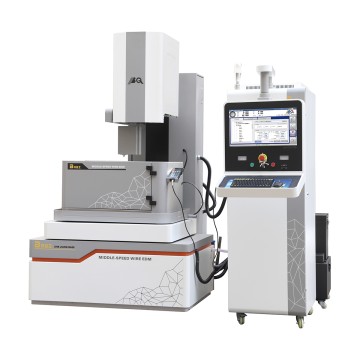
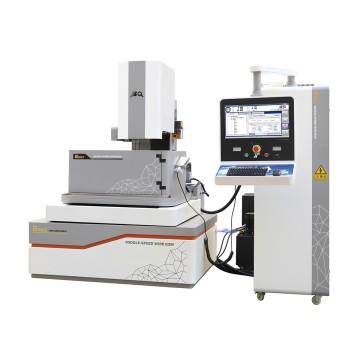
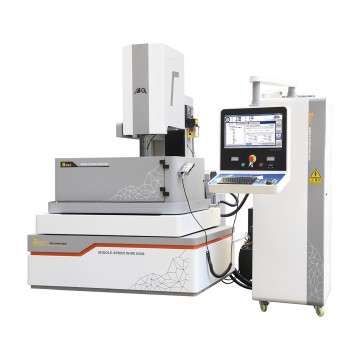
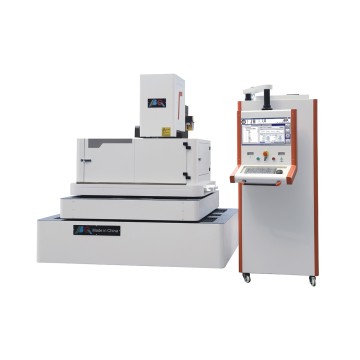
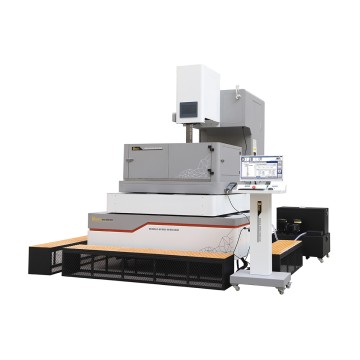
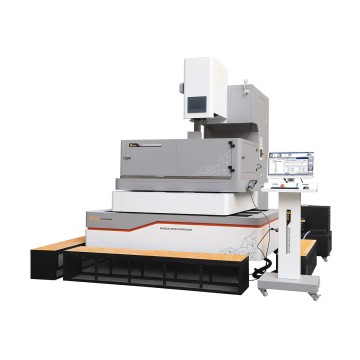
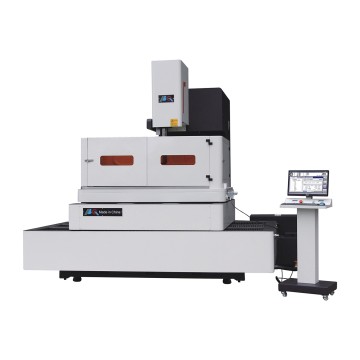
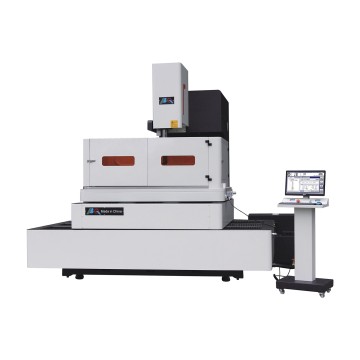
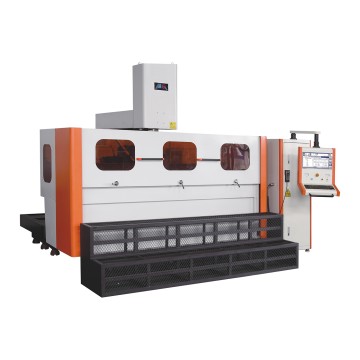
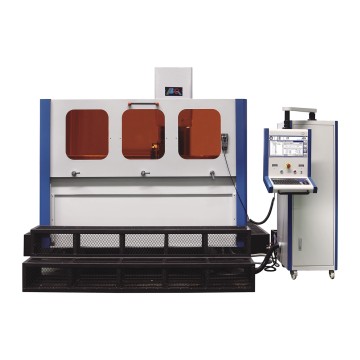
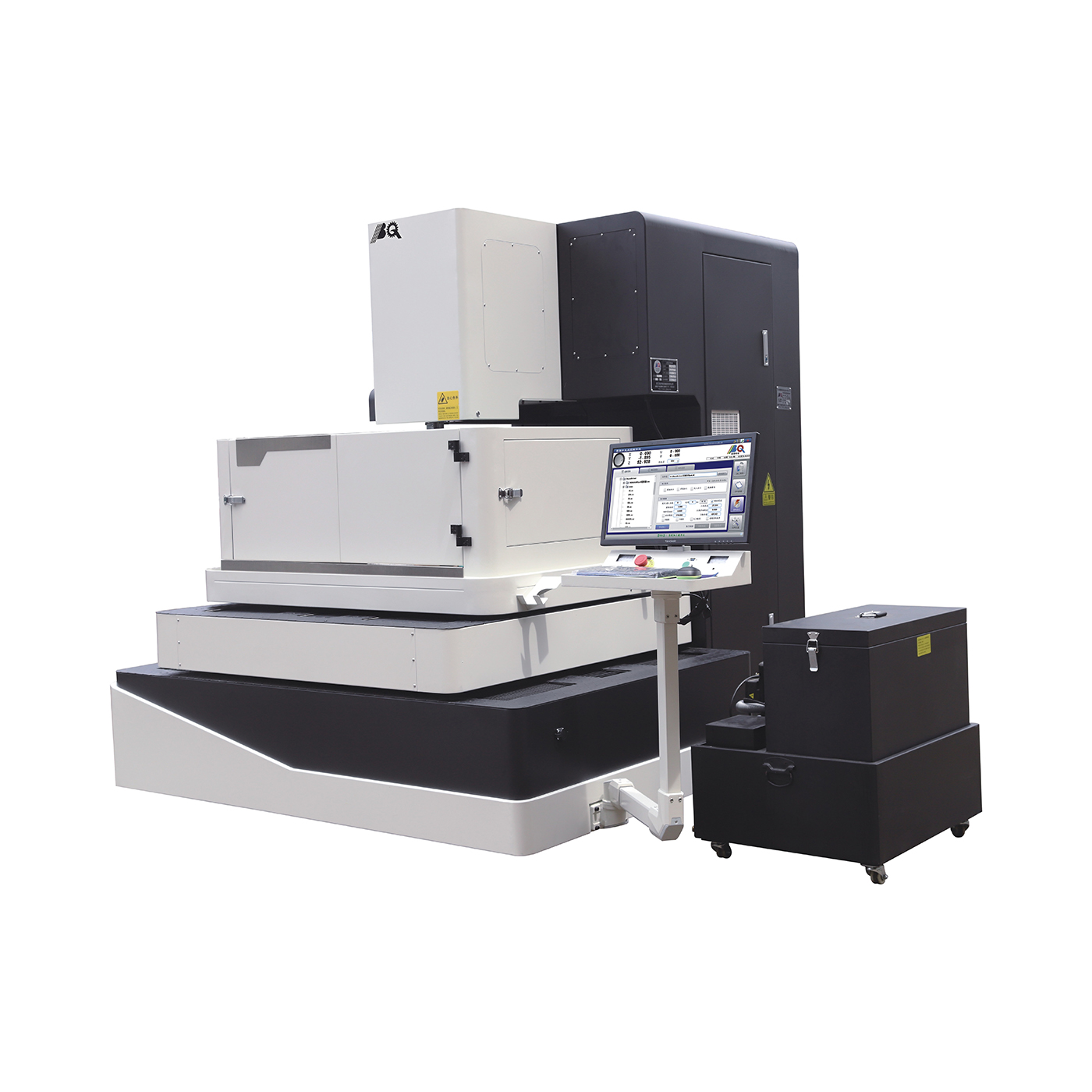
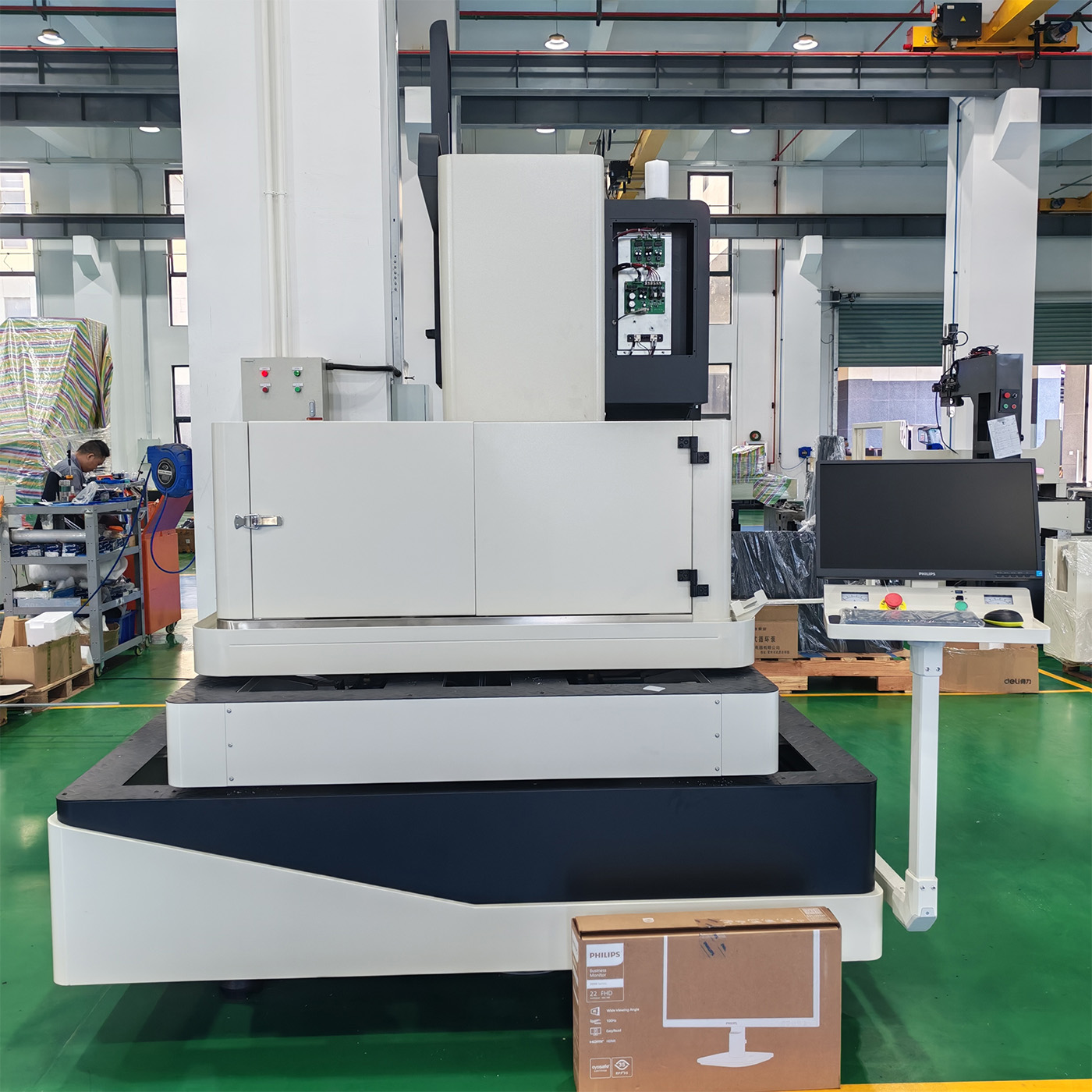
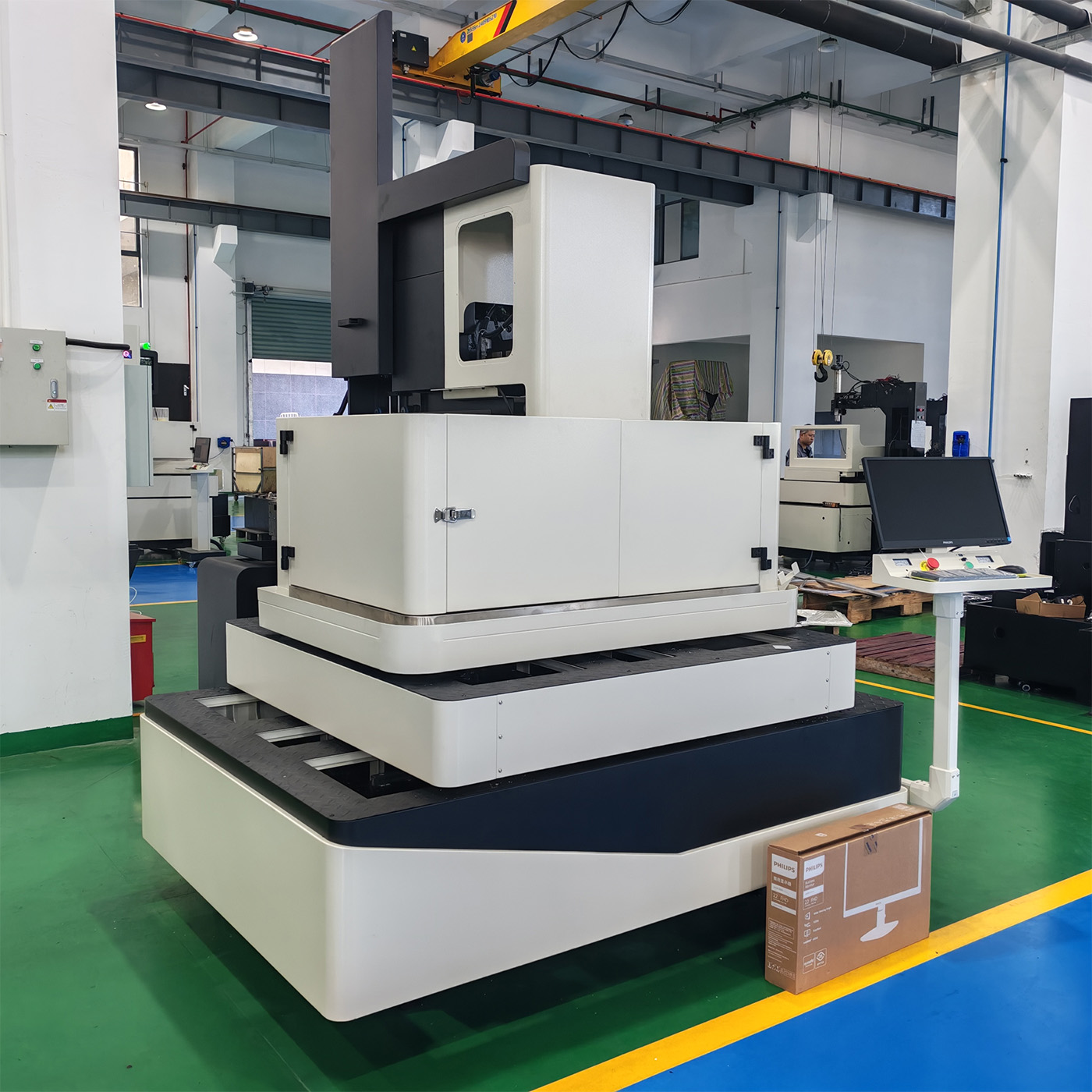
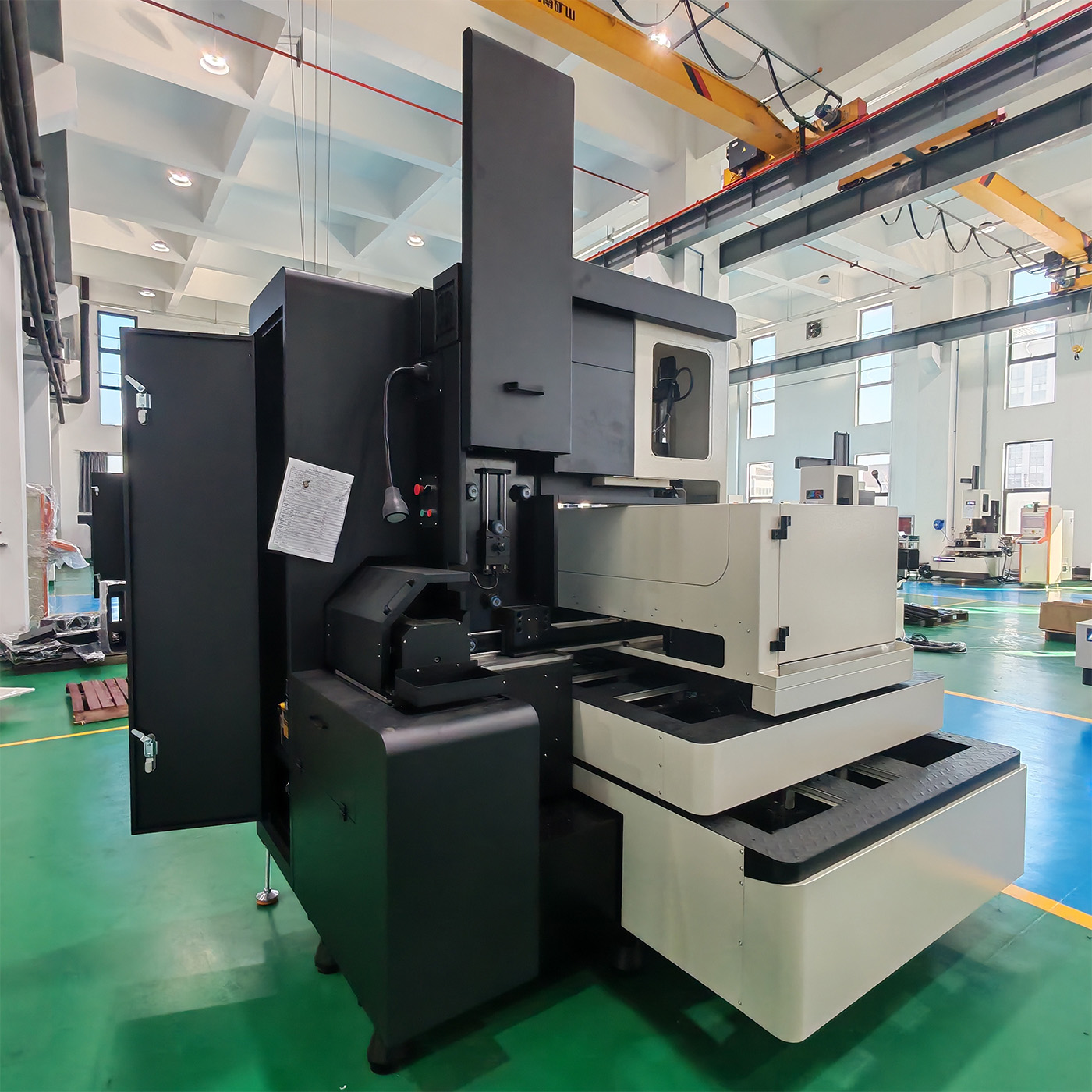
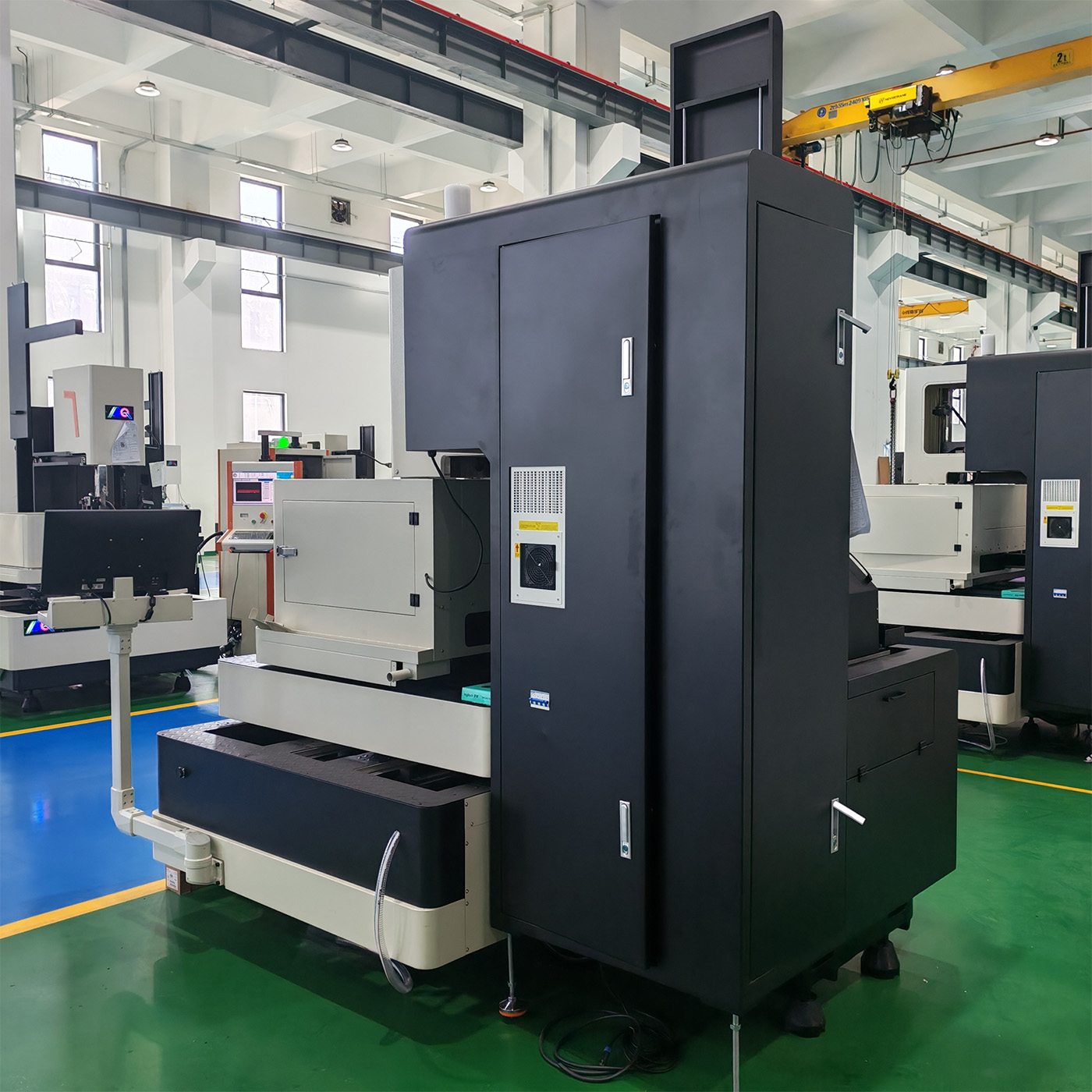
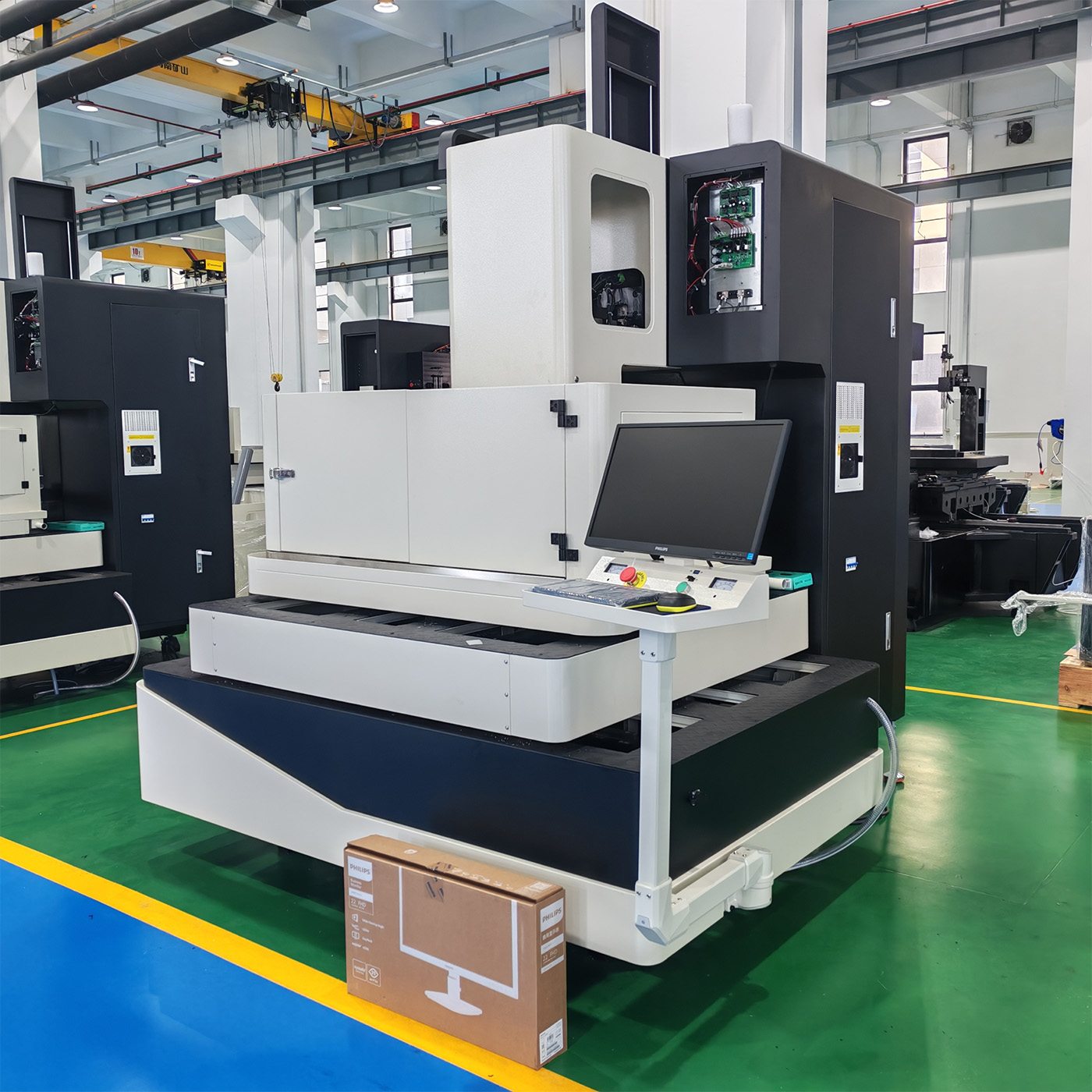
Integrated High Precision BQY700 Medium-Speed CNC Wire cutting EDM Machine
Share to:


Model |
BQS400 |
|
Table travel |
Worktable size(mm) |
675×490 |
X/Y travel (mm) |
400×320 |
|
Max work piece size(mm) |
800×500 |
|
Max cutting thickness (mm) |
300 |
|
Max load weight (kg) |
400 |
|
X/Y min.directive unit(mm) |
0.001 |
|
Taper and Z-axis travel |
Taper U/V travel (mm) |
36×36 |
Max cutting taper (mm) |
±9°/100 mm |
|
U/V min.command unit(mm) |
0.001 |
|
Transmission control |
Control method |
X/Y/U/V/Z Servo driven(Linear motor are option for X/Y) |
Z axis drive |
Numerical control |
|
Simultaneously controlled axes |
X Y U V-4 Axis |
|
Wire drum |
Max travel of wire drum(mm) |
200 |
Wire diameter(mm) |
①0.1-Φ0.2 (Standard 0.18) |
|
Wire speed(m/s) |
1-11.4 variable frequency |
|
Max.wire storage length (m) |
330 |
|
Machining parameters |
Reposition accuracy(mm) |
≤±0.003 |
Max cutting efficiency(mm²/min) |
≥300 |
|
Roughness/Ra(μm)cut 1 trim 2 |
0.7-1.4 |
|
Working liquid tank |
Liquid tank capacity |
120L |
Filtering method |
3 Layer filtration |
|
Others |
Power supply |
Three phase 380V AC/5OHz |
Control System |
Baqi system |
|
Total power consumption (kw) |
1.6 |
|
Max machining current(A) |
10 |
|
Machine gross weight(kg) |
1800 |
|
Machine size(mm) |
1938x1680×2080 |
|
Machine noise |
≤70dB |
|
Top-bottom irregular cutting |
Yes |
Baqi Intelligent's Medium-Speed Molybdenum Wire EDM are widely used in various fields such as mold and tooling, medical industry, aerospace, automotive parts, machining, military defense, and more. Let's explore the application characteristics and advantages of medium-speed wire cutting machines in different industries:
Application Analysis of Medium-Speed Molybdenum Wire EDM Machines in the Military Industry
Medium-speed molybdenum wire EDM machines (referred to as medium-speed wire EDM machines) have become key process equipment for precision manufacturing in the military industry due to their core advantages of micron-level precision, stress-free processing, adaptability to refractory materials, one-time forming of complex structures, high reliability, and low cost. They are widely used in defense fields such as aerospace, weaponry, ships, electronic warfare, and armored vehicles. They perfectly solve the processing pain points of military parts with high hardness, high complexity, high reliability, small batches and multiple varieties, and extreme materials. They are one of the core technologies supporting the high-performance, lightweight, and precision development of defense equipment.
Core Application Scenarios in the Military Industry
1. Aerospace and Military Components (Core Applications)
Mainly used for processing key precision components of aircraft, rockets, missiles, and engines, covering categories including:
● Engine components: combustion chamber cooling holes, turbine blade tenons, casing positioning blocks, nozzles, guide vanes
● Aircraft structural components: titanium alloy/aluminum alloy thin-walled frames, reinforcing ribs, irregular supports, landing gear parts
● Missile body parts: missile tail fins, servo motors, fuse components, precision cabins, micro-miniature control components
● Satellites/spacecraft: ultra-thin-walled brackets, micro-pore arrays, multi-layer stacked structures, temperature control components
The processing characteristics in this field are as follows: the accuracy can reach ±0.003~0.005mm, and the surface roughness reaches Ra0.4~0.8μm; stress-free processing technology is adopted, and 0.1~0.5mm ultra-thin wall parts are completely undeformed after processing; it can stably process various extreme performance materials such as high temperature alloys, titanium alloys, molybdenum, tungsten, and cemented carbide.
2. Precision Parts for Weapons and Equipment
Adapted to the high-precision manufacturing needs of firearms, artillery, ammunition, and optoelectronic equipment, core processing objects include:
● Firearm Components: Barrel rifling die, firing pin, bolt assembly, sight adjustment components
● Ammunition Fuzes: Precision detonating tubes, safety mechanisms, delay devices, miniature complex components
● Optoelectronic Fire Control: Laser rangefinder module, infrared window bracket, servo mechanism, precision gears/slots
● Artillery Parts: Bristle components, muzzle brake, recoil spring guide rod, high-strength wear-resistant positioning components
3. Armored Vehicles and Ship Equipment
High-reliability parts for processing armor, naval equipment, and power systems. Core applications include:
● Ballistic Armor: Irregularly shaped armor plates, inclined holes, reactive armor guide slots, bulletproof vest mold inserts
● Ship Components: Naval gun parts, underwater equipment sealing components, navigation and positioning devices, corrosion-resistant precision components
● Power Transmission: High-strength gears, splined shafts, hydraulic valve bodies, deep-hole narrow grooves, wear-resistant bushings
4. Military Electronics and Communication Equipment
Supports the processing of precision structural components in the fields of radar, communication, and electronic countermeasures. Core categories include:
● Radar antennas: waveguide slots, precision arrays, thin-walled cavities, microwave devices
● Precision housings: anti-interference shielding boxes, airtight chambers, sensor bases, micro-connectors
● Chips / Semiconductors: military-grade packaging molds, ceramic substrates, high-density pin frames, heat dissipation components
5. Military Tooling, Molds, and Testing Fixtures
Provides support for the standardization and mass production of military products. Coverage includes:
● Molding molds: ammunition molds, weapon forging molds, armor stamping molds, precision die-casting molds
● Tooling fixtures: positioning mandrels, indexing plates, assembly fixtures, testing and calibration blocks, welding fixtures
● Repair spare parts: battlefield rapid repair irregular parts, old equipment replica spare parts, emergency replacement parts
Core Advantages and Characteristics of Medium-Speed EDM in the Military Industry
1. Extreme Precision, Meeting Military Micron-Level Tolerance Requirements
The wire EDM process employs multiple cutting steps, following a roughing → finishing → smoothing process. This achieves dimensional accuracy of ±0.003~0.005mm and geometric tolerances controlled within ≤0.002mm. Surface roughness can reach Ra0.4~0.8μm, with no burrs, no tool marks, and sharp edges after processing, fully meeting the high surface quality requirements of military products. The consistency of hole and slot processing is extremely high, and the interchangeability of batch parts can reach 100%, effectively ensuring equipment assembly accuracy and operational reliability. The minimum kerf is only 0.08~0.12mm, which can stably process microholes below 0.3mm and narrow slot structures with a depth-to-width ratio exceeding 10:1.
2. Stress-Free Machining, Ensuring the Structural Strength of Military Parts
Medium-speed EDM adopts the principle of non-contact electrical discharge machining, eliminating mechanical cutting forces. Therefore, thin-walled, slender, and complex components will not deform after machining. The heat-affected zone during machining is extremely small, preventing internal stress and cracks, which can increase the fatigue strength of parts by more than 40%. For soft precious metals such as gold, silver, and copper, as well as high-strength alloys such as titanium alloys and high-temperature alloys, there is no collapse or tearing after machining, perfectly solving the fatal defects of traditional cutting processes that affect the performance of military products, such as stress deformation, work hardening, and thin-walled chatter.
3. Versatile Material Adaptability, Breaking Through the Limitations of Extreme Materials in Military Industry
Medium wire EDM can stably cut various special materials such as hardened steel (HRC60 and above), cemented carbide, titanium alloy, high-temperature alloy, molybdenum, tungsten, niobium, zirconium, and ceramic matrix composites. The machining process is not limited by the hardness or melting point of the material. Cutting can be performed after the part has been heat-treated, completely avoiding the risk of heat treatment deformation. At the same time, it can be adapted to the machining of complex structures such as dissimilar metal composites, multilayer stacked materials, and high brittleness/high toughness special materials. For ultra-hard, high-viscosity, and high-melting-point materials that cannot be cut by traditional tools, medium wire EDM can achieve stable and efficient machining.
4. One-Time Molding of Complex Structures, Meeting the Needs of Irregular Military Designs
Current mainstream wire EDM machines support four-axis/six-axis linkage, enabling one-time forming of large taper ±30°, irregular shapes, 3D curved surfaces, and spiral structures; multiple processes such as cutting, grooving, drilling, chamfering, and trimming can be completed in one clamping, eliminating cumulative errors and significantly improving assembly accuracy; complex internal cavities, irregular curved surfaces, multi-hole arrays, and micro-composite structures can be freely processed, and CAD/CAM data can be directly imported for processing, enabling rapid response to the customized, small-batch, and fast-iteration R&D production needs of the military industry.
5. High Reliability and Stability, Adapting to the Stringent Production Standards of Military Industry
The wire EDM machine supports 24-hour unattended processing and features automatic wire threading, wire breakage protection, power failure resume cutting, and temperature compensation. During continuous processing, the accuracy drift does not exceed ±0.003mm, and the batch processing consistency is strong, with a pass rate of over 99.5%. The equipment adopts a high-rigidity bed, servo drive, and closed-loop control system, with a failure rate of less than 1%, and can maintain a stable processing state for a long time. The entire production process complies with the requirements of the GJB9001 military quality management system, and the entire process is traceable and the quality is controllable, meeting the stringent standards of military production.
6. High Efficiency and Low Cost, Balancing Military Performance and Economy
Medium wire EDM cutting speed can reach 150~300mm²/min, with a processing efficiency of 1.5~2 times that of slow wire EDM and 5~10 times that of traditional cutting processes; the molybdenum wire can be reused repeatedly during processing, and the consumable cost is only 1/5 of that of slow wire EDM; the overall equipment investment is only 1/3~1/2 of that of slow wire EDM, daily maintenance is simple, and the investment payback period is fast; there are fewer processing steps, less subsequent grinding work, and a low scrap rate, and the overall processing cost can be reduced by 40%~60%, perfectly balancing the high performance requirements of military products with production economy.
Supporting Explanation Images
Image Name |
Display Content |
Core Features |
Machining Effect Diagram of Precision Military Parts |
Aircraft Engine Cooling Holes, Turbine Teeth, Thin-Walled Titanium Alloy Components, Precision Firearm Parts |
Micron-level Precision, Burr-Free, Complex Structure, Extreme Material Machining Capability |
Wire EDM Machining of Precision Military Parts - Armor / Weapon Molds and Thick Plate Cutting Diagram |
Bulletproof Armor Plates, Firearm Rifling Molds, Heavy Weapon Components, Thick Plate Hard Material Cutting Effect |
Large stroke, high rigidity, no deformation, high stability |
Processing site of medium-speed wire EDM equipment for military use |
Six-axis linkage medium-speed molybdenum wire EDM machine, military-grade workbench, batch precision machining scene |
Digitalization, Automation, High Reliability, Intelligence |
Summary
The medium-speed molybdenum wire EDM machine, with its comprehensive advantages of ultra-high precision, stress-free processing, extreme material adaptability, one-time molding of complex structures, high reliability, and low cost, has deeply penetrated the entire military industry, including aerospace, weaponry, armor, shipbuilding, and military electronics. It has become an irreplaceable core equipment for solving the manufacturing challenges of high-hardness, high-complexity, high-reliability, small-batch, and extreme material manufacturing in the military field. It perfectly supports the transformation and upgrading of national defense equipment towards lightweight, precision, high-performance, and intelligent manufacturing, and is the key process technology with the highest cost-effectiveness and strongest adaptability in the modern military precision manufacturing system.
Product advantages and applicable industries
-
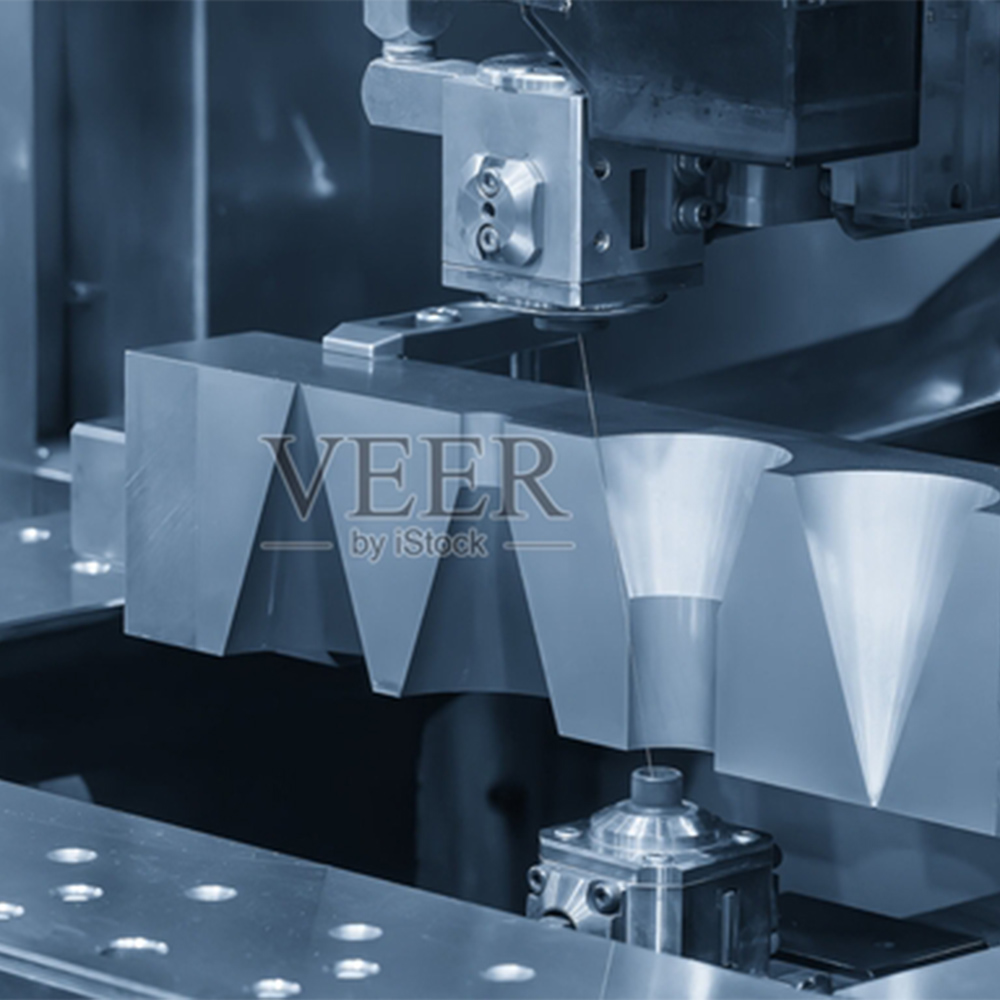
Wire cutting machine tool processing stamping die on site
-
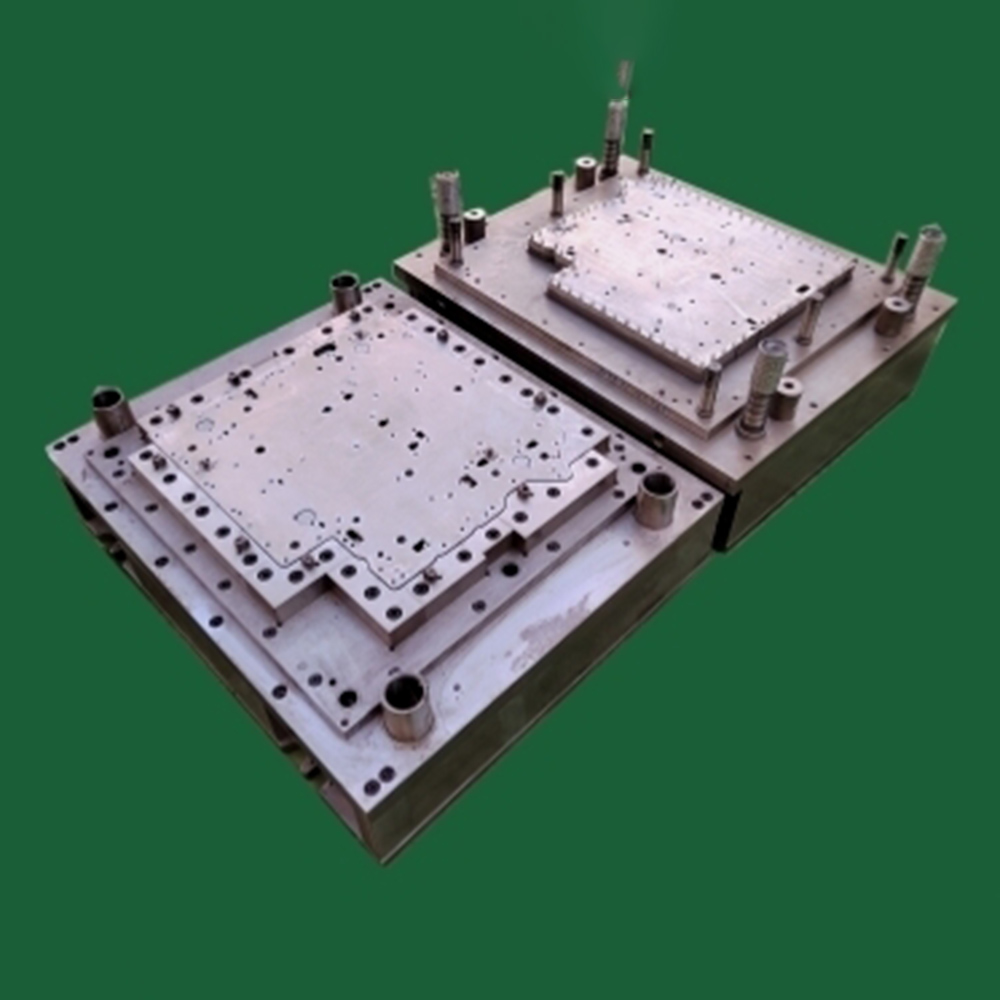
Multi-station continuous stamping die (integrated wire cutting)
-
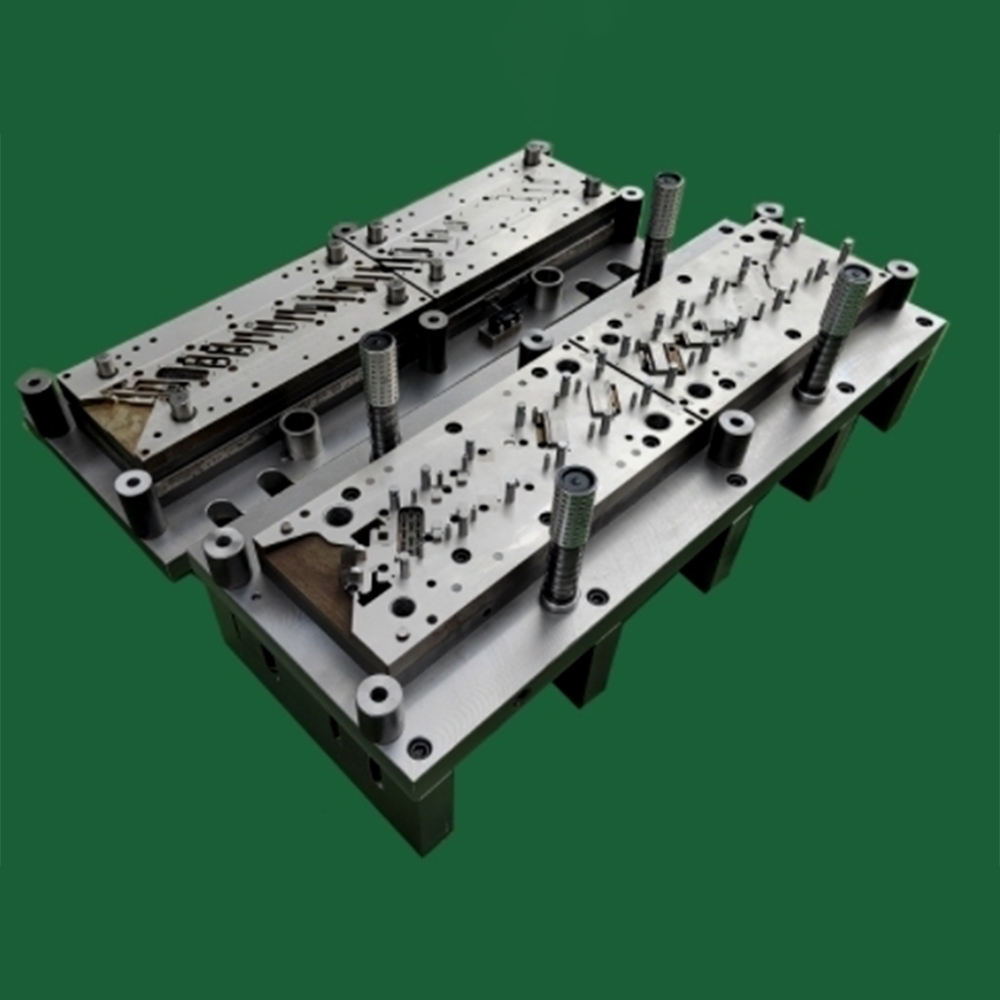
terminal progressive die (typical product of wire cutting)
-
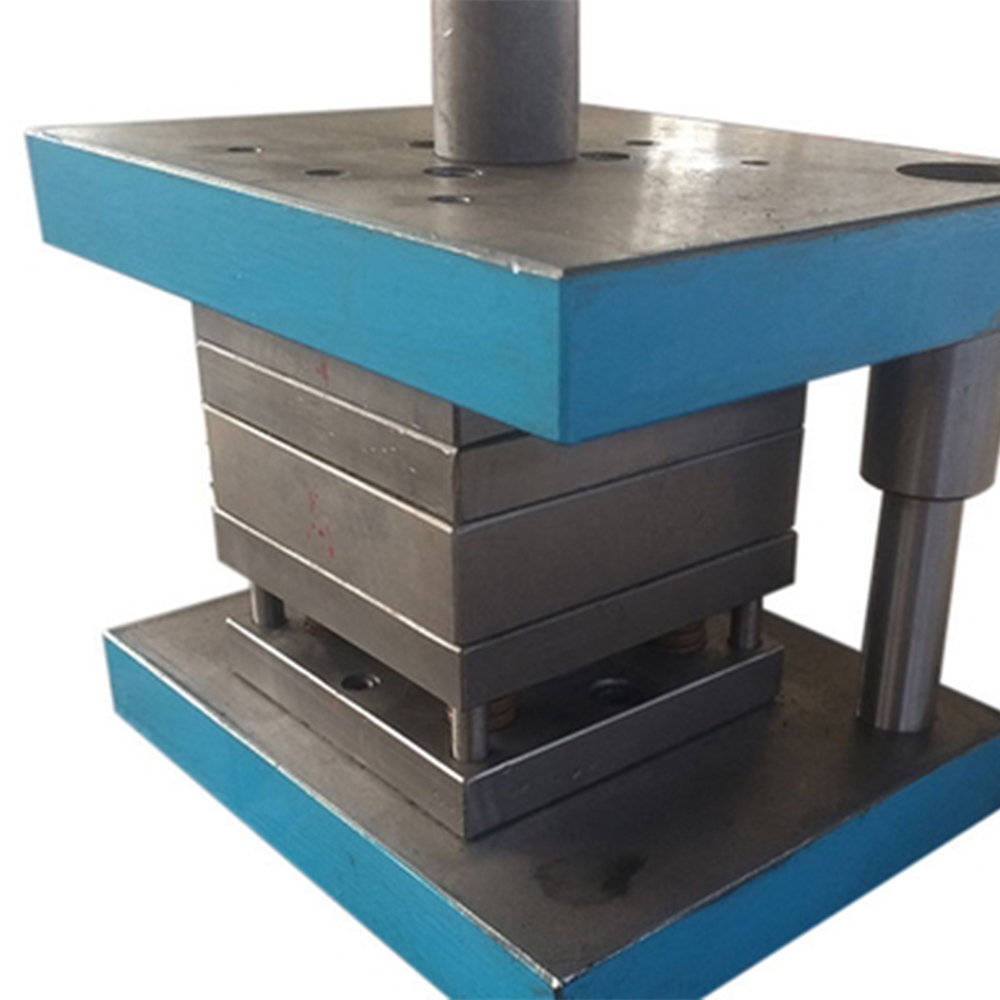
Motor silicon steel sheets, stator and rotor stamping molds (areas where wire cutting excels)