
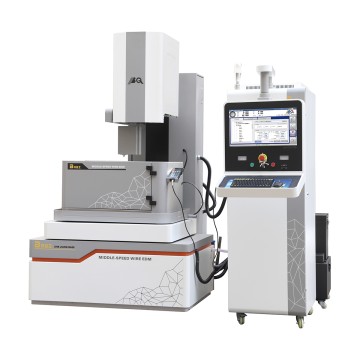
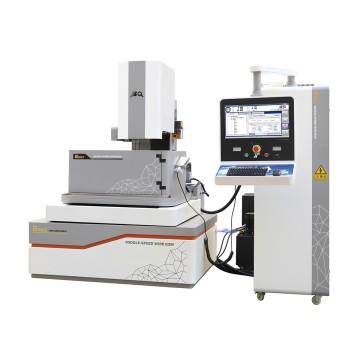
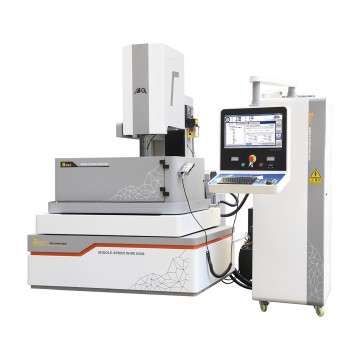
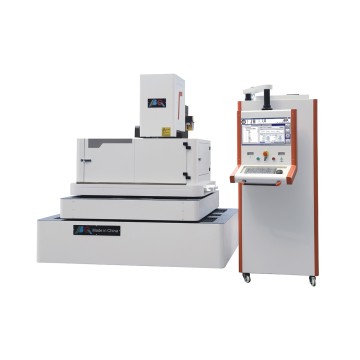
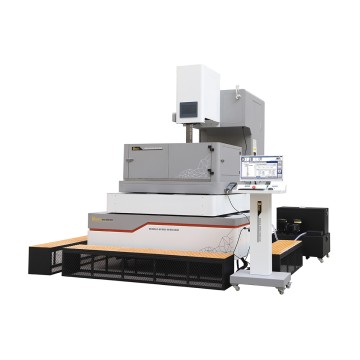
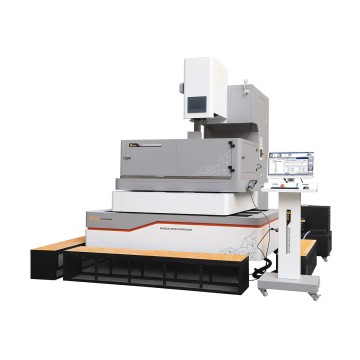
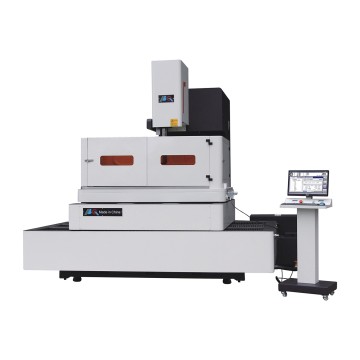
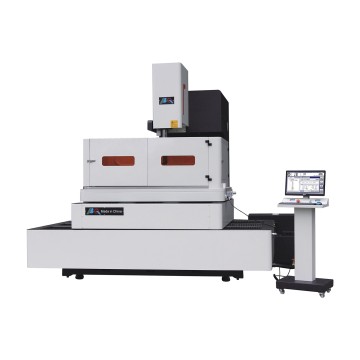
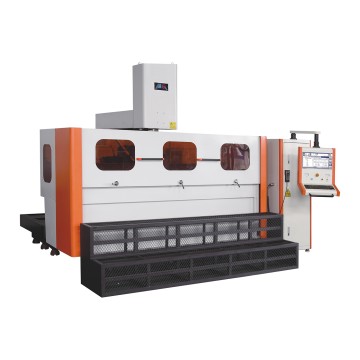
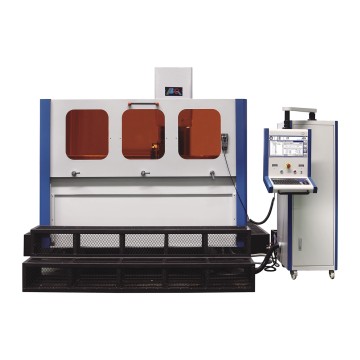
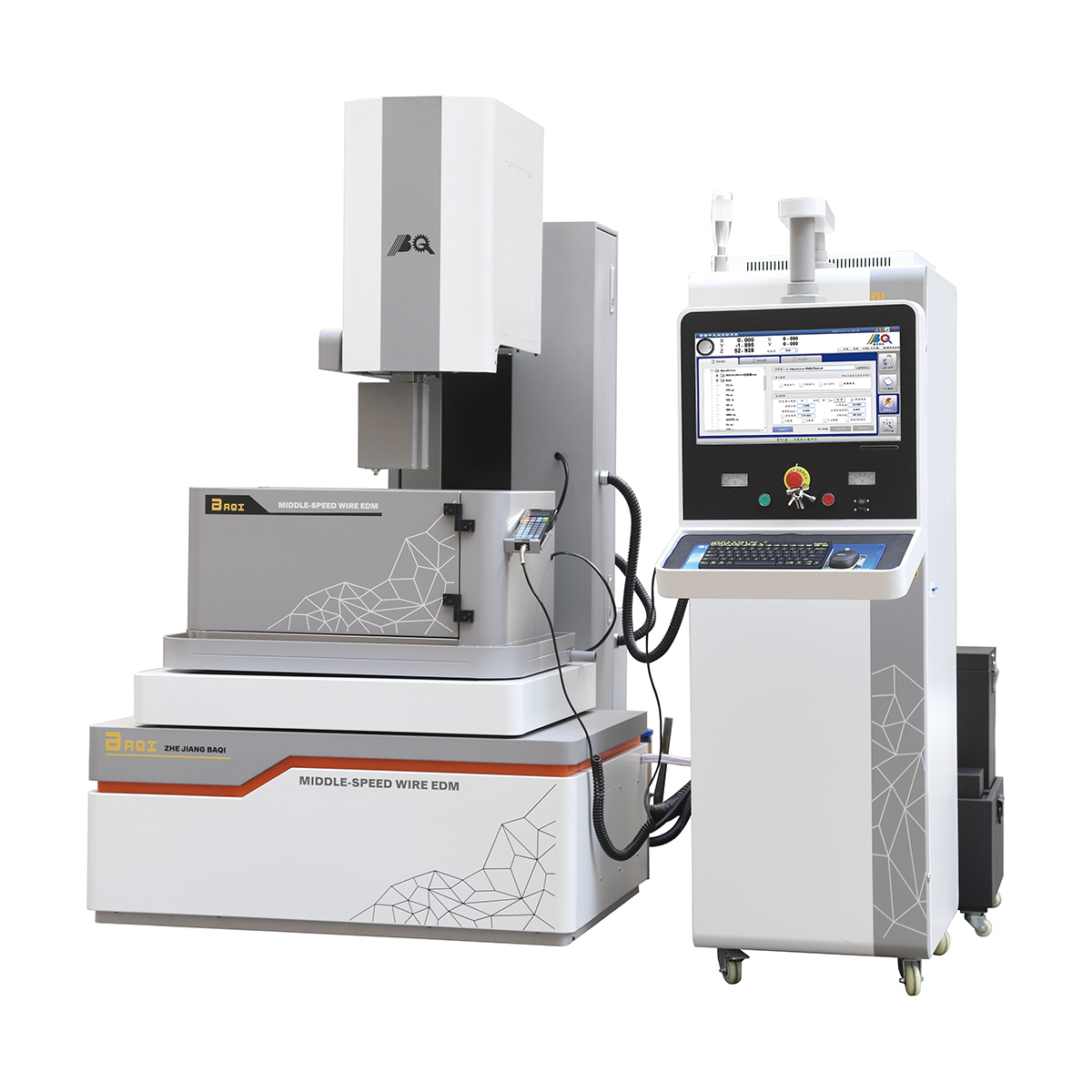
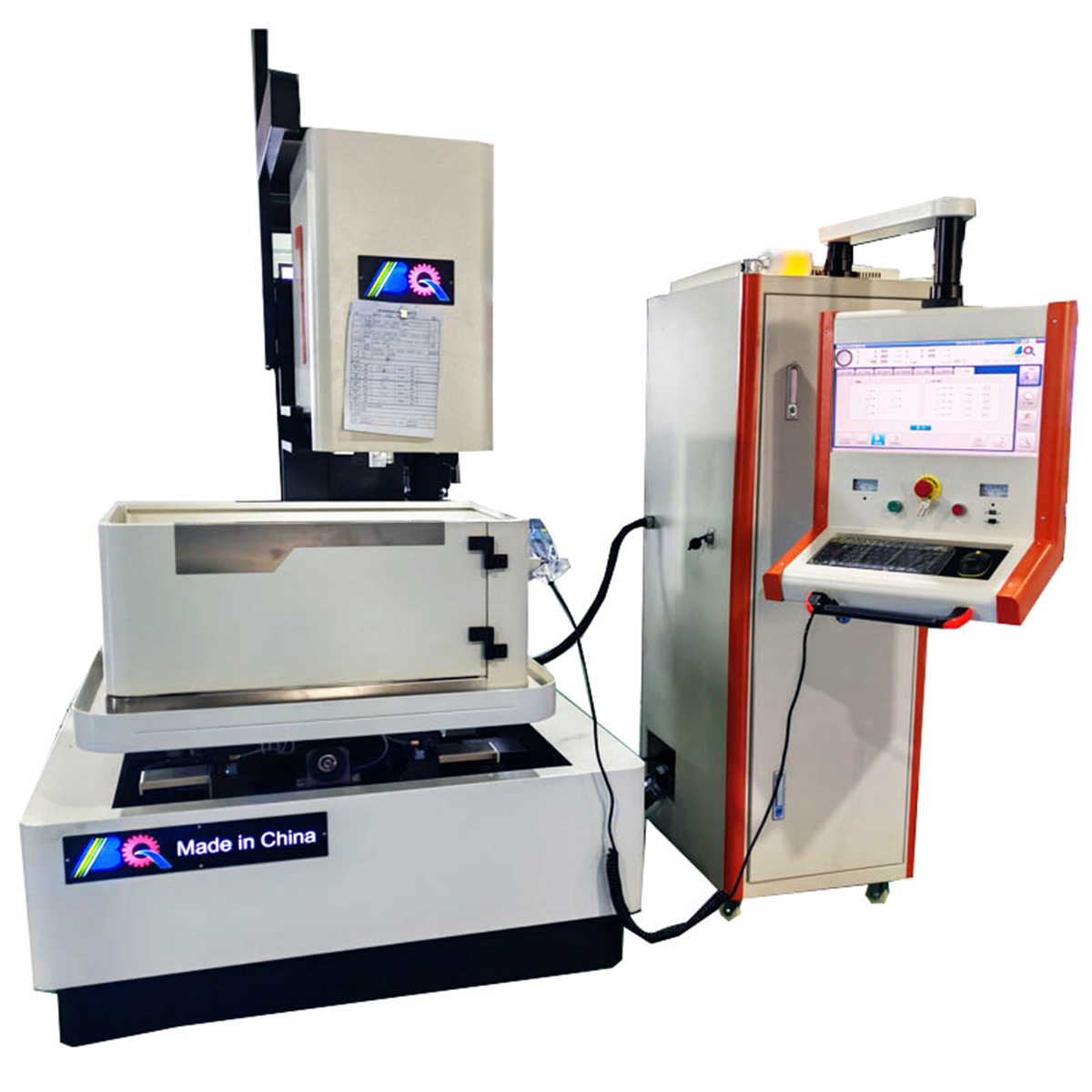
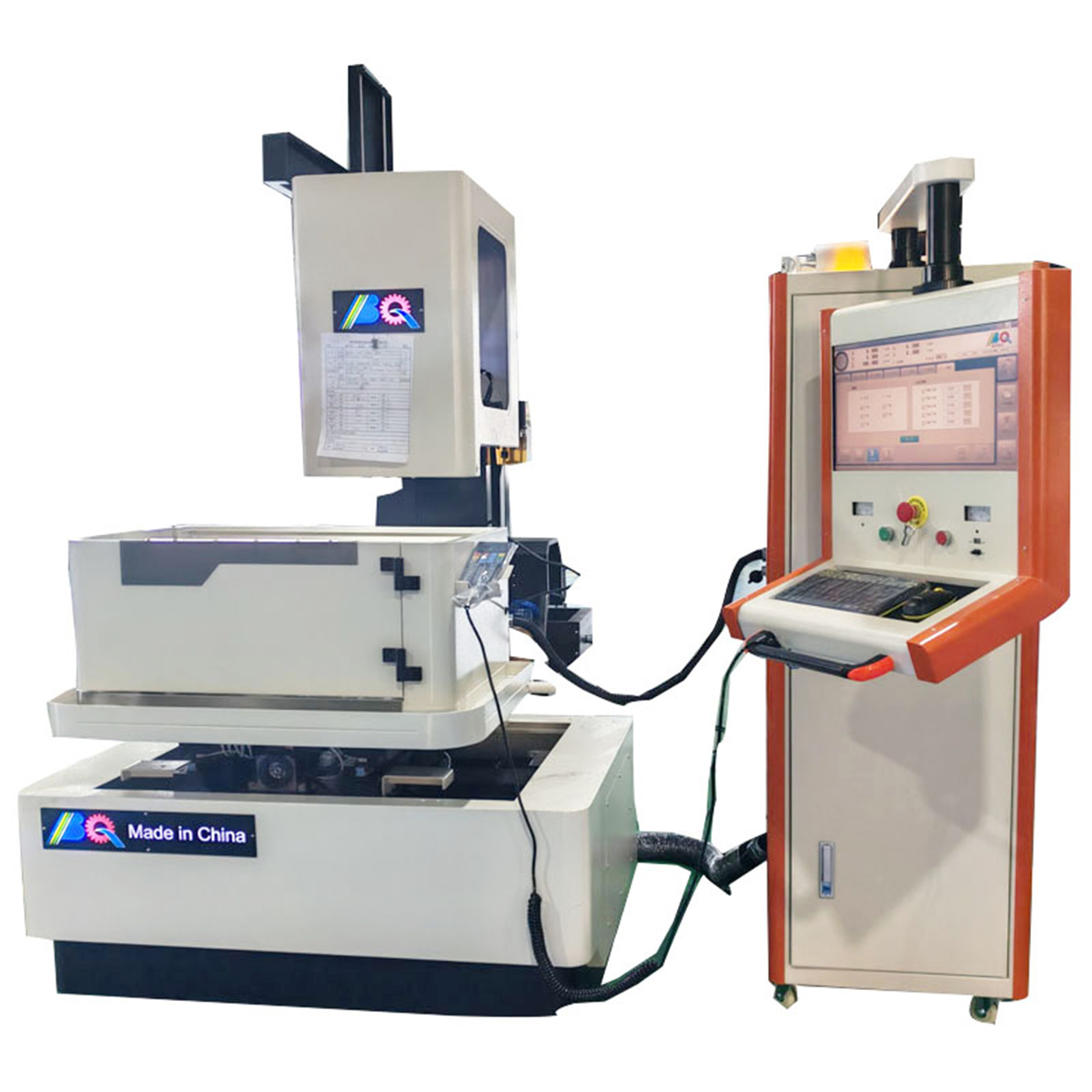
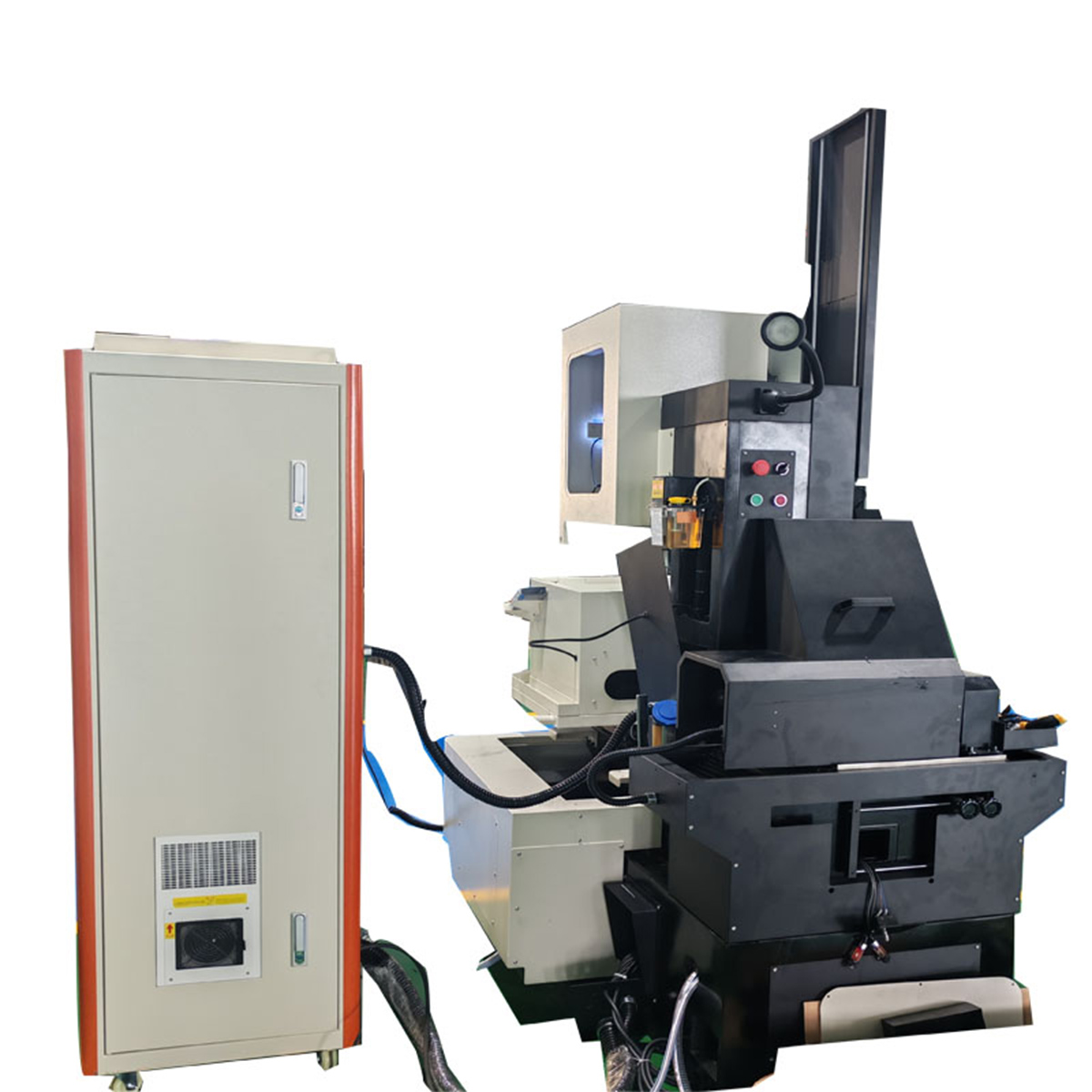
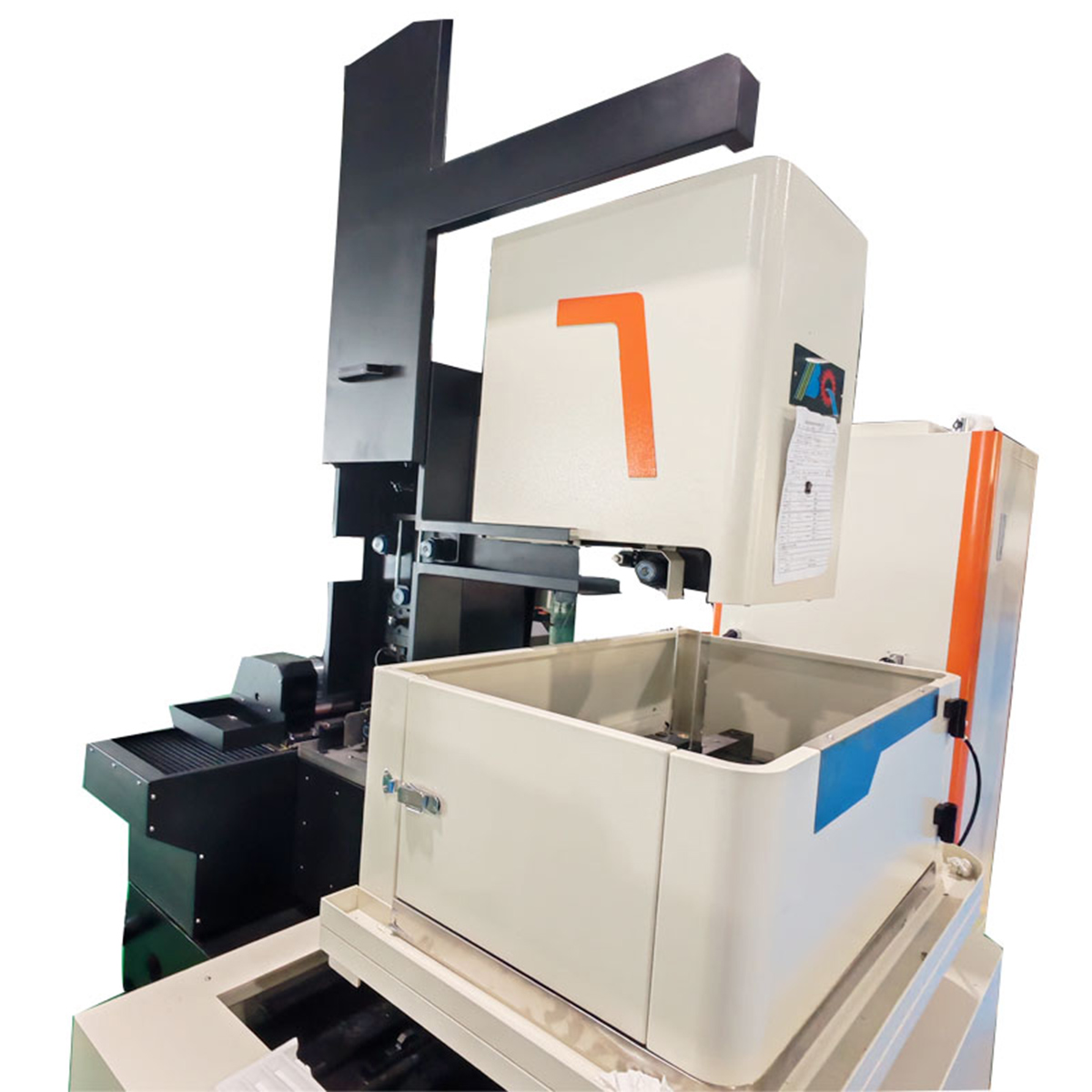
High Precision 5 Axis linkage BQ400 Medium-Speed CNC Wire cutting EDM Machine
Share to:


Model |
BQ400 |
|
Table travel |
Worktable size(mm) |
675×490 |
X/Y travel (mm) |
400×320 |
|
Max work piece size(mm) |
800×500 |
|
Max cutting thickness (mm) |
300 |
|
Max load weight (kg) |
400 |
|
X/Y min.directive unit(mm) |
0.001 |
|
Taper and Z-axis travel |
Taper U/V travel (mm) |
80×80 |
Max cutting taper (mm) |
±15°/150 mm |
|
U/V min.command unit(mm) |
0.001 |
|
Transmission control |
Control method |
X/Y/U/V/Z Servo driven(Linear motor are option for X/Y) |
Z axis drive |
Numerical control |
|
Simultaneously controlled axes |
X Y U V-4 Axis |
|
Wire drum |
Max travel of wire drum(mm) |
200 |
Wire diameter(mm) |
①0.1-Φ0.2 (Standard 0.18) |
|
Wire speed(m/s) |
1-11.4 variable frequency |
|
Max.wire storage length (m) |
330 |
|
Machining parameters |
Reposition accuracy(mm) |
≤±0.003 |
Max cutting efficiency(mm²/min) |
≥300 |
|
Roughness/Ra(μm)cut 1 trim 2 |
0.7-1.4 |
|
Working liquid tank |
Liquid tank capacity |
120L |
Filtering method |
3 Layer filtration |
|
Others |
Power supply |
Three phase 380V AC/5OHz |
Control System |
Baqi system |
|
Total power consumption (kw) |
1.6 |
|
Max machining current(A) |
10 |
|
Machine gross weight(kg) |
2100 |
|
Machine size(mm) |
1300x1550×2050 |
|
Machine noise |
≤70dB |
|
Top-bottom irregular cutting |
Yes |
BaBaqi Intelligent's Medium-Speed Molybdenum Wire EDM are widely used in various fields such as mold and tooling, medical industry, aerospace, automotive parts, machining, military defense, and more. Let's explore the application characteristics and advantages of medium-speed wire cutting machines in different industries:
Application of Medium-Speed Molybdenum Wire EDM in the Stamping Die Industry: Usage and Core Advantages
Medium-speed molybdenum wire EDM (commonly known as "medium-speed wire cutting") is currently the mainstream core technology in the domestic stamping die manufacturing field. With its core advantage of "achieving near-slow-speed wire cutting accuracy at the cost of fast wire cutting," it has become the preferred equipment for small and medium-sized mold factories and hardware stamping plants to process key parts such as punches, dies, and progressive die inserts, covering more than 90% of the general stamping die processing needs.
Industry Usage
In the entire stamping die manufacturing process, medium-speed wire cutting undertakes the core process of finishing after heat treatment:
● Core processing objects: Key cutting edges and mating parts such as punches, dies, stripper plates, fixing plates, and multi-station inserts of progressive dies, especially suitable for mainstream stamping die types such as hardware dies, terminal dies, and progressive dies.
● Process Positioning: Perfectly integrates the mold manufacturing chain of "CNC roughing → heat treatment and quenching → wire EDM finishing → polishing / assembly", solving the pain points of traditional milling being unable to process high-hardness materials and being prone to deformation.
● Market Penetration: Over 95% of domestic small and medium-sized mold factories use it, and large mold factories also use it as the main processing equipment for conventional precision parts and batch inserts, making it a "must-have" equipment in the stamping mold industry.
Core Advantages and Features
1. Extreme Cost-Effectiveness: The Golden Balance Between Cost and Precision
● Equipment Investment: The purchase cost is only 1/3 to 1/5 of that of wire EDM, with a low investment threshold, suitable for the batch production needs of small and medium-sized factories.
● Consumable Cost: Using reciprocating molybdenum wire, the wire consumption is far lower than that of disposable copper wire in wire EDM, reducing processing costs by more than 60%, and one roll of molybdenum wire can process more than 100 mold parts.
● Accuracy meets standards: After 2~3 multiple cuts, the dimensional accuracy can reach **±0.003mm**, and the surface roughness Ra 0.8~1.6μm, which fully meets the requirements of the punch and die fitting clearance of most stamping dies (0.005~0.02mm). The stamped parts have fewer burrs and stable dimensions.
2. Hard Material Machining Expert: Quenching Before Machining, Zero Deformation
● Can directly process high-hardness mold steels such as SKD11, Cr12MoV, and DC53 with a hardness of HRC 58~62 after quenching, completely realizing the "quench first, then wire cut" process, completely avoiding the impact of heat treatment deformation on mold accuracy, and ensuring long-term stability of punch and die dimensions.
●Not limited by material hardness, compared with traditional milling, tool wear is greatly reduced, and processing efficiency is increased by more than 30%.
3. Stress-Free Machining: Adaptable to Complex Thin-Walled Structures
● Employs non-contact EDM, with no cutting force, perfectly processing slender punches, narrow slits, thin ribs (<0.1mm), and irregular complex contours and other easily deformable structures. The minimum internal angle can reach R0.05mm, with sharp corner clearing, no need for subsequent grinding, and significantly extending mold life.
● Supports four-axis linkage taper cutting (±6°~15°), capable of forming blanking angles, guide pin holes, and draft angles of stamping dies in one step, reducing subsequent processes and improving production efficiency.
4. High Efficiency and Flexibility: Adaptable to Small-Batch, Multi-Variety Production
● No special tools are required; CAD/CAM programming is all that's needed for quick switching between processing modes, perfectly adapting to the "single-piece, small-batch, multi-variety" production characteristics of stamping dies, shortening new product development cycles by 50%.
● Processing speed is 30%~40% faster than slow wire EDM, supports 24-hour continuous operation, simple operation and maintenance, low skill requirements for workers, low failure rate, suitable for long-term batch production in mold factories.
Accompanying Illustration Pictures (3 Core Real Shots)
Figure 1: Medium-Speed Molybdenum Wire EDM Machine (processing Equipment Body)
Description: This is a typical medium-speed wire EDM machine, using a molybdenum wire reciprocating wire structure and equipped with multi-cutting technology. It is the core equipment for stamping die factories to process punches and dies, combining high cost performance and processing accuracy, and is suitable for the precision machining needs of various stamping die parts.
Figure 2: Finished Punches and Dies of Stamping Dies Produced by Medium-Speed Wire EDM
Explanation: The image shows a non-standard stamping die insert machined by wire EDM. The material is quenched SKD11 die steel, with sharp cutting edges and complete corner clearing. The positioning holes and non-standard contours meet the accuracy standards, perfectly adapting to the stamping requirements of hardware parts and terminal components. It intuitively demonstrates the core advantages of wire EDM in machining high-hardness materials and complex contours.
Figure 3: Multi-Station Punch and Die Inserts of Progressive Dies Produced by Medium-Speed Wire EDM
Explanation: The image shows a punch and die assembly of a precision multi-station progressive die. After multiple cutting processes by wire EDM, the cumulative pitch error is <0.005mm, and the fit clearance is uniform. It is a core component of electronic and automotive terminal dies, demonstrating the mature application of wire EDM in precision progressive die machining and meeting the production requirements of high-precision stamping dies.
Brief Summary
Medium-speed molybdenum wire EDM is the "king of cost-effectiveness" in the stamping die industry. With its core capabilities of low cost, high precision, hard material compatibility, and complex forming, it has become a key process connecting die design and finished products, supporting the large-scale and efficient production of the domestic stamping die industry. It is the core competitiveness of small and medium-sized die factories and an important supplementary process for large die factories.
Product advantages and applicable industries
-
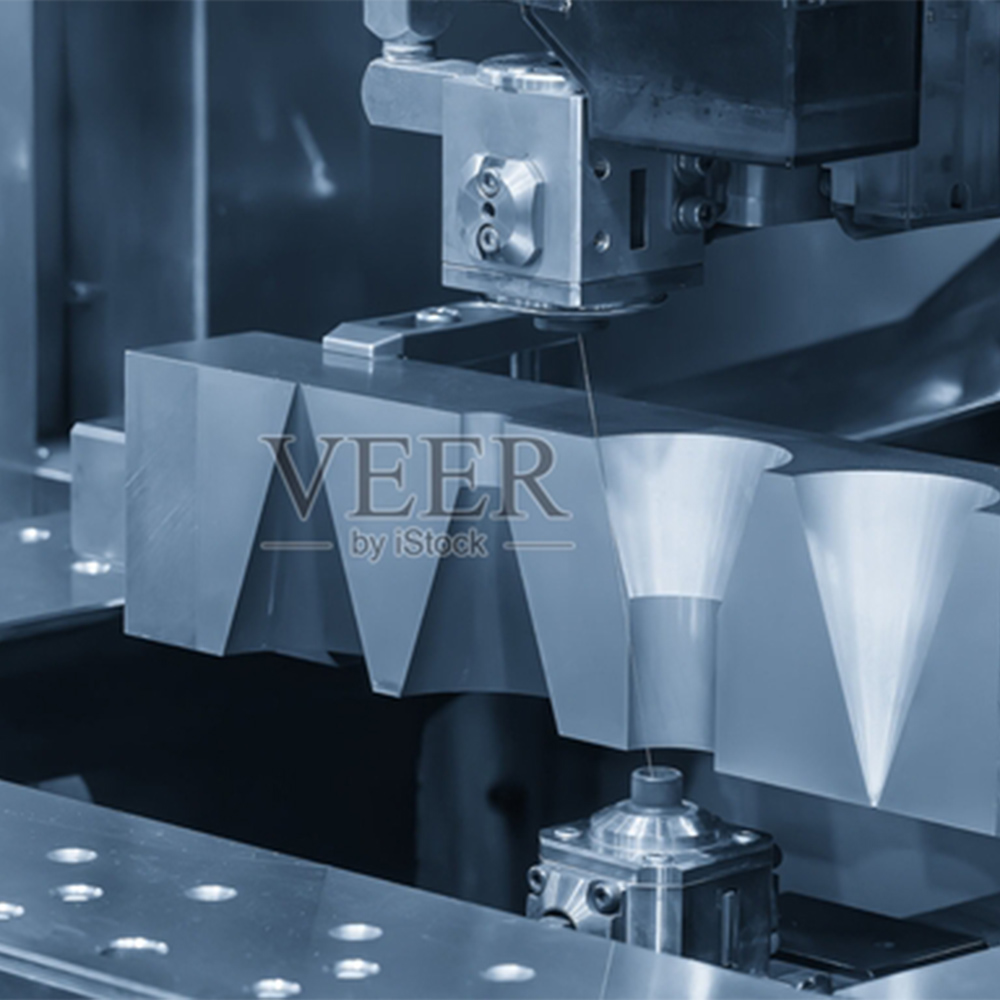
Wire cutting machine tool processing stamping die on site
-
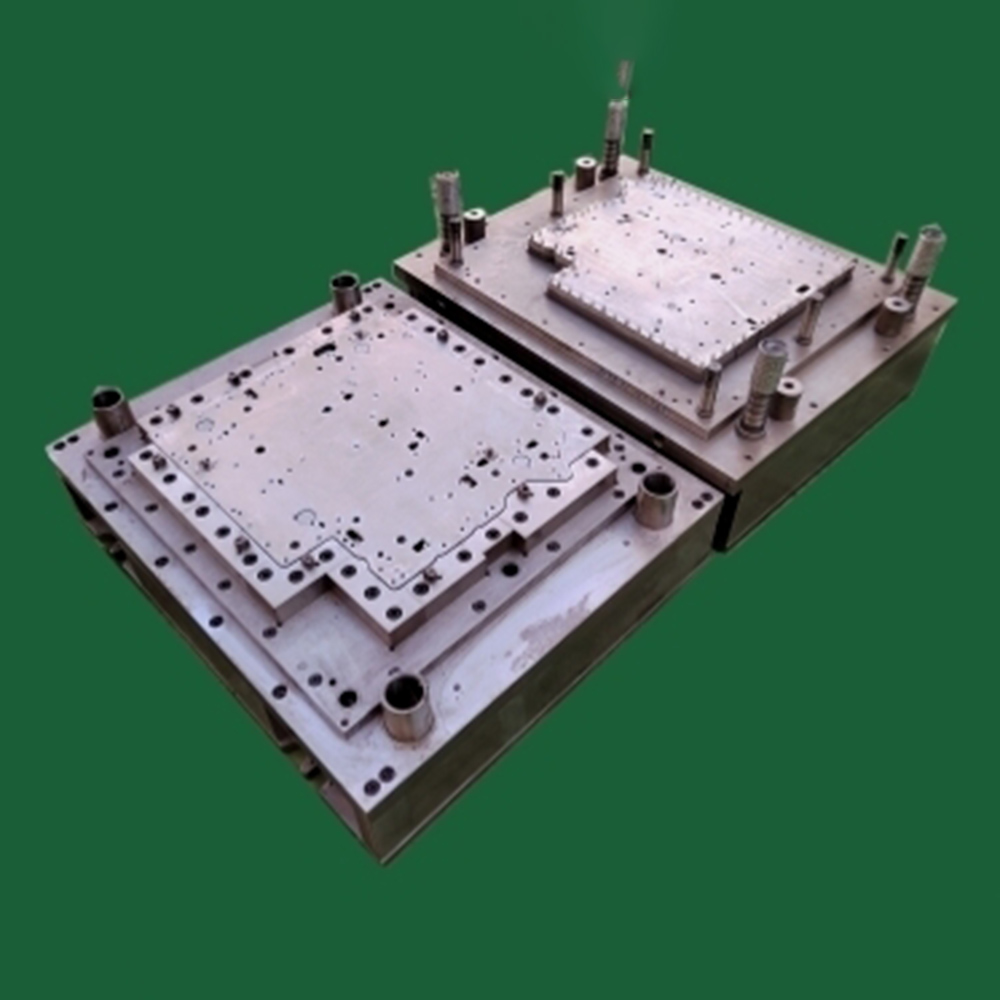
Multi-station continuous stamping die (integrated wire cutting)
-
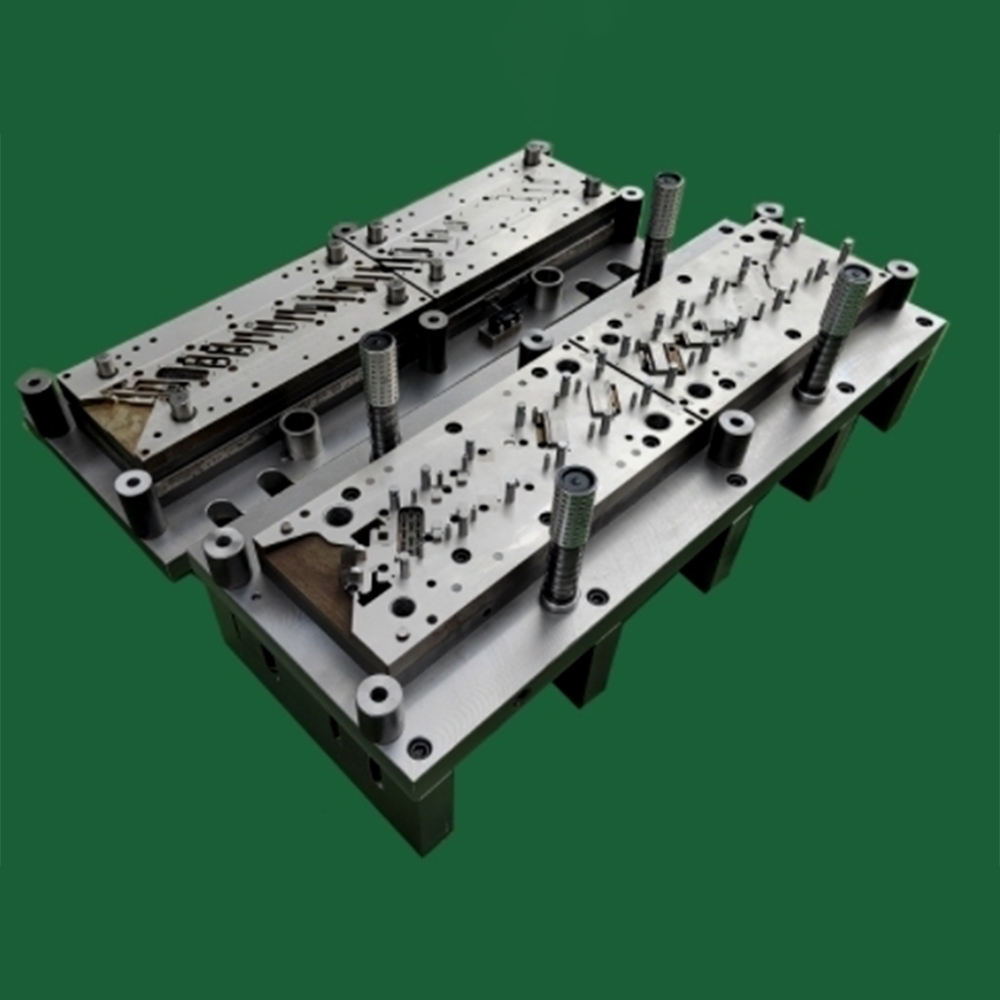
terminal progressive die (typical product of wire cutting)
-
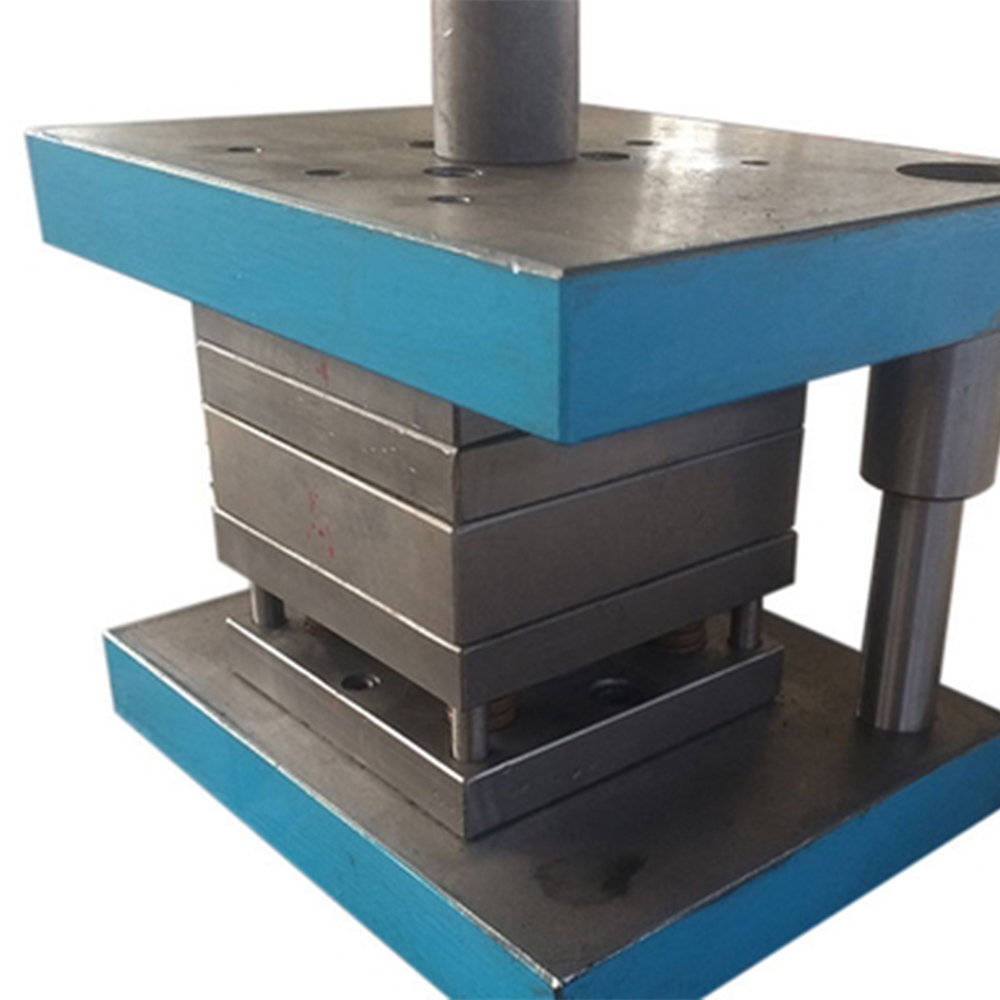
Motor silicon steel sheets, stator and rotor stamping molds (areas where wire cutting excels)