
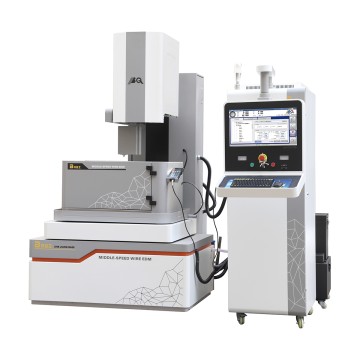
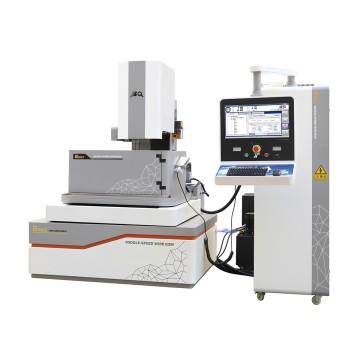
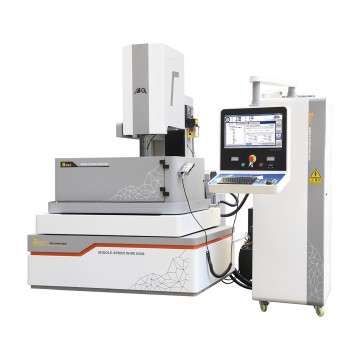
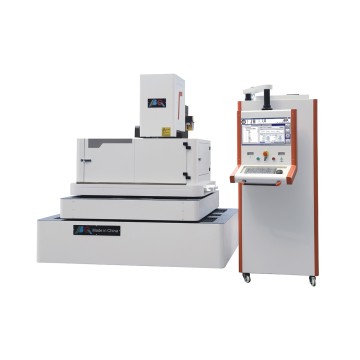
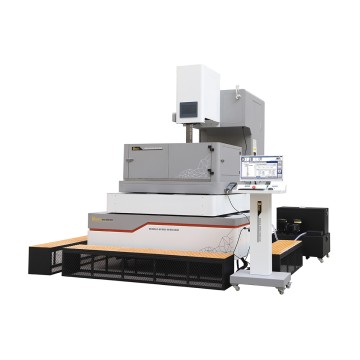
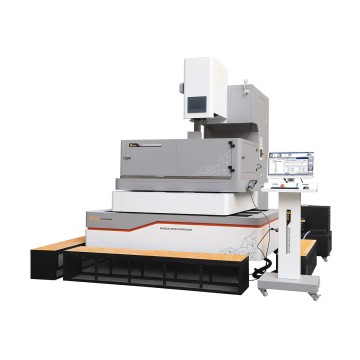
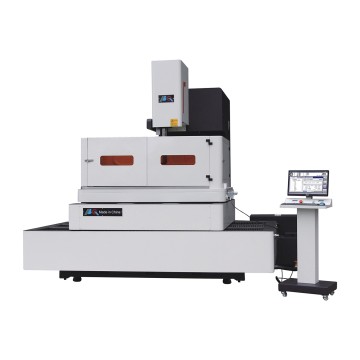
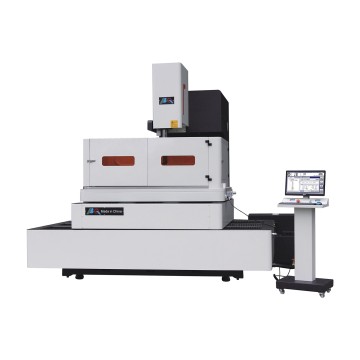
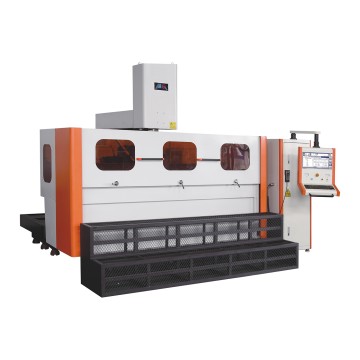
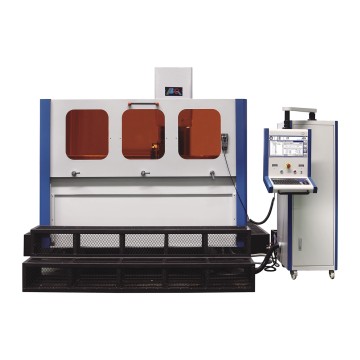
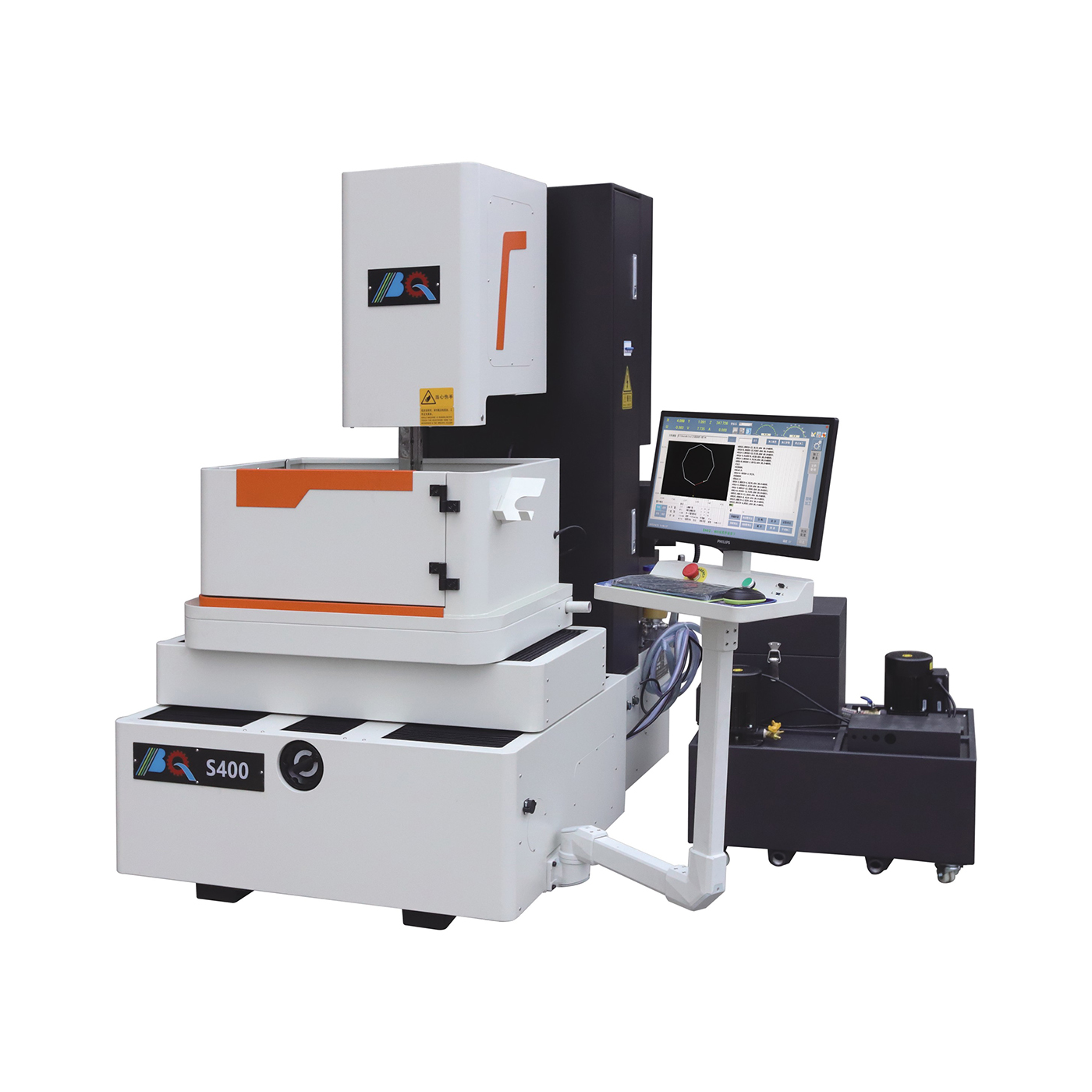
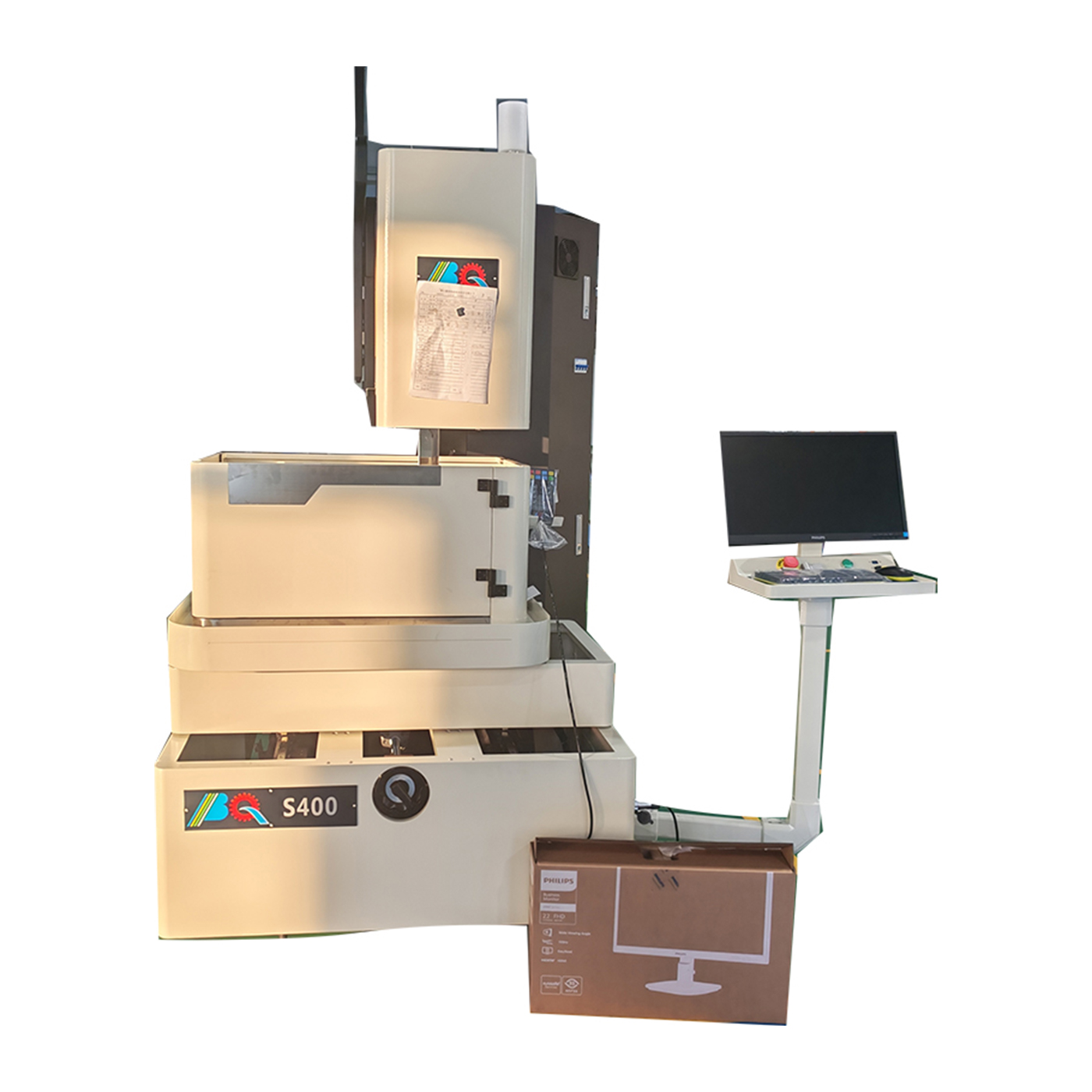
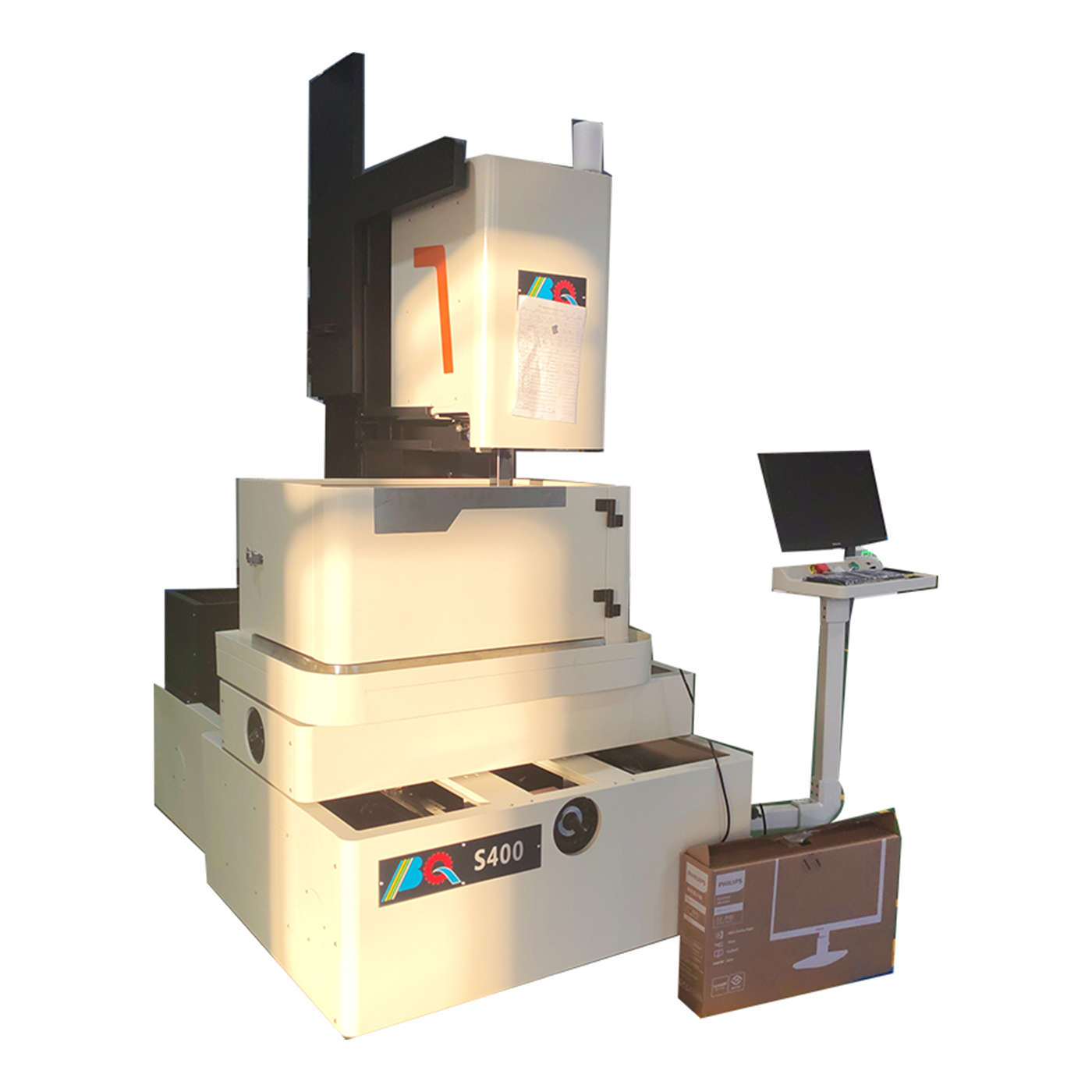
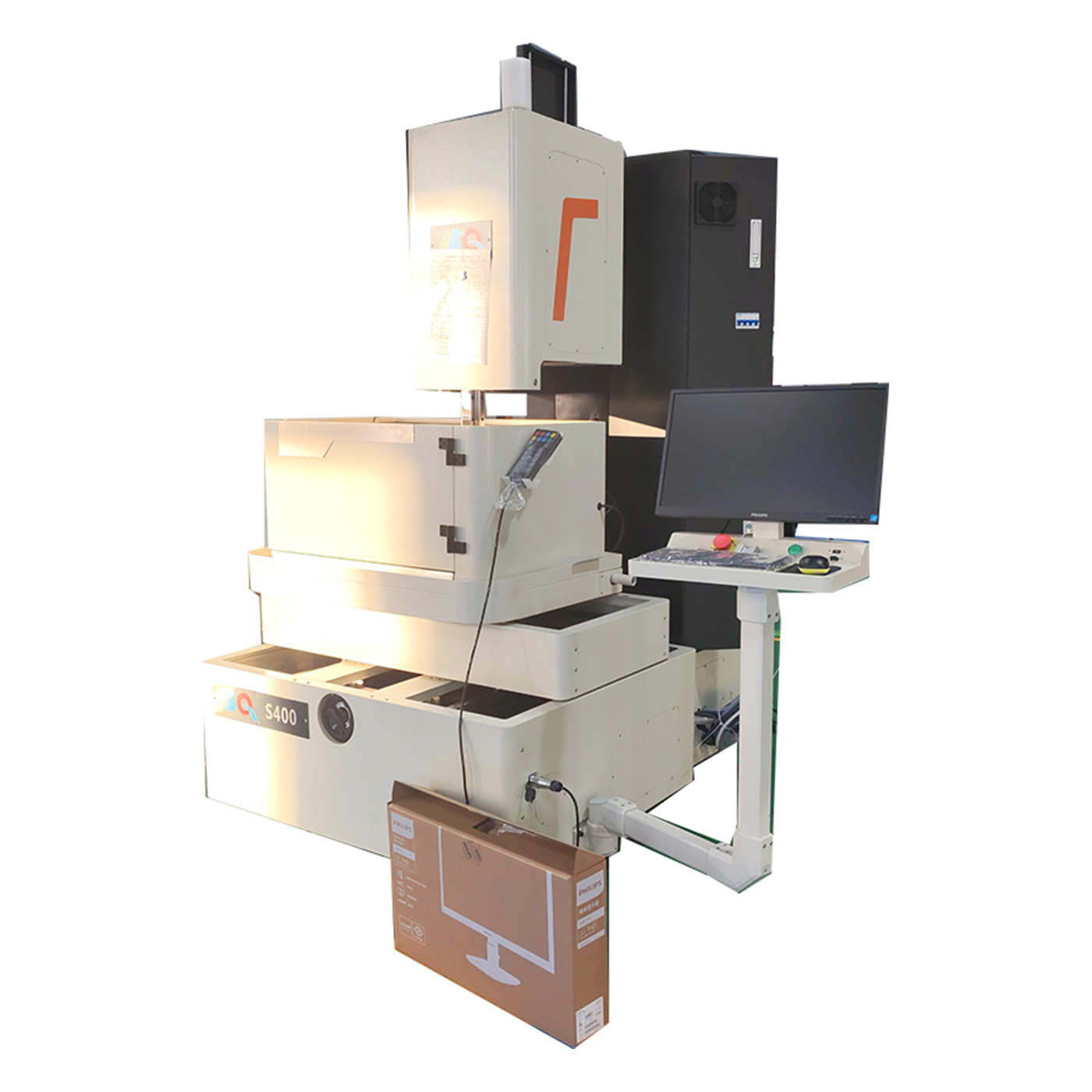
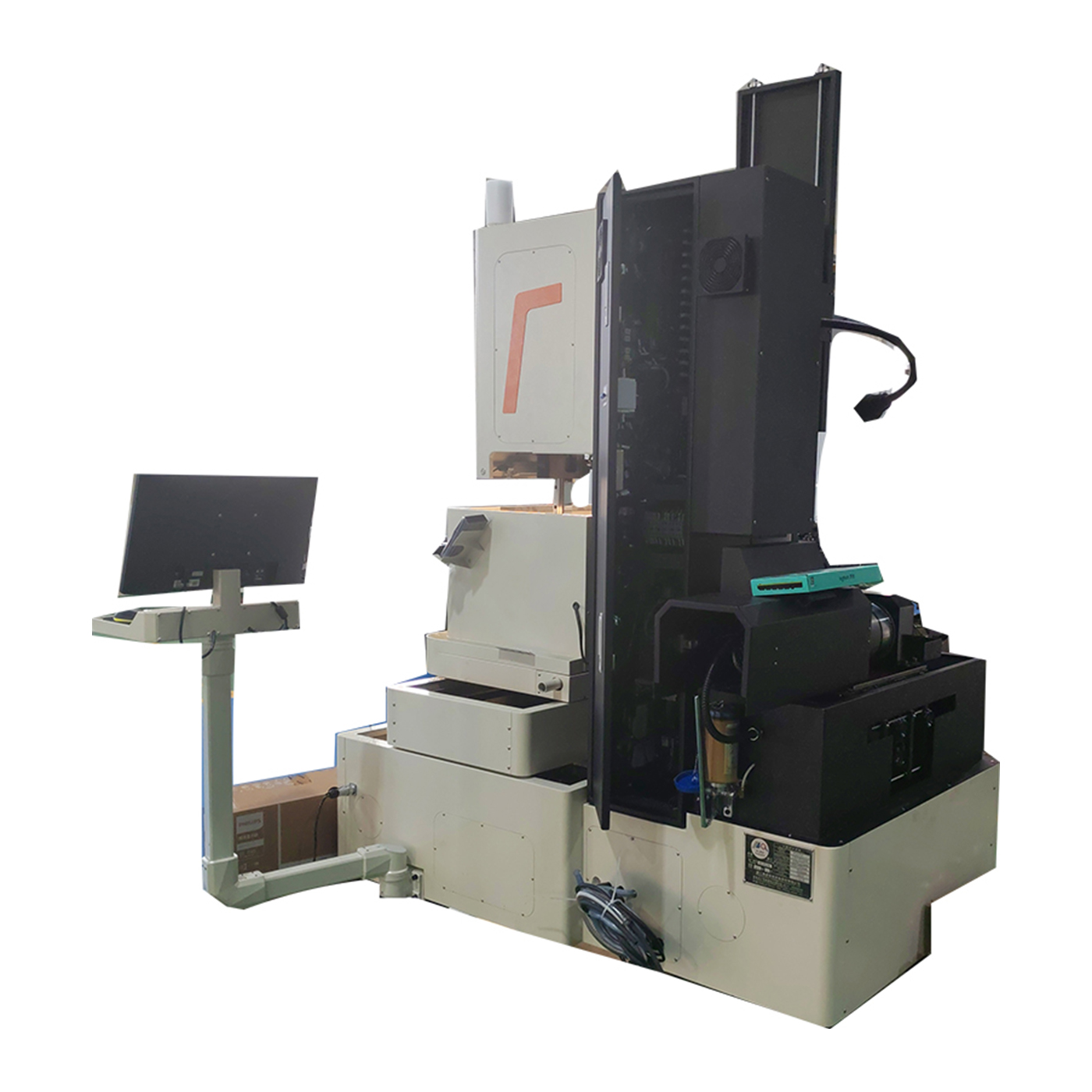
High-Efficiency BQS400 Medium-Speed CNC Molybdenum Wire cutting EDM Machine
Share to:


Model |
BQS400 |
|
Table travel |
Worktable size(mm) |
675×490 |
X/Y travel (mm) |
400×320 |
|
Max work piece size(mm) |
800×500 |
|
Max cutting thickness (mm) |
300 |
|
Max load weight (kg) |
400 |
|
X/Y min.directive unit(mm) |
0.001 |
|
Taper and Z-axis travel |
Taper U/V travel (mm) |
36×36 |
Max cutting taper (mm) |
±9°/100 mm |
|
U/V min.command unit(mm) |
0.001 |
|
Transmission control |
Control method |
X/Y/U/V/Z Servo driven(Linear motor are option for X/Y) |
Z axis drive |
Numerical control |
|
Simultaneously controlled axes |
X Y U V-4 Axis |
|
Wire drum |
Max travel of wire drum(mm) |
200 |
Wire diameter(mm) |
①0.1-Φ0.2 (Standard 0.18) |
|
Wire speed(m/s) |
1-11.4 variable frequency |
|
Max.wire storage length (m) |
330 |
|
Machining parameters |
Reposition accuracy(mm) |
≤±0.003 |
Max cutting efficiency(mm²/min) |
≥300 |
|
Roughness/Ra(μm)cut 1 trim 2 |
0.7-1.4 |
|
Working liquid tank |
Liquid tank capacity |
120L |
Filtering method |
3 Layer filtration |
|
Others |
Power supply |
Three phase 380V AC/5OHz |
Control System |
Baqi system |
|
Total power consumption (kw) |
1.6 |
|
Max machining current(A) |
10 |
|
Machine gross weight(kg) |
1800 |
|
Machine size(mm) |
1938x1680×2080 |
|
Machine noise |
≤70dB |
|
Top-bottom irregular cutting |
Yes |
Baqi Intelligent's Medium-Speed Molybdenum Wire EDM are widely used in various fields such as mold and tooling, medical industry, aerospace, automotive parts, machining, military defense, and more. Let's explore the application characteristics and advantages of medium-speed wire cutting machines in different industries:
Application Analysis of Medium-Speed Molybdenum Wire EDM Machines in the Instrumentation Industry
Medium-speed molybdenum wire EDM machines (medium-speed wire cutting) have become key equipment in precision manufacturing of instruments and meters due to their core advantages of micron-level precision, stress-free micromachining, complex structure forming, high material adaptability, low cost and high efficiency. They are widely used in sensors, optical instruments, analytical instruments, measuring instruments, medical instruments, precision watches and other fields, perfectly solving the manufacturing pain points of miniaturization, high precision, complex structure, small batch and high stability of instruments and meters, and supporting the development of instruments and meters towards precision, miniaturization, intelligence and high reliability.
Core Application Scenarios in the Instrumentation Industry
1. Precision Sensor Components (Core Applications)
Sensors are the core of instruments, and wire EDM is the mainstream processing solution for their precision structural components, covering the processing of core components for multiple categories of sensors:
● Pressure/Temperature/Flow Sensors: Precision cavity, sensing diaphragm, pressure guide hole, sealing groove, elastic beam
● MEMS sensor base: micro positioning holes, irregularly shaped slots, thin-walled brackets, heat insulation and vibration isolation structures
● Optoelectronic sensors: aperture plate, filter holder, photosensitive element holder, high-precision alignment groove
● Sensor housing/connector: micro thread, sealing surface, multi station positioning hole, anti-interference shielding groove
Processing characteristics:
● Accuracy ±0.003~0.005mm, aperture tolerance ±0.002mm, surface roughness Ra0.4~0.8μm
● Minimum kerf 0.08~0.12mm, can process φ0.05~0.5mm microholes, aspect ratio > 10:1 narrow slots
● Stress-free processing, 0.1~0.3mm ultra-thin wall parts without deformation or collapse
2. Optical and Precision Measuring Instruments
Adapted to the high-precision requirements of microscopes, spectrometers, interferometers, surveying instruments, etc., core functional components can be processed:
● Optical Lens Assembly: Lens barrel, aperture blades, focusing thread, lens positioning ring, multi-degree-of-freedom adjustment frame
● Precision measuring mechanisms: grating ruler base, scale plate, micrometer screw, dial indicator components, calibration block
● Optical bracket/base: processed from Invar and titanium alloy low thermal expansion materials, deformation <1μm/m
● Photoelectric detection modules: slit plate, array orifice plate, shielding cover, precision guide rail, miniature slider
3. Analytical and Medical Instruments
Precision fluid / structural component machining for chromatographs, spectrometers, and medical testing equipment:
● Microfluidic chip/cavity: multi-channel microfluidic channel, reaction cell, sampling needle, reagent distribution valve
● Medical detection sensors: electrode holder, probe, sampling needle, micro pump body, sealed valve core
● Analytical instrument valves: multi-way valve, metering pump, flow regulating components, high-precision fit clearance
● Laboratory instruments: sample rack, clamp, positioning fixture, microburette, precision scale
4. Precision Clocks and Timing Instruments
Ultra-precision parts machining for mechanical watches, electronic watches, and timing modules:
● Core transmission components: escapement fork, balance wheel, gears, bridges, shafts, hairspring supports
● Dial/Case: skeletonized dial, scale ring, irregularly shaped case, miniature buckle, hinges
● Timing module: pulse counter, positioning claw, clutch component, miniature spring seat
5. Instrument Tooling Molds and Fixtures
Supporting standardized and mass production of instruments:
● Precision stamping dies: sensor springs, contact pieces, shielding cover forming dies
● Injection molding/die casting molds: instrument housings, handles, knob mold cavities, inserts
● Assembly/testing fixtures: positioning mandrels, indexing plates, welding fixtures, calibration reference blocks
● Repair and replica parts: rapid replication of irregularly shaped spare parts for old instruments and precision worn parts
Core Advantages and Characteristics of Medium-Speed EDM in the Instrumentation Industry
1. Extreme Micron-Level Precision, Matching the Ultra-High Precision Requirements of Instrumentation
● Multiple cutting processes (roughing → finishing → smoothing), dimensional accuracy ±0.003~0.005mm, form and position tolerance ≤0.002mm
● Surface roughness Ra0.4~0.8μm, burr-free, tool mark-free, sharp edges, ensuring stable sensing/optical performance
● Minimum feature size 0.05mm, sharp corner R≤0.01mm, reproducing ultra-micro structural details
● 100% Consistency of Hole Positions/Slot Positions, Ensuring Interchangeability of Instrument Components, Assembly Accuracy, and Measurement Stability
2. Stress-Free Micromachining, Protecting the Integrity of Precision Structures
● Non-Contact Discharge, Zero Mechanical Cutting Force, Completely No Deformation of Thin-Walled, Miniature, and Slender Components
● Low Heat-Affected Zone, No Internal Stress, No Cracks, 40%+ Improvement in Fatigue Strength of Elastic Elements
●No Collapse, No Chipping, No Tearing in Soft Copper/Aluminum, High-Hardness Stainless Steel/Hard Alloy, and Brittle Ceramics
● Solves Fatal Defects of Traditional Cutting Stress Deformation, Work Hardening, and Micro-Component Vibration
3. Versatile Material Adaptability, Covering All Material Requirements of Instrumentation
● Stable cutting of stainless steel, copper alloys, aluminum alloys, titanium alloys, Invar steel, cemented carbide, tungsten molybdenum, and ceramics
● Not limited by material hardness, toughness, or brittleness; heat treatment followed by cutting avoids heat treatment deformation
● Compatible with dissimilar metal composites, multi-layered materials, and high-elasticity/high-wear-resistant special materials
● Stable and efficient machining of ultra-micro, ultra-hard, and high-viscosity materials that traditional tools cannot process
4. Complex Microstructures Formed in One Step, Meeting the Miniaturization Design Requirements of the Instrument
● Four/five/six-axis linkage, ±15°~30° large taper, irregular shapes, 3D curved surfaces, spiral lines formed in one step
● Cutting, grooving, drilling, chamfering, and trimming completed in one clamping operation, with zero cumulative error and high assembly precision
● Freely machine complex internal cavities, porous arrays, microfluidic channels, ultra-thin walls, and ultra-micro gaps
● Direct import into CAD/CAM, rapid response to instrument customization, small batch, and rapid iteration needs
5. High Stability and Reliability, Ensuring Long-Term Performance of the Instrument
● 24-hour unattended operation, automatic wire threading, wire breakage protection, power failure resume cutting, and temperature compensation
● Continuous processing accuracy drift ≤±0.003mm, strong batch consistency, pass rate 99.5%+
● High-rigidity bed, servo drive, closed-loop control, failure rate < 1%, long-term stable accuracy.
● Complies with the quality management system for precision instrument production, with full traceability and controllable quality.
6. High Efficiency and Low Cost, Balancing Precision and Economy.
● Cutting speed is 150~300mm²/min, with efficiency 1.5~2 times that of slow wire EDM and 5~10 times that of traditional processes.
● Molybdenum wire is used in a reciprocating cycle, with consumable costs only 1/5 of those of wire EDM.
● Equipment investment is only 1/3 to 1/2 of that of wire EDM, with simple maintenance and quick return on investment.
● Fewer processes, less grinding, fewer scrap, reducing overall production costs by 40% to 60%.
Suggested Supporting Images
1.Display of precision microstructure processing effects for instruments and meters: sensor micro-hole array, optical slit plate, microfluidic chip, ultra-thin elastic beam, demonstrating micron-level precision, burr-free, ultra-microstructure, and deformation-free processing capabilities.
2.Display of core parts for precision watches and optical instruments: watch escapement fork, gears, optical lens adjustment bracket, precision indexing plate, demonstrating complex shapes, sharp corners, high surface quality, and high assembly fit.
3.On-site demonstration of medium-speed molybdenum wire EDM equipment: a six-axis linkage medium-speed molybdenum wire EDM machine, a precision worktable, and a batch processing scenario for micro-parts, showcasing digitalization, automation, high stability, and intelligence.
Summary
The medium-speed molybdenum wire EDM machine, with its comprehensive advantages of ultra-high precision, stress-free micromachining, full material compatibility, one-time molding of complex structures, high reliability, and low cost, has deeply penetrated the entire field of instruments and meters, including sensors, optics, analysis, medical, and watchmaking. It has become an irreplaceable core equipment for solving the manufacturing challenges of miniaturization, high precision, complex structures, small batches, and high stability in instruments and meters. It perfectly supports the transformation and upgrading of instruments and meters towards precision, miniaturization, intelligence, and high reliability, and is the key process technology with the highest cost performance and strongest adaptability in the modern precision instrument manufacturing system.
Product advantages and applicable industries
-
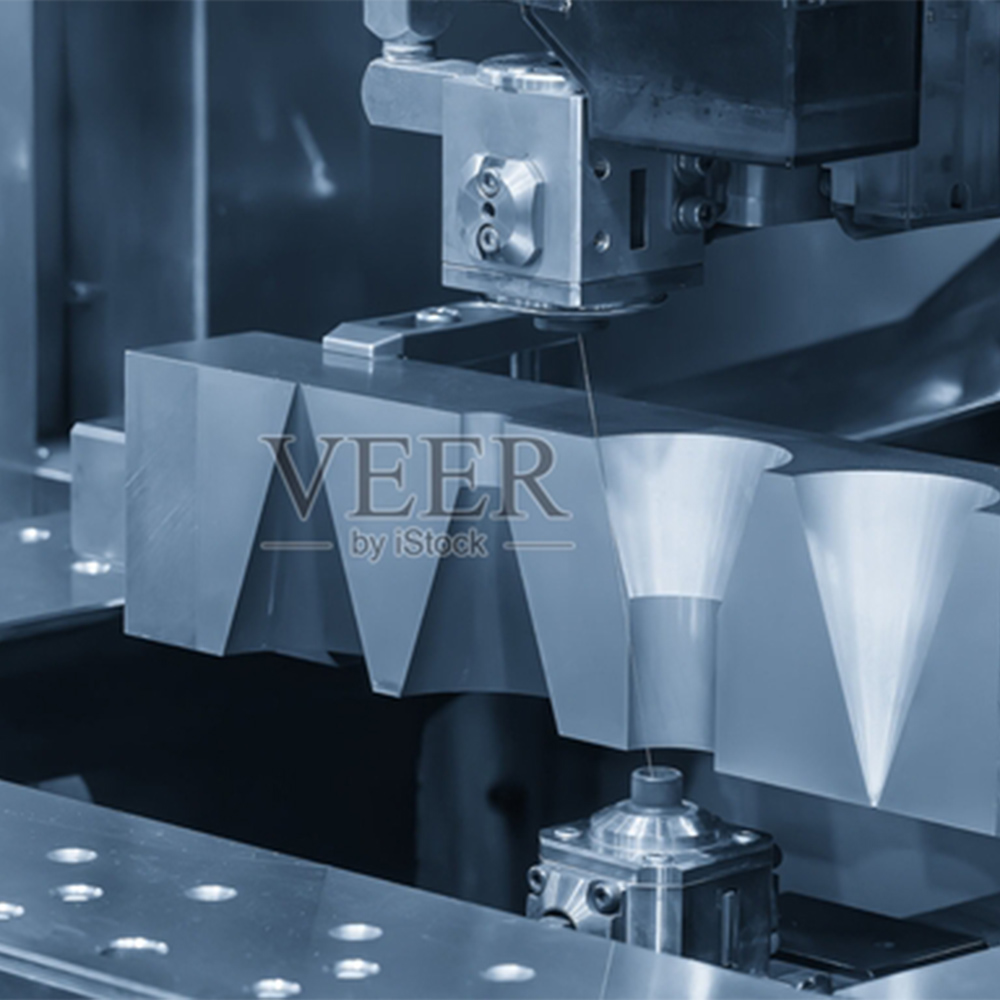
Wire cutting machine tool processing stamping die on site
-
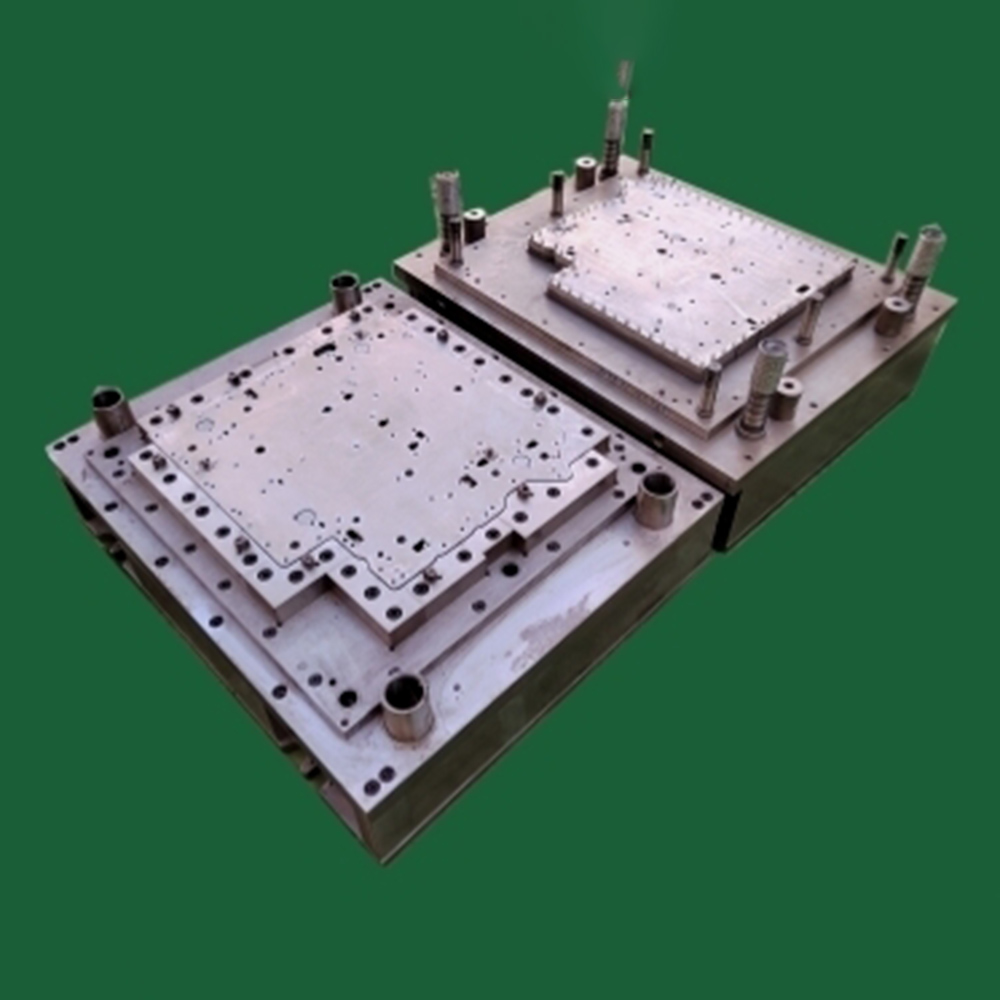
Multi-station continuous stamping die (integrated wire cutting)
-
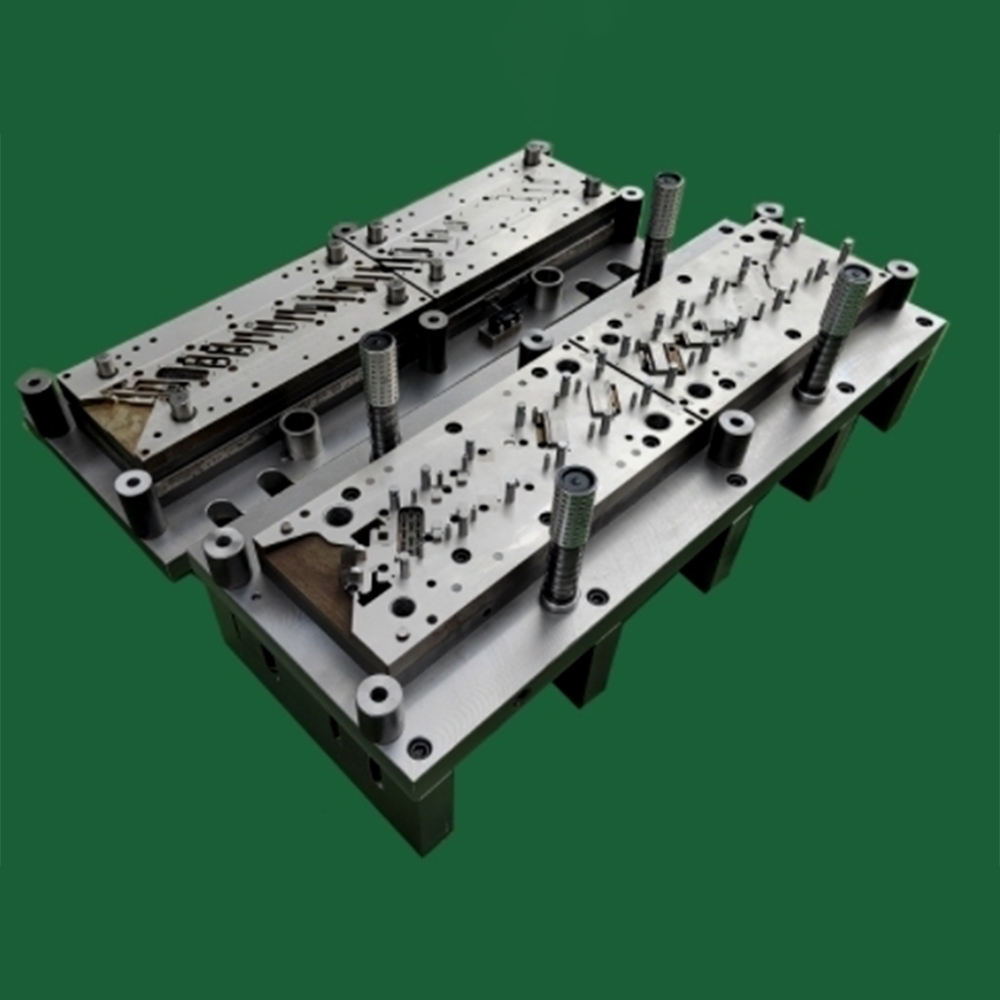
terminal progressive die (typical product of wire cutting)
-
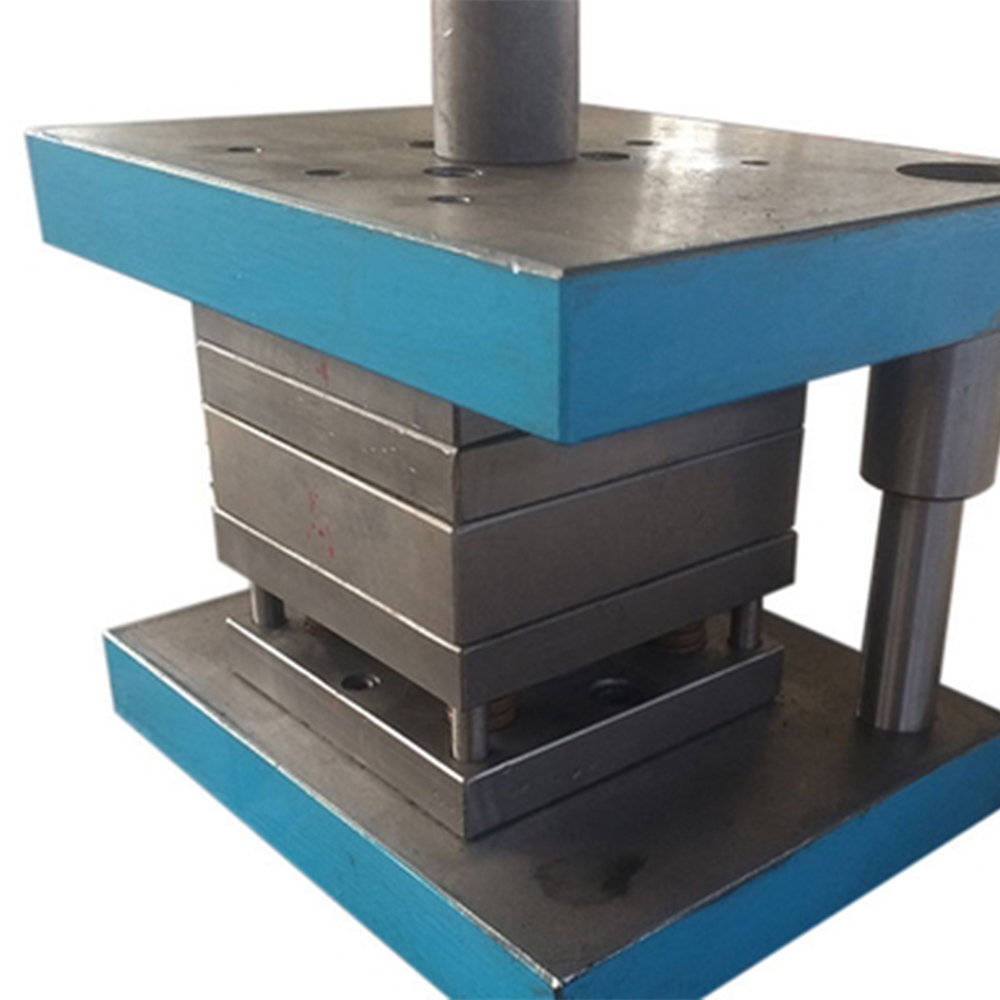
Motor silicon steel sheets, stator and rotor stamping molds (areas where wire cutting excels)