Leave Your Message
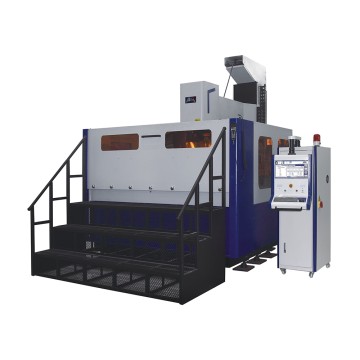
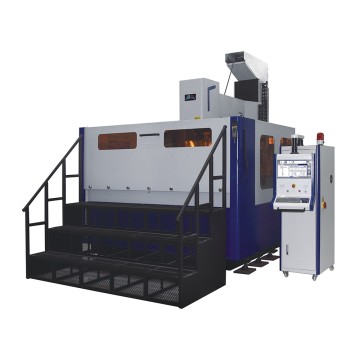
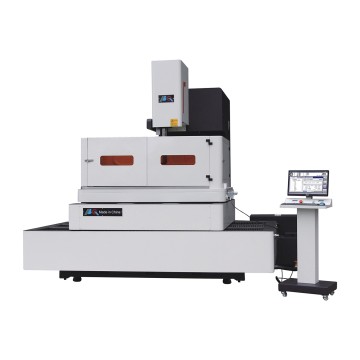
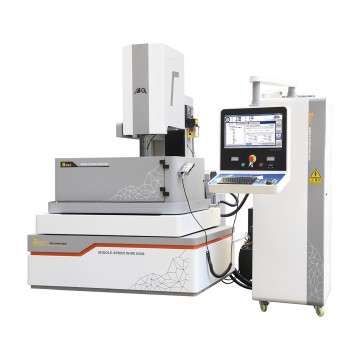
Explore our elite selection of multi-axis CNC wire cutting EDM systems configured specifically for critical aviation manufacturing operations.
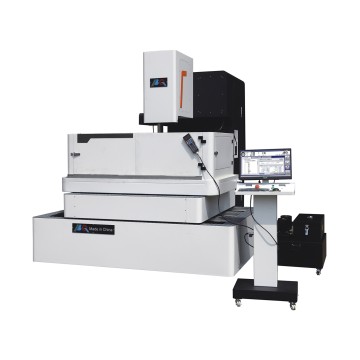
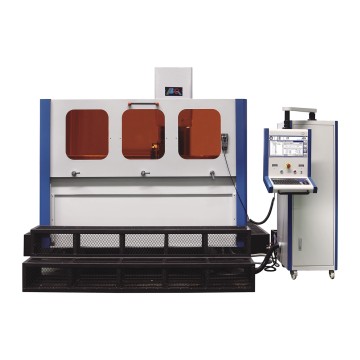
Analyzing the market drivers, strict safety mandates, and the rising demand for high-precision manufacturing solutions.
The aerospace and aviation sectors represent the absolute pinnacle of global manufacturing complexity, requiring tolerances measured in microns and materials engineered to withstand extreme physical forces. Historically, machining components for jet engines, fuselage structures, and avionics relied on traditional mechanical cutting tools. However, as modern commercial flight routes expand and military aircraft demand higher performance, the industry has transitioned rapidly. Today, CNC (Computer Numerical Control) technology, particularly advanced multi-axis Wire Electrical Discharge Machining (EDM), forms the backbone of modern aerospace factory floors.
From a global market perspective, the aerospace CNC machining sector is experiencing unprecedented growth. The commercial aviation rebound, combined with heavy investments in defense systems and private space exploration programs, has created a major bottleneck in component fabrication. Manufacturers are under constant pressure to optimize production throughput while maintaining zero-defect quality control. This commercial landscape demands highly reliable, automated machine tools that can operate continuously. CNC solutions must not only deliver high speed but must also integrate seamlessly into smart factories equipped with IoT monitoring and real-time diagnostic systems.
Aerospace manufacturing is strictly governed by international quality systems such as AS9100 and ISO 9001. Every component, from a tiny hydraulic valve actuator to a massive wing spar, must possess complete metallurgical traceability. Conventional machining methods often introduce micro-cracks or residual thermal stresses. This is where advanced CNC Wire EDM machines excel, offering stress-free cutting that satisfies FAA, EASA, and military aviation design regulations.
To reduce fuel consumption and carbon emissions, aerospace engineers are increasingly utilizing lightweight titanium alloys, carbon fiber reinforced polymers (CFRPs), and high-strength nickel superalloys (like Inconel). Machining these stubborn materials using traditional milling tools leads to rapid tool wear and high scrap rates. CNC Wire EDM bypasses physical tool contact entirely, using electrical discharges to vaporize material efficiently.
Furthermore, the commercial aviation supply chain has become highly decentralized. Leading aerospace OEMs (Original Equipment Manufacturers) rely on a global network of Tier 1 and Tier 2 suppliers. For these suppliers to secure lucrative contracts, they must demonstrate machining capabilities that go beyond standard 3-axis milling. Investing in 5-axis and 10-axis linkage CNC wire cutting systems allows manufacturers to produce intricate geometries in a single setup, dramatically reducing lead times, eliminating repositioning errors, and lowering overall labor costs. Consequently, advanced CNC machines are no longer a luxury but a crucial entry requirement for the modern aerospace supply chain.
How multi-axis linkage and spark erosion technologies solve the most complex manufacturing challenges in aviation engineering.
The turbine section of a jet engine operates under extreme temperatures and pressures, requiring turbine blades to be anchored to the rotor disc using complex, interlocking "fir-tree" root profiles. The tolerances required for these slots are exceptionally tight—often within ±5 microns. Any slight deviation can cause catastrophic engine failure due to centrifugal forces at high RPMs. CNC Wire EDM machines, particularly 5-axis systems, are the industry-standard solution for cutting these intricate slots. Because there is no mechanical force exerted on the workpiece, the delicate edges of the superalloy disc remain perfectly intact, free from burrs and micro-fractures.
Modern aviation engines demand highly optimized combustion to maximize fuel efficiency and minimize emissions. This efficiency depends heavily on the geometry of fuel injection nozzles, which feature micro-apertures and complex internal channels. Traditional drilling struggles to produce the non-circular, tapered holes necessary for optimal fuel atomization. Multi-axis CNC wire cutting EDM systems enable engineers to program complex paths, cutting microscopic channels with high aspect ratios in heat-resistant alloys. This capability directly supports the development of next-generation green aviation propulsion systems.
Wire EDM works by creating a continuous electrical spark between a thin traveling wire (usually brass or molybdenum) and the conductive workpiece. The spark erosion process vaporizes minute particles of the metal, which are then flushed away by a dielectric fluid. Because the wire never physically touches the metal, there is no tool wear, no mechanical stress, and virtually no heat-affected zone (HAZ) when utilizing advanced medium-speed control algorithms. This ensures the structural integrity of safety-critical aviation parts remains uncompromised.
Landing gear assemblies are subjected to massive impact forces during touchdown. These assemblies are constructed from ultra-high-strength steels and titanium alloys. CNC wire cutting is extensively used to shape the critical pivot joints, shock absorber brackets, and internal components of hydraulic actuators. The ability to cut deep, narrow slots and complex internal splines in hardened materials makes CNC wire EDM an invaluable asset for landing gear manufacturers who cannot afford material distortion or surface degradation.
In space exploration, weight reduction is the primary design goal. Spacecraft and satellite structures use complex pocketing and rib designs to maintain structural rigidity while minimizing mass. CNC wire cutting EDM machines are used to slice thin-walled titanium frames and honeycomb structural panels. The precision of 5-axis and 10-axis linkage machines allows for the creation of ultra-thin ribs that would collapse under the force of a traditional CNC milling cutter, enabling space agencies to launch lighter and stronger payloads into orbit.
While aerospace represents the pinnacle of precision, our CNC wire cutting technologies serve a wide range of high-demand industrial sectors globally.

The medium speed molybdenum wire cutting spark machine (medium speed wire), with its core characteristics of high precision and efficiency, plays a key role in robotics...
Read more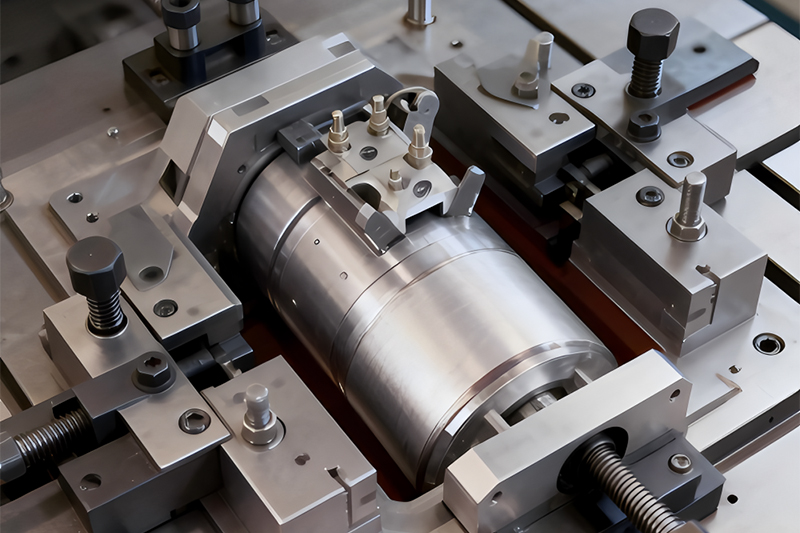
In the mechanical processing industry, wire cutting plays a dual role of universal machining supplement and precision finish operations for complex geometries...
Read more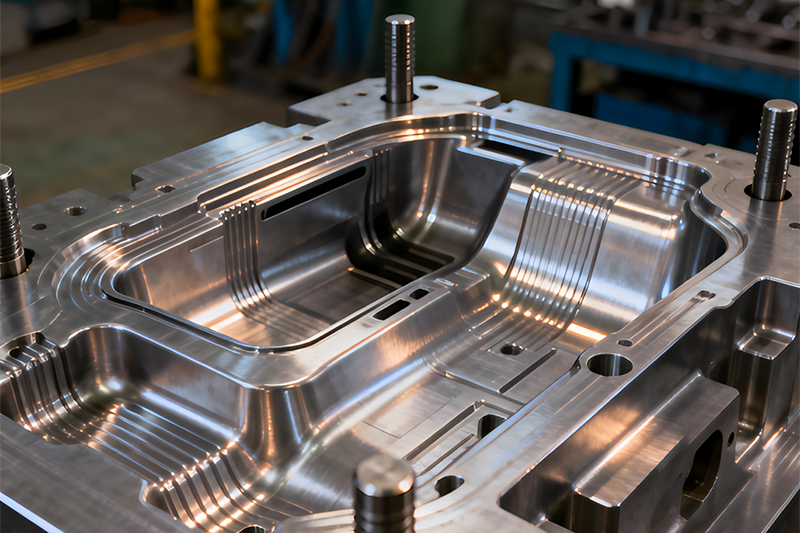
The core advantage of wire cutting in the automotive industry lies in its high efficiency, high precision, and stability, essential for mass-producing engine components...
Read more
The application of wire cutting in the medical industry is a typical extension of its precision machining capabilities, producing surgical tools and implants...
Read more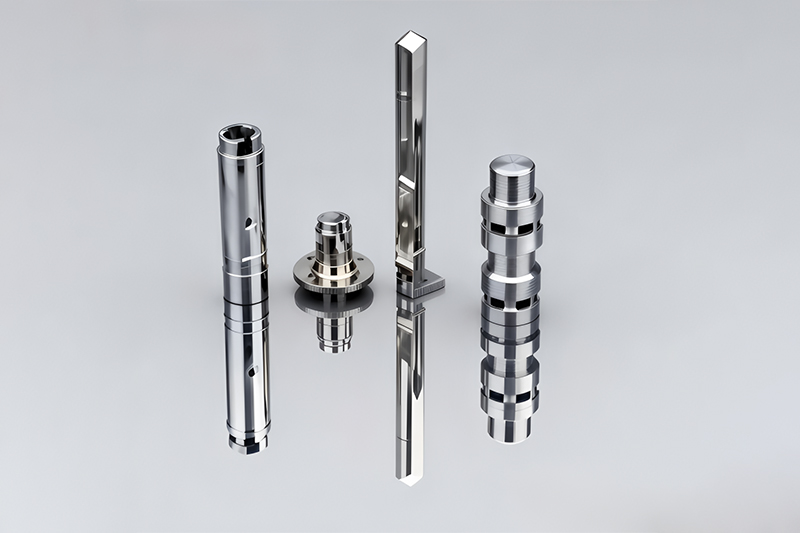
Wire-cutting EDM CNC machine tools (referred to as wire cutting) occupy an irreplaceable core position in the mold making industry, ensuring perfect die mating...
Read more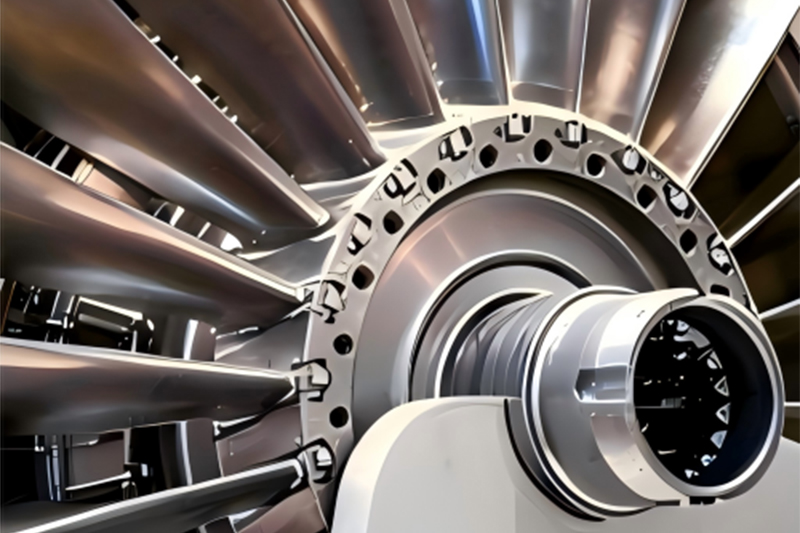
The application of wire cutting in the aerospace industry can be said to represent the pinnacle of its machining capabilities, meeting the highest standards...
Read moreHow AI, multi-axis synchronization, and eco-friendly engineering are defining the next decade of flight manufacturing.
The aerospace industry is moving away from modular assemblies toward single-piece components (monolithic structures) to reduce weight and points of failure. Machining these complex, continuous profiles requires 5-axis, 6-axis, and even 10-axis simultaneous CNC linkage. By dynamically adjusting the angle of the wire guide relative to the workpiece, modern CNC wire EDM machines can cut variable tapers and complex helical shapes in a single continuous pass. This reduces setup times, eliminates alignment errors, and delivers the aerodynamically optimized surfaces required for supersonic flight.
The integration of Artificial Intelligence (AI) into CNC systems is transforming the factory floor. Modern EDM generators use real-time sensor feedback to monitor spark stability thousands of times per second. If the system detects a risk of wire breakage due to a sudden change in material thickness or flushing conditions, the AI algorithm instantly adjusts the discharge parameters and wire speed. This closed-loop control guarantees consistent surface finishes, prevents damage to expensive aerospace alloys, and enables reliable, lights-out automated manufacturing.
Historically, brass wire EDM offered superior surface finishes but at a higher operating cost due to the single-use nature of the wire. The development of medium-speed molybdenum wire cutting EDM machines has revolutionized the industry, particularly in Asian manufacturing hubs. Molybdenum wire can be reused multiple times, significantly lowering operating costs while achieving surface roughness values (Ra) below 0.4 microns. This makes it an incredibly cost-effective solution for aerospace suppliers who need to balance extreme precision with competitive pricing.
As the aviation industry commits to achieving net-zero carbon emissions, manufacturers are auditing the environmental impact of their production processes. Traditional machining consumes large volumes of cutting fluids that require hazardous waste disposal. CNC Wire EDM systems are increasingly utilizing bio-degradable dielectric fluids and energy-efficient power generators. By reducing power consumption during long machining cycles and optimizing wire consumption, modern CNC machines align perfectly with the green aviation initiatives championed by major global aerospace consortia.
Ultimately, the future of aerospace manufacturing belongs to those who can master the integration of hardware precision and software intelligence. As next-generation aircraft designs incorporate composite metal matrix materials and additive-manufactured (3D printed) metal preforms, the role of CNC wire EDM will expand even further. It will serve as the primary subtractive finishing method to remove support structures and refine critical mating surfaces on complex 3D printed aerospace components, uniting the best of additive and subtractive manufacturing technologies.
Select from our comprehensive range of high-precision machines engineered for aerospace, defense, and high-tech industrial applications.