
Leave Your Message
Precision-engineered solutions for the most demanding electronic component fabrication
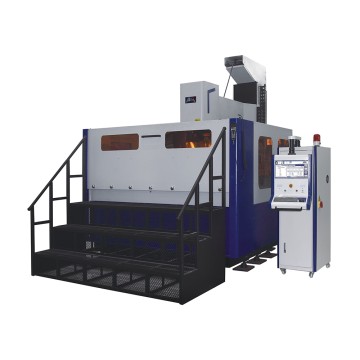
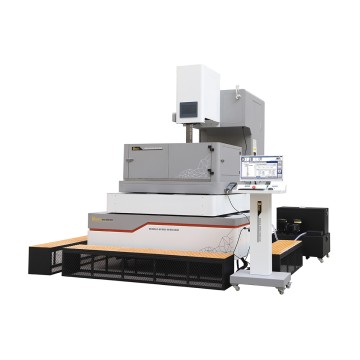
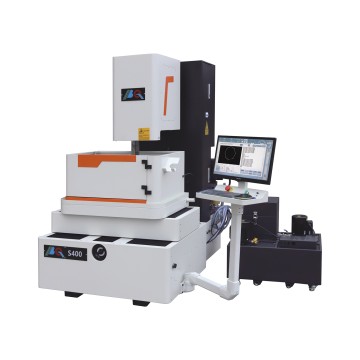
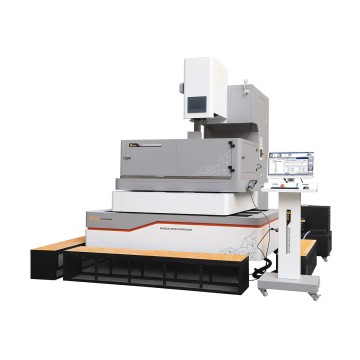
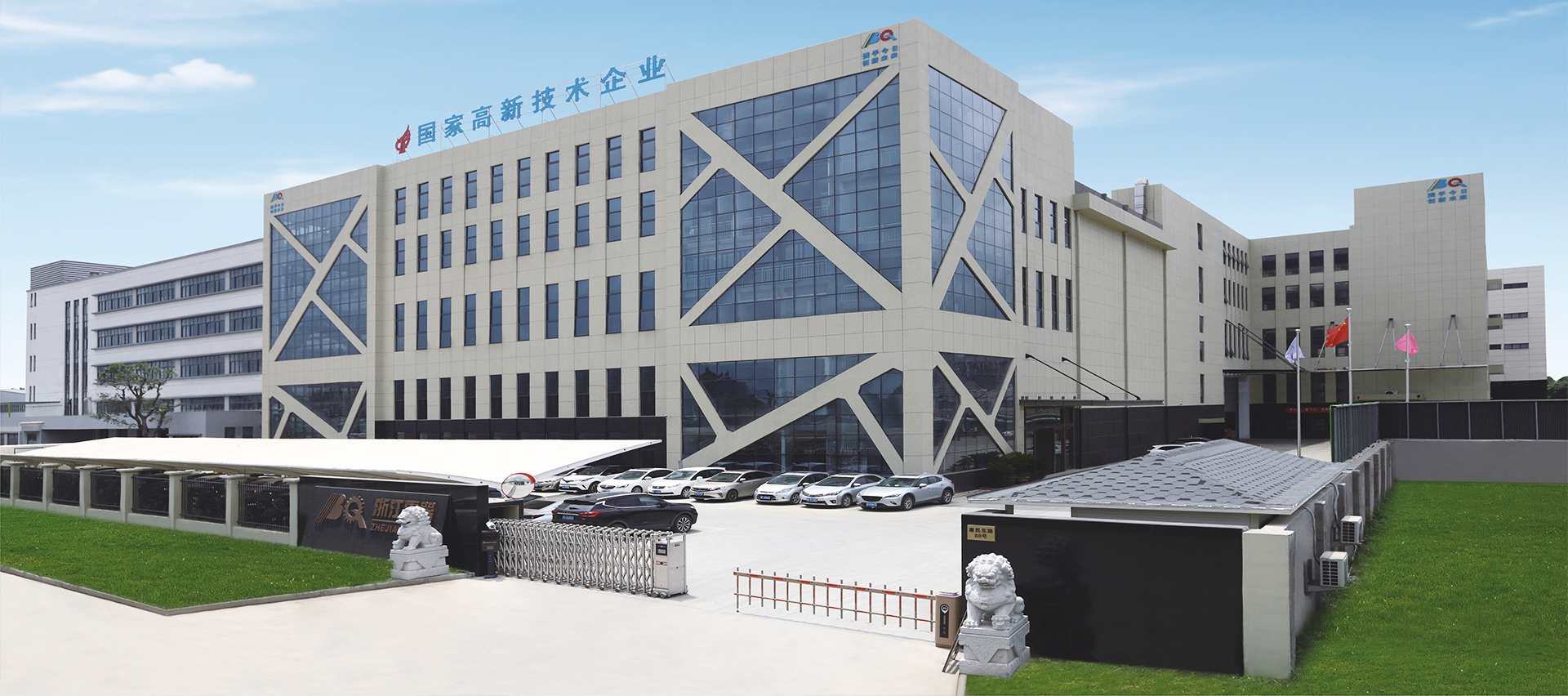
Zhejiang Baqi Intelligent Equipment Co., Ltd. is a modern technology-based enterprise engaged in the research, development, production, and sales of medium-speed wire EDM machines. It has a strong R&D team engaged in the development of core processing software, hardware, and intelligent integration.
It possesses tens of thousands of square meters of constant temperature assembly workshops and imported pentahedral horizontal machining centers, guideway grinding machine and testing equipment, to ensure the progressiveness and stability of products. The product is widely used in hardware molds, plastic molds, tooling and metallurgy tools, auto parts, military defense, ships and other supporting projects in many fields.
The company has a quality management system, sales management system, and after-sales management system that strictly follow advanced operating procedures, standardized execution, fully recognized by customers. The product has covered various domestic markets as well as international markets such as Vietnam and Russia.
The company puts customers at the center, with the core concept of "Precision casting of Baqi powerful tools, intelligent expansion of the future", and strives to provide global special processing services one-stop supporting solutions.

Electrical Discharge Machining (EDM) — commonly referred to as EDM burning or spark erosion — is a non-contact, thermal material removal process that uses controlled electrical discharges to shape conductive materials with extraordinary precision. In semiconductor and electronics manufacturing, where tolerances are measured in microns and component complexity is ever-increasing, EDM burning has become an indispensable technology.
EDM burning operates by generating rapid electrical sparks between a conductive tool electrode and the workpiece, separated by a dielectric fluid. Each spark removes a minute amount of material from the workpiece surface. By precisely controlling spark frequency, energy, and electrode positioning via CNC systems, manufacturers can achieve surface finishes and dimensional accuracies unattainable by conventional cutting methods — making it ideal for ultra-hard materials like tungsten carbide, silicon, and advanced ceramics used in semiconductor devices.
Wire EDM (WEDM) uses a thin, continuously fed wire as the electrode to cut complex two-dimensional and three-dimensional profiles with sub-micron precision — perfect for semiconductor lead frames, IC packaging components, and fine-pitch connectors. Die-sinking EDM creates cavities and molds used for encapsulation tooling, PCB press tools, and micro-mold inserts. Together, these two EDM variants cover virtually every precision machining need in modern electronics production lines.
Semiconductor manufacturing demands machining of exotic materials that defeat conventional tools: silicon carbide wafer carriers, molybdenum heat spreaders, tungsten carbide bonding capillaries, beryllium copper contact springs, and polycrystalline diamond (PCD) dicing blades. EDM burning processes all these materials without mechanical stress, preserving the crystalline structure and electrical properties critical to device performance — a capability no other machining technology can match at this scale.
Modern semiconductor packaging requires tolerances as tight as ±1 µm on lead frame features, ±2 µm on mold cavity dimensions, and surface roughness values below Ra 0.1 µm on critical sealing surfaces. Baqi's medium-speed CNC wire EDM machines achieve positioning accuracy of ±0.002 mm and surface finish Ra ≤ 0.4 µm in standard operation, with multi-cut strategies delivering Ra ≤ 0.1 µm — fully meeting the demanding specifications of IC packaging, MEMS device fabrication, and advanced PCB tooling.
The global EDM machine market is experiencing robust growth driven by the explosive expansion of semiconductor fabrication, consumer electronics miniaturization, and the electrification of automotive and industrial systems. Understanding the current industrial landscape helps manufacturers make informed investment decisions.
The global EDM machine market is projected to surpass USD 8.5 billion by 2030, growing at a CAGR of over 6.8%. Semiconductor and electronics manufacturing accounts for more than 35% of total EDM machine demand, driven by new fab construction in Asia, North America, and Europe. Government-backed initiatives like the US CHIPS Act and EU Chips Act are accelerating capital investment in precision machining infrastructure, with EDM equipment at the forefront of toolroom and production floor upgrades.
China, Taiwan, South Korea, and Japan collectively represent over 65% of global semiconductor production capacity, and these regions are also the largest consumers of EDM burning equipment. China's domestic semiconductor push has created unprecedented demand for locally manufactured, high-precision EDM machines. Zhejiang Baqi's medium-speed CNC wire EDM machines are positioned at the intersection of quality and cost-efficiency, capturing market share from both domestic buyers and export markets in Southeast Asia, Russia, and beyond.
The EDM industry has transitioned from purely mechanical systems to fully digitized, AI-assisted CNC platforms. Medium-speed wire EDM — the core product category of Baqi — occupies the sweet spot between slow-wire precision (typically Swiss or Japanese brands) and fast-wire economy, offering Chinese manufacturers a competitive edge in cost-per-part for high-volume electronics tooling applications. With 120+ patents, Baqi's proprietary pulse generators, adaptive control algorithms, and intelligent wire tension management systems represent significant technological differentiation in this competitive landscape.
EDM burning machines are increasingly integrated into smart factory ecosystems. Real-time MES (Manufacturing Execution System) connectivity, automated workpiece loading/unloading via robotic arms, and predictive maintenance powered by IoT sensors are becoming standard requirements for semiconductor fab toolrooms. Baqi's intelligent equipment platform supports these integrations, enabling customers to achieve OEE (Overall Equipment Effectiveness) rates above 85% in continuous production environments — a critical metric for high-volume IC packaging and lead frame manufacturing.
Electronics manufacturers face increasing pressure to reduce environmental impact. Modern EDM burning systems address this through closed-loop dielectric fluid recycling, reduced power consumption via intelligent pulse modulation, and elimination of cutting fluids and mechanical tool wear debris. Baqi's machines comply with international environmental standards, supporting customers' ESG commitments while maintaining the precision and throughput required for competitive semiconductor manufacturing.
The semiconductor industry's push toward lights-out manufacturing has elevated demand for EDM machines capable of unattended, 24/7 operation. Automatic wire threading (AWT), broken wire detection and recovery, adaptive spark gap control, and remote monitoring via cloud dashboards are now essential features. Baqi's multi-axis CNC wire EDM platforms support unmanned overnight runs with automatic workpiece repositioning, dramatically reducing labor costs per part in high-mix, medium-volume electronics tooling production.
The convergence of Industry 4.0, AI-driven process optimization, and the relentless miniaturization of electronic devices is reshaping the EDM burning landscape. Here are the key trends defining the next decade of EDM technology in semiconductor and electronics manufacturing.
Machine learning algorithms are being integrated directly into EDM CNC controllers to enable real-time optimization of spark parameters based on workpiece material feedback. AI systems can predict and prevent wire breakage, optimize cutting speed for varying material thicknesses, and self-calibrate surface finish parameters — reducing setup time by up to 60% and improving first-part accuracy. For semiconductor tooling where each setup involves expensive materials and tight schedules, AI-driven EDM represents a transformative productivity leap.
As semiconductor packaging advances toward heterogeneous integration, chiplet architectures, and fan-out wafer-level packaging (FOWLP), the demand for finer wire EDM electrodes is intensifying. Wire diameters are shrinking from the standard 0.25 mm to 0.05 mm and below, enabling feature sizes below 100 µm on lead frames and interposer components. Next-generation medium-speed EDM machines must support ultra-fine wire operation with enhanced wire tension control and nano-precision positioning systems — an area of active R&D at Baqi's engineering center.
The industry is witnessing the emergence of hybrid machines that combine EDM burning with metal additive manufacturing (AM) in a single platform. Parts can be near-net-shape printed and then EDM-finished to final dimensions without re-fixturing — dramatically reducing lead times for complex semiconductor tooling components. This hybrid approach is particularly valuable for producing conformal cooling inserts for IC molding tools, where both internal geometry complexity and external dimensional accuracy are paramount.
Digital twin technology is enabling semiconductor manufacturers to simulate entire EDM burning processes in virtual environments before cutting a single part. By modeling electrode wear, thermal distortion, and dielectric flow dynamics, engineers can optimize programs offline and validate quality outcomes digitally — eliminating costly physical trials on expensive semiconductor-grade materials. Cloud-based digital twin platforms also enable remote expert support, reducing downtime and enabling rapid process transfer between global manufacturing sites.
Traditional 4-axis wire EDM is giving way to 5-axis and 10-axis linkage systems capable of machining complex tapered, twisted, and compound-angle features in a single setup. Baqi's BQ2015DYB 10-axis linkage machine exemplifies this trend, enabling semiconductor equipment manufacturers to produce turbine-blade-profile cooling fins, complex cam surfaces for wire bonding equipment, and multi-angle guide features for automated chip handling systems — all without the accuracy-degrading re-fixturing required by conventional multi-setup approaches.
From wafer processing equipment to final device packaging, EDM burning touches virtually every stage of the semiconductor and electronics value chain. Here is an in-depth analysis of the most critical application scenarios where Baqi's CNC wire EDM machines deliver measurable competitive advantage.
Lead frames are the structural backbone of packaged integrated circuits, providing electrical interconnection between the die and the printed circuit board. Wire EDM is the dominant technology for producing lead frame stamping dies and progressive die sets, where feature pitches as fine as 0.2 mm and tolerances of ±1.5 µm are standard requirements. Baqi's high-precision 5-axis machines achieve the sub-2 µm positioning accuracy and Ra ≤ 0.2 µm surface finish required for long-life lead frame tooling that produces billions of components without dimensional drift.
Printed circuit board manufacturing relies on precision punching, routing, and forming tools that must maintain accuracy across millions of cycles. Wire EDM produces the carbide punch-and-die sets, blanking tools, and forming inserts used in PCB fabrication with the tight tolerances and superior surface quality that extend tool life and maintain board dimensional accuracy. For flexible PCB (FPCB) tooling, EDM burning enables the ultra-sharp cutting edges and complex profile geometries that prevent delamination and ensure clean cuts in multi-layer flexible substrates.
Micro-Electro-Mechanical Systems (MEMS) — including accelerometers, gyroscopes, pressure sensors, and RF switches — require machining features at scales where EDM burning is uniquely capable. Micro-EDM processes can produce through-holes as small as 50 µm diameter in stainless steel MEMS housings, create complex 3D micro-cavities in silicon wafer handling fixtures, and machine the precision nozzles and orifices used in inkjet print heads and microfluidic chips. As IoT device proliferation drives MEMS volume growth, EDM burning capacity in this segment is expanding rapidly.
The machines that manufacture semiconductors — lithography systems, CVD reactors, ion implanters, and CMP polishers — themselves require precision-machined components of extraordinary quality. Wafer end-effectors, robot arm blades, chuck bodies, and gas distribution plates must be machined from silicon carbide, quartz, or ultra-high-purity aluminum alloys to sub-micron flatness and cleanliness standards. Wire EDM produces the complex profiles and precision holes in these components without the contamination risk of conventional machining, meeting the stringent cleanroom compatibility requirements of semiconductor equipment OEMs.
The global rollout of 5G infrastructure and mmWave communication systems has created surging demand for precision RF components: waveguide assemblies, cavity filters, antenna array elements, and power amplifier heat sinks. These components require complex internal geometries, extremely tight dimensional tolerances, and superior surface finish to maintain RF performance. EDM burning — particularly wire EDM for slot and aperture features, and die-sinking EDM for cavity formation — is the enabling technology for 5G hardware manufacturing, with Baqi's machines serving antenna and RF module producers across Asia and beyond.
The electrification of transportation is driving massive investment in power semiconductor devices — IGBTs, SiC MOSFETs, and GaN transistors — and their associated packaging and assembly tooling. Wire EDM machines produce the precision sintering molds, bonding tool guides, and busbar stamping dies used in EV power module manufacturing. The ability of EDM to machine sintered tungsten-copper heat spreaders and silicon carbide substrates without cracking or stress is particularly valuable in this rapidly growing application segment, where Baqi's machines are increasingly specified by Tier-1 EV supply chain manufacturers.
Quality first, customer first, and credit-based.
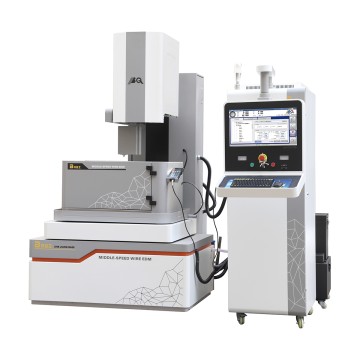
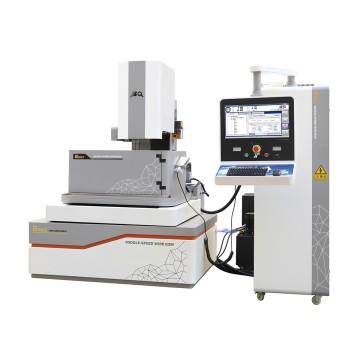
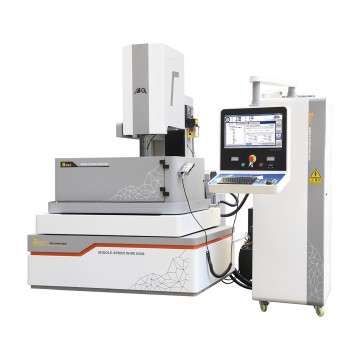
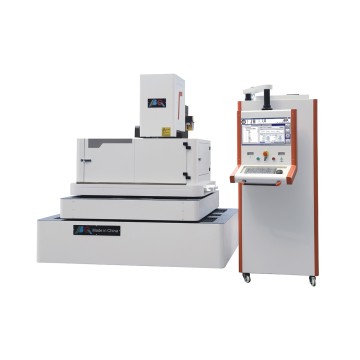
From R&D innovation to global after-sales support, Baqi delivers a complete EDM burning solution ecosystem tailored to the precision demands of modern electronics manufacturing.
Baqi's in-house R&D team has developed proprietary pulse generators, adaptive gap control algorithms, and intelligent wire management systems that deliver measurable performance advantages over generic EDM platforms in semiconductor tooling applications.
Our 50,000 m² facilities feature constant-temperature assembly workshops and imported pentahedral horizontal machining centers, ensuring that every Baqi EDM machine is built and calibrated to the thermal stability standards required for semiconductor-grade precision.
With partners in over 30 countries including Vietnam, Russia, and growing Southeast Asian markets, Baqi provides localized technical support, spare parts logistics, and application engineering expertise to keep your electronics production running at peak efficiency.
From 5-axis precision models to 10-axis linkage big-swing configurations, Baqi's product range covers the full spectrum of semiconductor tooling complexity — enabling customers to consolidate multiple machining operations onto a single intelligent EDM platform.
Baqi's comprehensive service ecosystem includes installation commissioning, operator training, remote diagnostics, preventive maintenance programs, and rapid spare parts supply — ensuring maximum uptime and lowest total cost of ownership for electronics manufacturers worldwide.
Baqi's medium-speed CNC wire EDM machines deliver slow-wire-class precision at medium-speed economics, providing electronics manufacturers with the optimal balance of quality, throughput, and cost-per-part that drives competitive advantage in high-volume semiconductor tooling production.
Explore our full lineup of precision CNC wire EDM machines — engineered for the most demanding electronics manufacturing environments
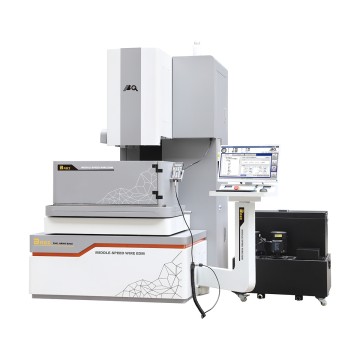
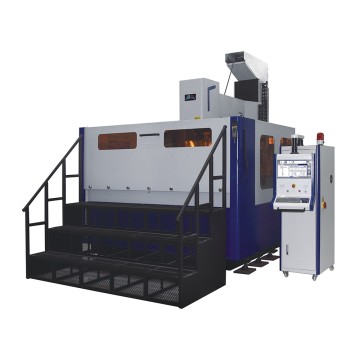
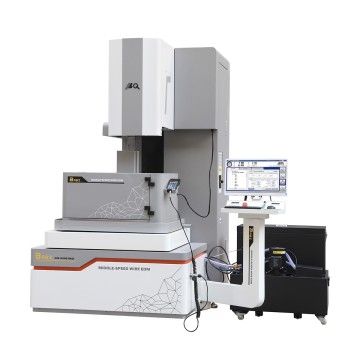
Contact Zhejiang Baqi's global application engineering team today to discuss your EDM burning requirements, request a technical consultation, or arrange a live machine demonstration at our facility.
Get a Free Consultation