Leave Your Message
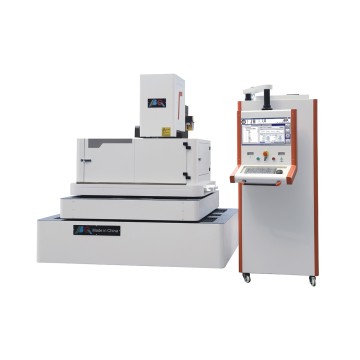
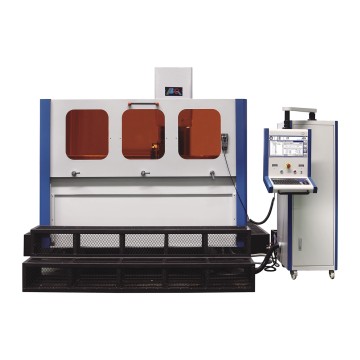
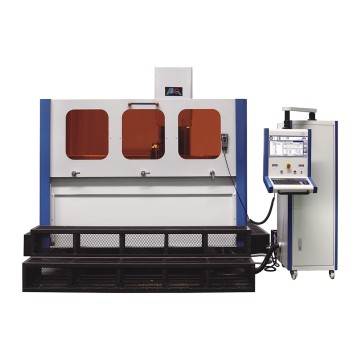
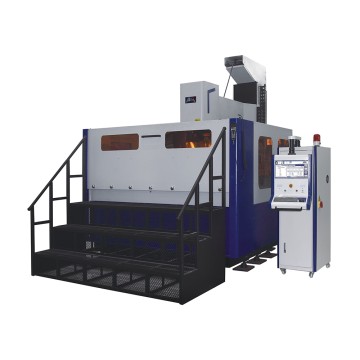
The global aerospace and aviation manufacturing sector represents one of the most technically demanding environments for CNC machining technology. With the commercial aviation market projected to exceed $430 billion by 2030, and defense aerospace expenditure continuing to rise across major economies, the demand for ultra-precise CNC tools has never been greater. Every structural component — from turbine blades and fuel nozzles to landing gear brackets and avionics housings — must meet tolerances measured in microns, often within complex geometries that only advanced multi-axis CNC wire EDM machines can achieve.
CNC Wire Electrical Discharge Machining (EDM) has emerged as the definitive technology for aerospace part fabrication. Unlike conventional cutting, wire EDM uses a precisely controlled electrical discharge to erode material without mechanical contact, eliminating tool pressure and enabling the machining of exotic alloys such as titanium, Inconel, and hardened stainless steel — materials ubiquitous in aerospace engineering. The ability to maintain surface integrity while producing complex tapered profiles and micro-features makes wire EDM irreplaceable in modern aerospace production lines.
"In aerospace manufacturing, a tolerance error of just a few microns can have catastrophic consequences. CNC Wire EDM technology is the cornerstone of precision — delivering repeatable accuracy, superior surface finish, and the ability to machine superalloys that no other process can match at scale."
Industry leaders including Boeing, Airbus, Rolls-Royce, and GE Aviation have progressively integrated advanced multi-axis CNC wire EDM systems into their supply chains. Tier-1 and Tier-2 suppliers worldwide are following suit, recognizing that investment in high-precision EDM infrastructure is essential to winning and retaining aerospace contracts that demand AS9100 and ISO 9001 quality compliance.
Achieves tolerances as tight as ±0.002mm, meeting the stringent dimensional requirements of turbine blades, nozzle guides, and fuel system components where micron-level accuracy is non-negotiable.
Machines titanium, Inconel 718, Hastelloy, and other aerospace superalloys without inducing heat-affected zones or mechanical stress — preserving the metallurgical integrity of safety-critical parts.
5-axis and 10-axis linkage configurations enable the production of complex tapered, contoured, and multi-plane geometries found in turbine disc slots, honeycomb seals, and structural brackets.
Delivers Ra values down to 0.4μm, reducing the need for secondary finishing operations and ensuring aerodynamic surfaces meet fatigue and corrosion resistance specifications.
Automated wire threading, intelligent CNC control systems, and closed-loop feedback ensure consistent quality across production runs — essential for AS9100-certified aerospace supply chains.
Next-generation EDM systems incorporate AI-powered adaptive control that optimizes cutting parameters in real time, reducing cycle times and minimizing wire breaks during unattended overnight machining.
Turbine blades and disc fir-tree slots demand the highest levels of precision and surface integrity. Wire EDM is the only viable process for machining the complex fir-tree root profiles on nickel superalloy turbine discs used in jet engines. The non-contact cutting process eliminates residual stress and maintains the grain structure of the alloy, which is critical for fatigue life at operating temperatures exceeding 1,000°C. Multi-axis wire EDM systems can simultaneously machine multiple blade root profiles, dramatically reducing cycle time for engine overhaul and new production programs.
Modern commercial aircraft such as the Boeing 787 and Airbus A350 use titanium for up to 15% of their structural weight. Wire EDM is extensively used to machine titanium wing spars, bulkheads, and fuselage frames to net shape, minimizing the buy-to-fly ratio and reducing material waste. Large-format 10-axis EDM machines with big-swing capability can accommodate oversized titanium billets, making them ideal for machining long structural members that require complex tapered profiles along their length.
Fuel injection nozzles, metering valves, and hydraulic actuator components require micro-precision orifices and complex internal geometries that are beyond the capability of conventional milling or turning. Wire EDM produces these features with absolute dimensional repeatability in stainless steel and Inconel, ensuring consistent fuel flow characteristics across entire engine production batches. The process is equally suited to the production of hydraulic servo valve bodies where spool bore tolerances of ±0.001mm are routinely required.
Avionics enclosures, waveguide components, and electromagnetic interference (EMI) shielding structures demand tight-tolerance machining in aluminum alloys and specialty materials. Wire EDM is used to produce the complex slot patterns, precision apertures, and thin-wall features required in radar housings, antenna structures, and electronic warfare system components. The burr-free cutting characteristic of wire EDM is particularly valuable in avionics manufacturing, where any metallic debris could cause catastrophic electronic failures.
Landing gear components are manufactured from ultra-high-strength steels (300M, 4340) with hardness values up to 54 HRC. Conventional machining of these materials is extremely challenging and costly. Wire EDM cuts hardened steel with equal ease regardless of hardness, making it the preferred process for producing precision slots, lugs, and attachment features on main landing gear beams, side stays, and drag braces. The ability to machine after heat treatment eliminates distortion concerns associated with post-machining thermal processing.
The commercial space sector is experiencing unprecedented growth, with satellite constellations from SpaceX, OneWeb, and Amazon Kuiper driving demand for high-volume precision components. Wire EDM is used to machine satellite bus structures in aluminum and CFRP-bonded metal assemblies, thruster components in refractory metals such as molybdenum and tungsten, and precision deployment mechanisms. The technology's ability to machine complex 3D geometries in a single setup reduces assembly requirements and improves the reliability of space-qualified hardware.
The world's first AI-powered intelligent CNC systems are now entering production, using machine learning algorithms to adapt cutting parameters in real time based on material feedback, reducing scrap rates by up to 40% on complex aerospace alloys.
Modern EDM machines are being integrated into digital factory ecosystems with real-time data streaming, predictive maintenance algorithms, and digital twin simulation — enabling aerospace manufacturers to achieve zero-defect production targets.
New-generation EDM systems feature energy-efficient power supplies, closed-loop dielectric fluid recycling, and reduced wire consumption technology — aligning with aerospace OEM sustainability commitments and tightening environmental regulations.
The evolution from 5-axis to 10-axis and 11-axis linkage configurations enables the single-setup machining of previously impossible geometries, including compound-tapered turbine seals and helical aerospace fastener profiles.
Wire EDM is increasingly used as the precision finishing stage in hybrid additive manufacturing workflows — removing support structures and achieving final tolerances on 3D-printed titanium and Inconel aerospace components that cannot be achieved by any other subtractive process.
Integrated automatic wire threading, robotic part loading, and AI-driven process monitoring now enable true lights-out manufacturing — with aerospace EDM cells running 24/7 unattended production, dramatically reducing per-part costs for high-volume programs.

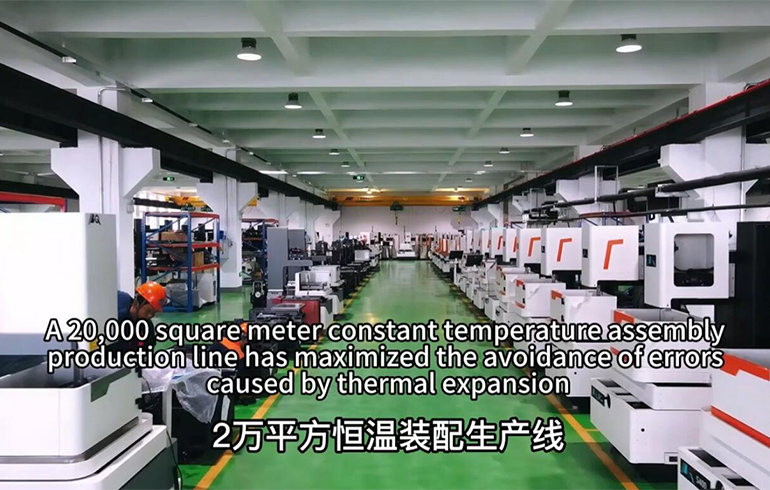
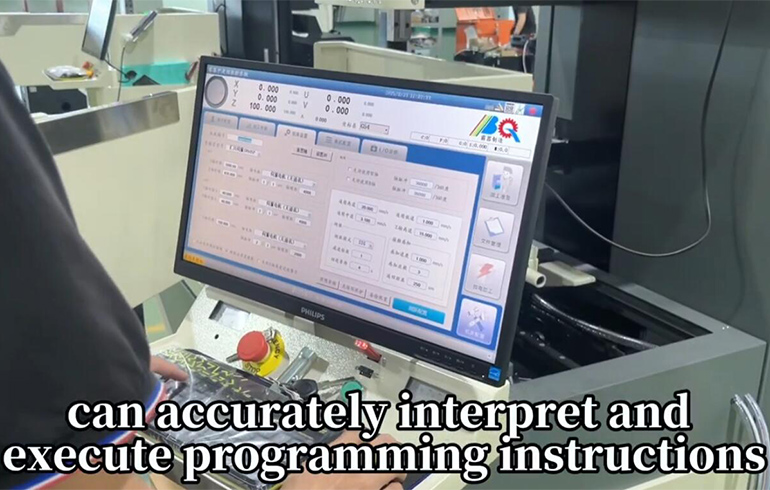
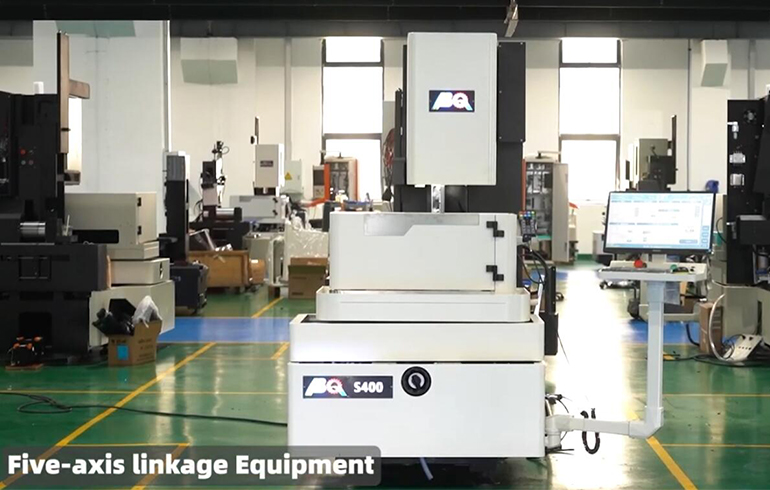
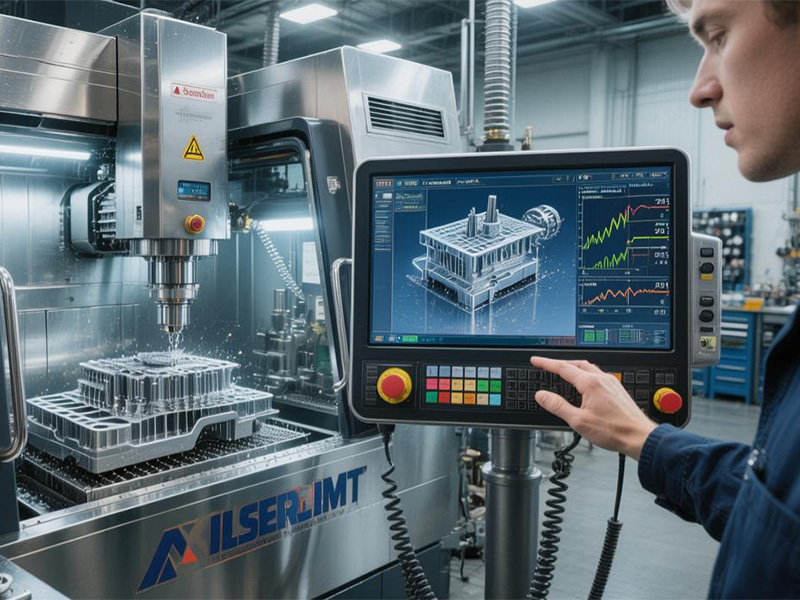
A breakthrough in aerospace manufacturing technology — the new AI-driven CNC system adapts cutting parameters in real time, setting a new benchmark for precision and efficiency in aviation component production.
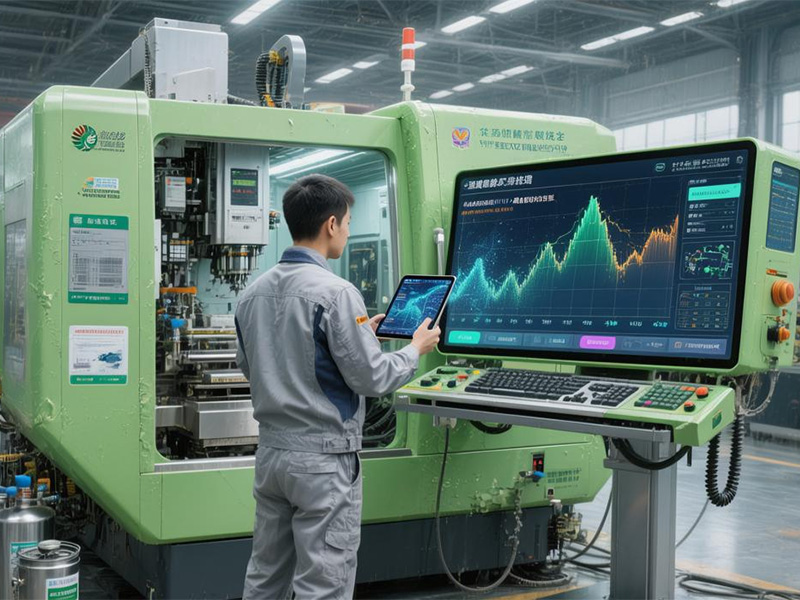
Aerospace manufacturers are accelerating green and digital transformation initiatives, with next-generation CNC EDM systems leading the way in energy efficiency, waste reduction, and smart factory integration.
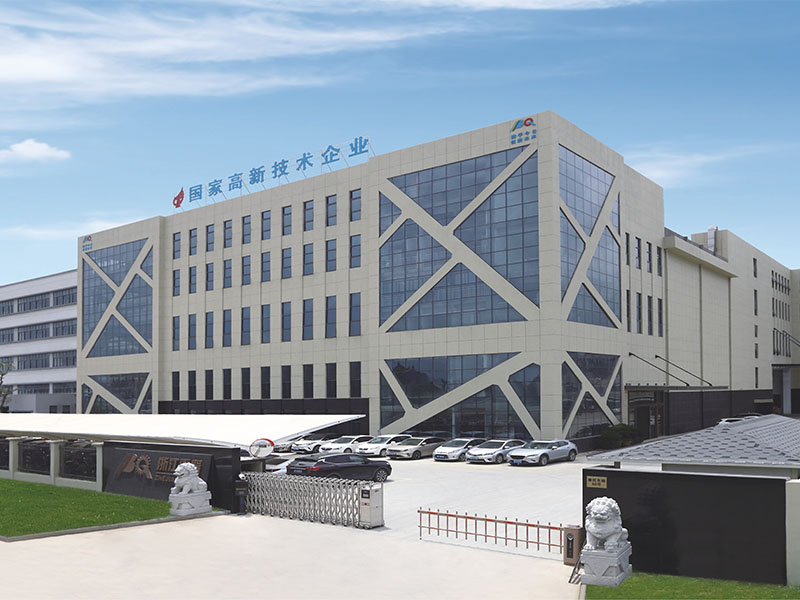
The latest 11-axis, 10-linkage large-taper wire EDM machine expands the boundaries of aerospace component geometry, enabling the machining of compound-tapered turbine seals and complex airframe profiles in a single automated setup.