Leave Your Message
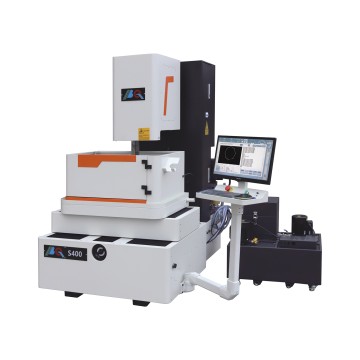
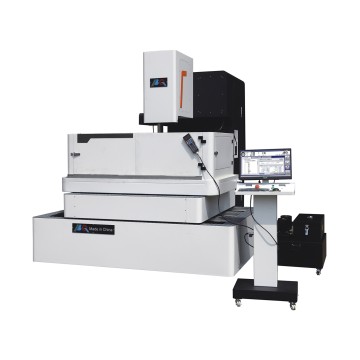
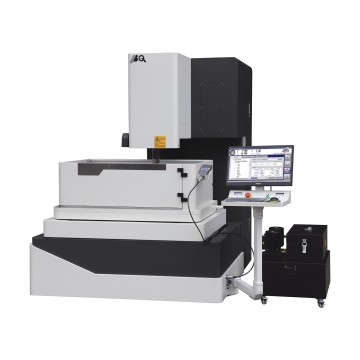
Flagship medium-speed wire EDM systems engineered specifically for complex aerospace geometries, turbine blisk machining, and exotic alloy fabrication.
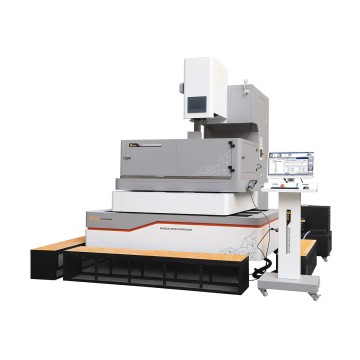
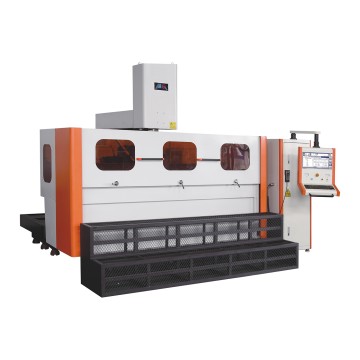
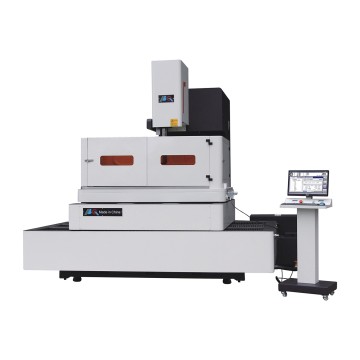
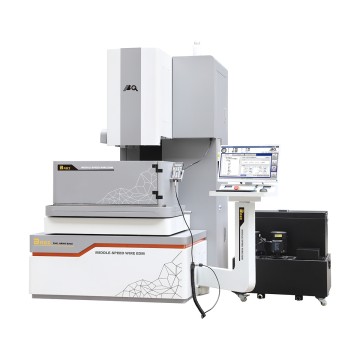
The aerospace and aviation industry operates under the most stringent dimensional and thermal tolerances known in global manufacturing. Components deployed in commercial airliners, military fighter jets, launch vehicles, and satellite constellations must withstand hyper-thermal conditions, intense mechanical stresses, and severe aerodynamic loads. In this hyper-demanding ecosystem, traditional chip-removal machining methods encounter extreme physical limitations when processing refractory metals, nickel-based superalloys (such as Inconel 718, Inconel 625), and titanium aluminides. Advanced CNC machine devices—specifically medium-speed wire electrical discharge machining (WEDM) systems and multi-axis spark erosion units—have emerged as the definitive solution for non-contact, stress-free micro-machining of critical flight hardware.
By harnessing thermoelectric erosion rather than mechanical shear forces, modern CNC wire EDM platforms bypass material hardness constraints entirely. This ensures that delicate aerospace components—including turbine rotor slots, combustor heat shields, and thin-walled structural bulkheads—suffer zero mechanical deformation, minimal micro-cracking, and a negligible heat-affected zone (HAZ). Modern multi-axis CNC machines allow for continuous synchronized contouring across complex spatial curves, providing aero-engine designers with the structural freedom required for aerodynamic optimization and weight minimization.
Eliminates tool deflection and physical stress on ultra-thin walls, delicate aerofoils, and honeycomb structures critical to lightweight aeronautical design.
Effortlessly cuts hardened superalloys, single-crystal nickel alloys, and carbon-carbon composites regardless of hardness ratings up to 70+ HRC.
Delivers 5-axis and 10-axis linkage capabilities that handle high-angle tapers, variable draft angles, and non-uniform spline curves across turbine discs.
The global aerospace CNC machining sector is witnessing profound growth driven by the acceleration of next-generation low-emission aircraft platforms, urban air mobility (UAM) vehicles, and expanding commercial orbital launch programs. Industrial procurement data reveals a major shift toward high-efficiency medium-speed wire cutting devices that deliver high surface integrity approaching slow-speed EDM performance while maintaining far superior operating economies and higher throughput.
Three technological vectors dominate current CNC aerospace machine development:
1. AI-Driven Adaptive Pulse Generators: Modern CNC EDM systems automatically calibrate spark discharge intervals and servo gap feed rates in real time based on instantaneous dielectric conductivity, preventing wire breakage and eliminating recast surface layers.
2. Large-Swing, High-Axis Density Architecture: The integration of synchronized 10-axis linkage mechanisms enables simultaneous multi-angle fir-tree root slotting on large-diameter aviation turbine disks in a single clamping setup, reducing cumulative fixturing tolerances.
3. Closed-Loop Digital Metrology: Machine-integrated optical and contact probing allows inline verification of aerospace part geometry, feeding error compensation matrices directly into the CNC kernel for sub-micron repeatability.
Within aerospace structural manufacturing, CNC wire cutting and spark erosion machines handle the most intricate geometric challenges across propulsion, structure, and avionics:
Turbine Engine Hot-Section Components: High-pressure turbine blades, nozzle guide vanes, and blisks require cooling air passage slots, seal wire channels, and intricate fir-tree root profiles. Medium-speed CNC wire EDM delivers micron-level edge sharpness and superior surface finishes that prevent aerodynamic boundary turbulence and stress risers.
Aviation Hydraulics & Fuel Injection Manifolds: High-pressure servo valves, fuel atomizer nozzles, and actuator metering orifices feature micro-holes and specialized inner profiles machined via multi-axis CNC spark erosion, preventing burrs that could compromise fuel atomization and flight control responsiveness.
Structural Airframe Joints & Landing Gear Hardware: Ultra-high-strength titanium alloy forgings (Ti-6Al-4V) and high-strength steels (AerMet 100, 300M) used in landing gear trunnions and wing-root spars require precise stress-relief keyways and complex contouring where conventional high-speed milling causes premature tool failure and work hardening.


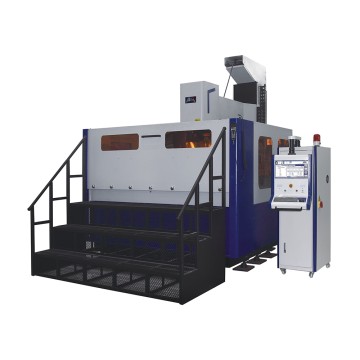
Discover our full spectrum of multi-axis CNC machine devices, from high-speed molybdenum wire units to 10-axis big-swing heavy fabrication systems.