Leave Your Message
CNC (Computer Numerical Control) equipment for mold and die manufacturing represents the technological backbone of modern precision tooling. From injection molds and stamping dies to extrusion tooling and forging dies, CNC wire cutting EDM machines deliver micron-level accuracy that conventional machining simply cannot achieve. As global manufacturing demands escalate, these systems are no longer optional — they are the competitive standard.
Modern CNC wire EDM achieves tolerances down to ±0.001 mm, essential for high-cavitation injection molds and precision stamping dies.
5-axis and 10-axis CNC linkage systems enable complex 3D contour cutting, taper machining, and simultaneous multi-surface operations.
Wire EDM cuts any conductive material regardless of hardness — tungsten carbide, hardened tool steel, titanium alloys, and more.
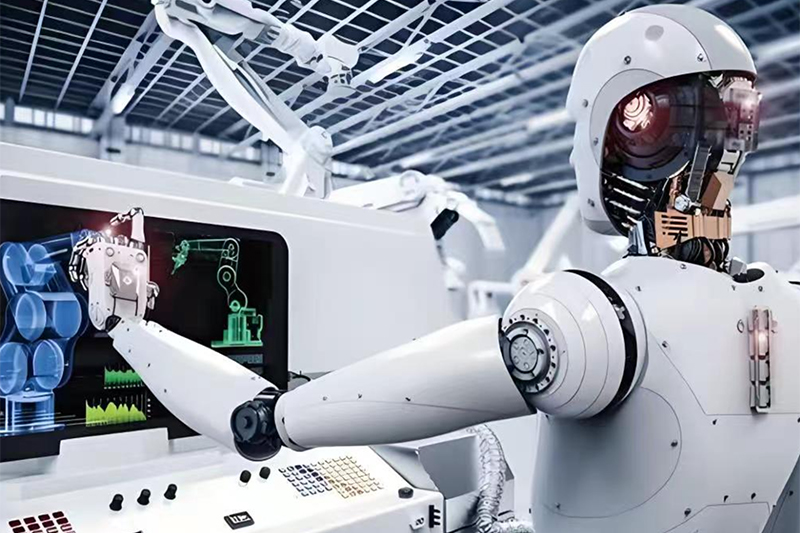
AI-assisted parameter optimization, automatic wire threading, and remote monitoring reduce operator dependency and boost throughput.
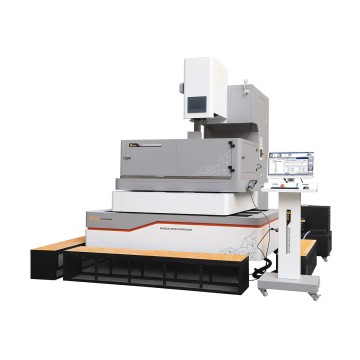
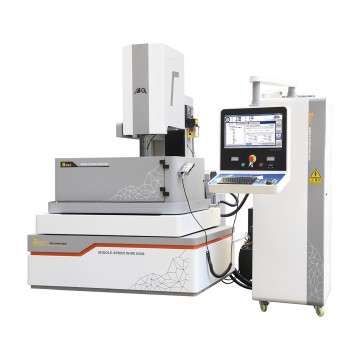
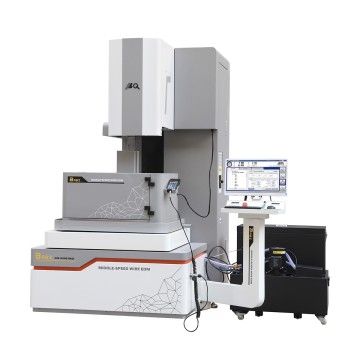
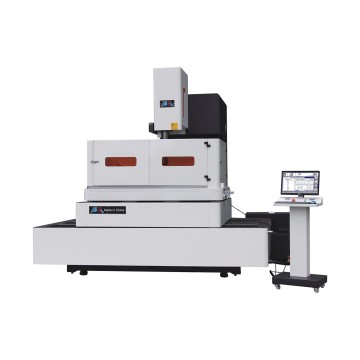
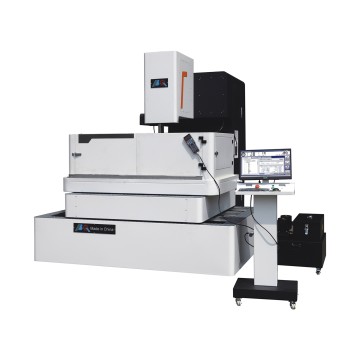
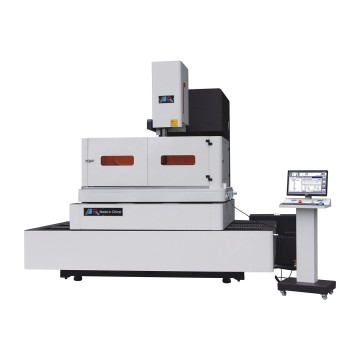
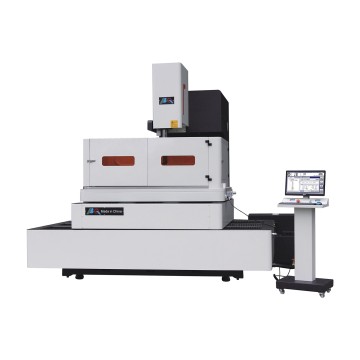
Our flagship 10-axis and 5-axis linkage medium-speed CNC wire cutting EDM machines are purpose-engineered for the most demanding mold and die manufacturing requirements — delivering unmatched precision, large-swing capability, and intelligent control.
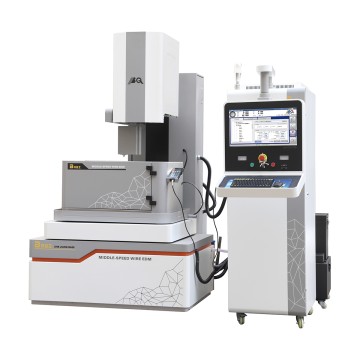
The global mold and die industry is undergoing a profound transformation driven by electrification of vehicles, miniaturization of electronics, and the rise of smart manufacturing. CNC wire EDM equipment sits at the epicenter of this shift.
The global mold and die market is projected to exceed USD 45 billion by 2030, growing at a CAGR of over 5.2%. Asia-Pacific — particularly China, Japan, and South Korea — accounts for more than 60% of global CNC EDM machine consumption, driven by massive automotive, electronics, and consumer goods production volumes. Demand for high-precision CNC wire cutting machines is growing proportionally faster than the overall market.
The explosive growth of electric vehicles is creating unprecedented demand for precision die-cast molds, battery housing tooling, and motor lamination stamping dies. CNC wire EDM machines are critical for producing the ultra-tight tolerances required in EV battery pack components, power electronics housings, and lightweight structural parts. This segment alone is driving double-digit annual growth in premium wire EDM machine orders.
Next-generation CNC wire EDM systems are incorporating AI-driven adaptive control, real-time process monitoring, and predictive maintenance algorithms. Machine learning models analyze cutting conditions on-the-fly to optimize wire tension, pulse parameters, and flushing pressure — reducing wire breakage by up to 40% and improving surface finish consistency. Integration with MES and Industry 4.0 platforms enables full traceability from raw material to finished mold cavity.
Miniaturization trends in medical devices, micro-optics, and semiconductor packaging are pushing wire EDM technology toward sub-micron precision territory. Advanced CNC systems now achieve surface roughness values of Ra 0.1–0.4 μm and positional accuracy within ±0.0005 mm, enabling the production of micro-injection molds for drug delivery devices, optical connectors, and MEMS components.
Post-pandemic supply chain disruptions have accelerated reshoring of mold and die manufacturing in North America and Europe. Manufacturers are investing in high-performance CNC wire EDM equipment to rebuild domestic tooling capacity, reduce lead times, and maintain IP security. This trend is creating significant new market opportunities for advanced multi-axis CNC wire cutting machines outside traditional Asian markets.
Environmental regulations and ESG commitments are reshaping CNC equipment procurement decisions. Modern wire EDM machines feature closed-loop dielectric fluid recycling, energy-efficient servo drives, and reduced wire consumption through advanced cutting strategies. Manufacturers increasingly select CNC equipment partners based on total lifecycle environmental footprint alongside technical performance metrics.
Understanding where and how CNC wire cutting EDM machines deliver maximum value requires examining specific mold and die manufacturing scenarios in detail. Each application presents unique technical challenges that multi-axis CNC systems are uniquely positioned to solve.
Injection mold cavities demand perfect surface finish, dimensional accuracy, and complex internal geometry that is impossible to achieve with conventional milling. CNC wire EDM excels at machining hardened P20, H13, and S136 tool steels after heat treatment — eliminating distortion risks. Multi-axis linkage enables the cutting of complex parting lines, lifter pockets, and side-action slots in a single setup, dramatically reducing mold lead times from weeks to days.
Progressive stamping dies for automotive body panels, electronic connectors, and precision hardware require punch and die clearances as tight as 0.005–0.02 mm. CNC wire EDM is the definitive technology for cutting hardened carbide and tool steel die sections with the profile accuracy and edge quality needed for multi-million-stroke die life. 5-axis taper cutting capability allows the production of relief angles and back-taper geometries that optimize punch-die fit and extend tool life.
High-pressure die-cast tooling for automotive and electronics applications operates under extreme thermal and mechanical stress. CNC wire EDM produces the overflow wells, cooling channel access slots, and ejector pin holes that are critical to die performance. The ability to machine complex 3D profiles in H13 hot-work steel after full hardening ensures that die-cast tooling achieves dimensional stability throughout its operational life.
Extrusion dies for aluminum profiles, plastic shapes, and wire drawing tools require extremely smooth, accurate internal profiles that directly determine product dimensional quality. CNC wire EDM produces these profiles with the surface finish and geometric accuracy that grinding and conventional EDM cannot match economically. Multi-pass cutting strategies achieve Ra values below 0.4 μm on die land surfaces, extending die service life and reducing downstream surface defects on extruded products.
Medical injection molds for syringes, catheter components, implant parts, and diagnostic device housings demand the highest levels of dimensional precision, surface quality, and material traceability. CNC wire EDM machines produce mold inserts in stainless steel and titanium alloys with surface finishes suitable for direct molding of Class III medical devices. The non-contact nature of EDM eliminates mechanical stress and micro-cracking in critical mold surfaces.
Aerospace forging dies for titanium and nickel superalloy components operate at the absolute limits of tooling technology. CNC wire EDM machines cut complex die cavities in premium tool steels with the accuracy needed for near-net-shape forging of turbine blades, structural brackets, and landing gear components. For composite tooling, wire EDM produces the precision trim fixtures, drilling templates, and assembly jigs that ensure aerodynamic surface accuracy within aerospace tolerances.
The transition from 2-axis to 5-axis and 10-axis CNC wire EDM represents more than a technical upgrade — it is a fundamental change in what mold and die shops can offer their customers. 10-axis linkage machines enable the simultaneous control of X, Y, U, V, Z axes plus rotational and auxiliary axes, allowing the production of complex ruled surfaces, twisted profiles, and variable-taper geometries in a single unattended operation.
For mold makers, this translates to the ability to produce undercut mold features, complex lifter mechanisms, and multi-angle parting surfaces without multiple setups or specialized fixtures. The result is faster mold delivery, lower labor cost per cavity, and dramatically improved dimensional consistency across high-cavitation mold sets — competitive advantages that directly impact customer retention and profitability.
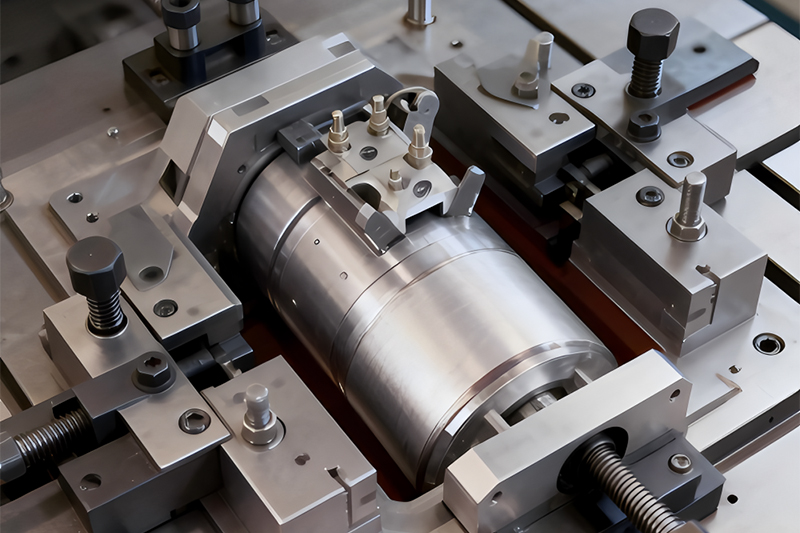
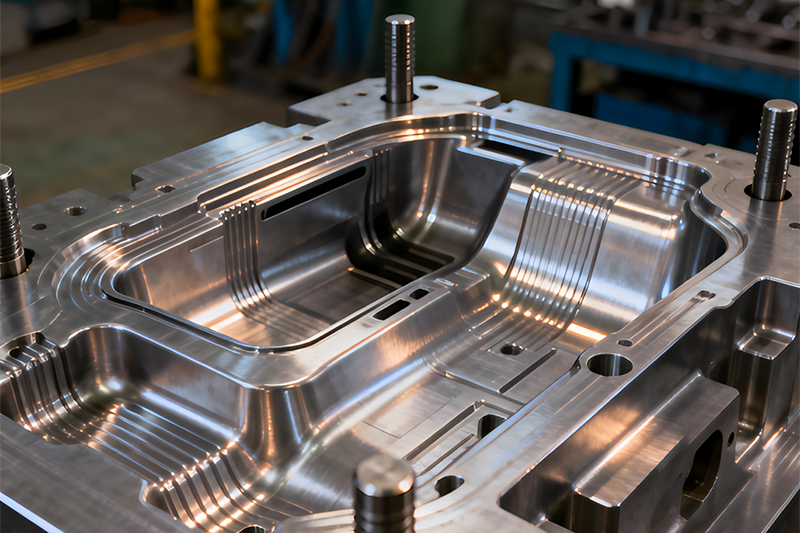

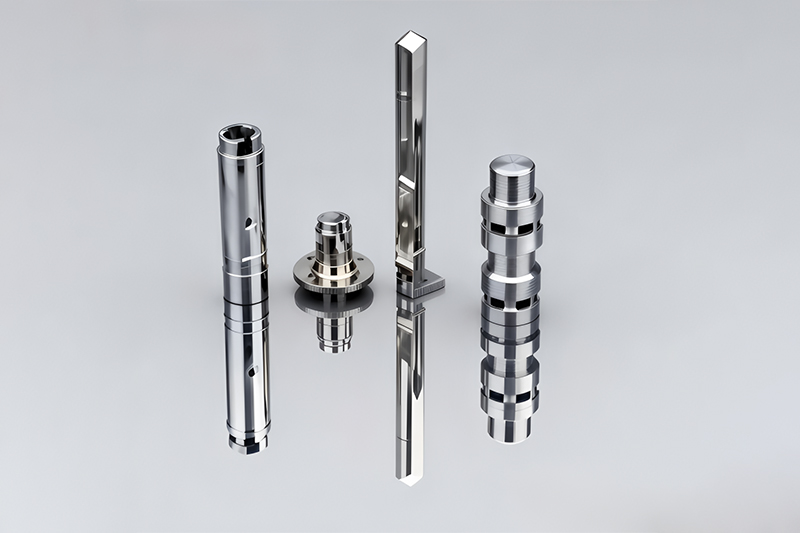
From compact high-precision models to large-format big-swing machines, our complete range of medium-speed CNC wire cutting EDM systems covers every mold and die manufacturing requirement.