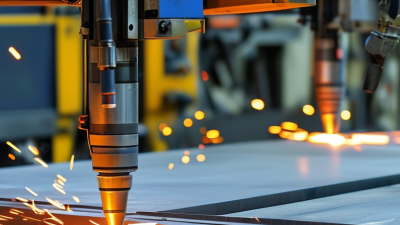
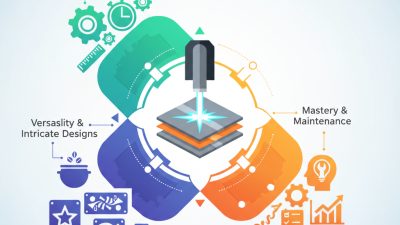
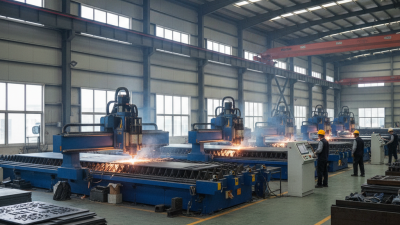
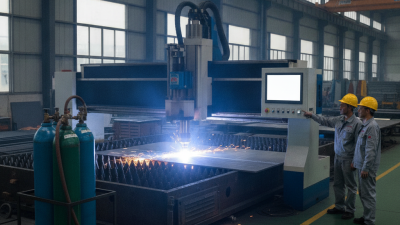
Picking the right Plasma Cnc Machine isn’t just about grabbing the biggest or fastest machine you see in a brochure. It really starts on your shop floor—thinking about what materials you cut, how thick they are, and how much you’ll be running the machine each week. For example, a small shop making mild steel brackets has completely different needs compared to a big production line dealing with long plates. And those differences show up in the practical details—like how clean and precise the cut is, how much time you need for setup, how often you need to change consumables, and even how much space you need around the table.
Jim Colt, who’s pretty well-known in the plasma-cutting world, often shares useful tips about these systems and processes. Here’s a quick paraphrase (not an exact quote): "Pick a machine that matches the parts you actually cut, not just the top speed it boasts on paper." That’s a good rule of thumb, but it’s not the whole story. When shopping around, you’ll want to compare things like the power source, CNC controls, torch height control, software compatibility, exhaust requirements, and support in your area. Don’t forget to ask suppliers for sample cuts on your actual materials—check out the edges, bevels, and any dross yourself. And bring a real part drawing, instead of just a fancy demo file.
Now, let’s talk numbers. Be sure to factor in costs like installation, training, consumables, maintenance, and potential downtime when estimating what you’ll actually spend over time. Even a machine that cuts super fast can end up being expensive if the setup process is a nightmare or if support takes forever to respond. Some specs can be pretty confusing—totally worth admitting that upfront. Make a list of your questions, verify claims with documentation, and if possible, chat with other users who already have the same or similar machines. Usually, the best option isn’t the machine with every feature under the sun, but the one your team can operate reliably, safely, and profitably—even as your orders fluctuate.
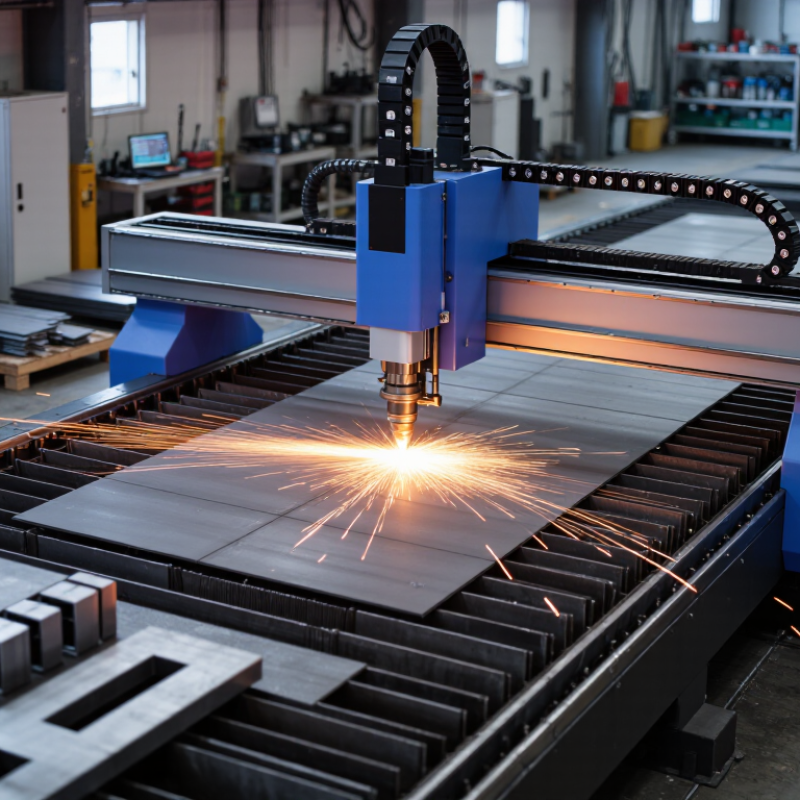
Define Your Business Needs and Typical Cutting Jobs
Before comparing machines, define the jobs your shop actually cuts. Review recent work orders and record material, thickness, sheet size, cut length, and monthly volume. A shop cutting mostly 6 mm mild steel has different needs from one handling 25 mm plate every shift. Include small holes, tight corners, and bevels; these can affect usable speed and edge quality. Not every job is typical. One unusually thick order can distort your estimate.
Also note whether parts are flat, tubular, or both. A Cnc Plasma Pipe Cutting Machine may suit repeat tube work, but it will not automatically solve flat-sheet bottlenecks. The U.S. Bureau of Labor Statistics’ 2023–33 projections estimate a 2% employment decline for machinists and tool-and-die makers, with about 34,200 openings each year. This is workforce data, not a plasma-machine forecast. Still, it makes operator training, setup time, and straightforward job programming worth measuring. Track loading and cleanup too. They are easy to overlook. I would avoid sizing equipment around a hoped-for future order; that assumption can leave an expensive machine waiting. Compare your real job mix against available floor space, power, extraction, and the precision customers actually require.
Match Plasma Technology to Your Materials and Production Volume
A plasma Cnc Machine should fit the metal you cut most often, not just the thickest sheet you might handle once. Mild steel, stainless steel, and aluminum respond differently to heat and cutting speed. Check the machine’s rated capacity against your actual material thickness, then test sample cuts. A clean edge matters. Look for dross beneath the cut, bevel on the edge, and distortion around small holes.
Production volume changes the choice. A shop cutting a few parts each week may value a simple table and easy setup. Daily runs call for reliable motion components, suitable torch duty cycle, and a cutting bed that supports full sheets. Ask how quickly consumables wear during your typical work, too. A low purchase price can feel less attractive when tips and electrodes need frequent replacement.
Keep your workflow in view. Nesting software can reduce scrap, while a torch height control helps maintain consistent spacing over uneven plate. Measure the floor space, ventilation, and power supply before delivery; these details are easy to overlook. It is tempting to choose extra capacity for “future growth,” but that can mean paying for capability your jobs never use. Bring several real part drawings to a supplier and discuss the expected cut quality, production hours, and material mix. One test cut may still not represent a full shift.
Compare Cutting Capacity, Precision, Speed, and Automation
Choosing a plasma CNC machine starts with the thickest material you regularly cut, not an occasional job.
Match the machine’s rated capacity to your common steel thickness, then check its recommended production capacity. Cutting at the maximum rating may slow the job and worsen edge quality. Test cuts matter. Ask for samples using your material, thickness, and desired finish. Compare the results with ISO 9013:2017, which classifies thermal-cut edge quality and dimensional tolerances.
A brochure alone cannot predict your shop’s outcome.
Precision and speed trade off. Higher feed rates can leave more bevel, dross, or roughness, especially on thick plate or tight corners. Watch a full cutting cycle, including piercing, repositioning, and cleanup. Tiny details count. Automation deserves the same scrutiny: check whether the controller supports your workflow, nesting software, and planned material handling. The International Federation of Robotics’ World Robotics 2024 report counted 541,302 industrial robot installations worldwide in 2023, showing how widely automation is being adopted. That figure is not specific to plasma cutting, but it makes integration worth evaluating.
A spec sheet can still mislead. I would compare actual test parts, operator setup time, and service needs before choosing.
Assess Workshop Space, Power, Air Supply, and Installation Needs
How to Choose the Best Plasma CNC Machine for Your Business
Assess Workshop Space, Power, Air Supply, and Installation Needs
Measure the full working area, not just the machine’s footprint. Leave room for sheet loading, torch movement, control access, and routine cleaning. Measure twice. Check doorways, ceiling height, and the route from delivery point to installation site. A machine that fits on paper may still be difficult to position around a post or workbench.
Power requirements vary, so compare the machine specifications with your workshop’s available supply. Confirm voltage, circuit capacity, grounding, and connection location with a qualified electrician. Air matters too. Check the recommended pressure and flow, then make sure your compressor can maintain them during cutting. A small tank may cause pressure drops. Dry, filtered air helps support consistent cuts and reduces consumable wear.
Plan for exhaust or fume extraction, safe cable routing, and access for maintenance before choosing a location. Keep hoses away from sharp edges and hot work, and allow space to remove panels. When researching an Xyz Cnc Machine, compare its installation requirements with your actual workshop measurements, not assumptions. Even a careful plan can miss a detail, like a low beam above the loading side. Recheck the layout with the operator who will use it daily.
How to Choose the Best Plasma CNC Machine for Your Business — Assess Workshop Space, Power, Air Supply, and Installation Needs
| Table Size |
Typical Use |
Planning Space |
Electrical Planning |
Compressed-Air Planning |
Installation Considerations |
| 4 × 4 ft (about 1.2 × 1.2 m) |
Small parts, repair work, prototypes, and limited production. |
Allow roughly 8 × 8 ft (2.4 × 2.4 m) or more for the table, operator access, and material handling. Reserve additional space for stock storage. |
Check the table controller and plasma power source separately. Smaller power sources commonly use 208–240 V single-phase service, but current requirements depend on the unit and cutting output. |
Plan for clean, dry, regulated air. A typical starting point is 90–120 psi at the inlet; required flow varies by power source and cutting duty. |
Confirm doorway access, a level and load-capable floor, grounding, ventilation, and room for electrical disconnects and service access. |
| 4 × 8 ft (about 1.2 × 2.4 m) |
General fabrication and sheet work using common 4 × 8 ft stock. |
Allow approximately 8 × 12 ft (2.4 × 3.7 m) or more. Keep the loading side clear enough to place and remove full sheets safely. |
Many mid-range systems require 208–240 V service; some configurations require three-phase power. Size the circuit to the plasma source and table specifications, not table size alone. |
Use a compressor and air treatment system that can sustain the source’s specified pressure and flow during cutting. A receiver tank can help manage intermittent demand. |
Plan for sheet loading equipment or a safe manual-handling method, fume extraction, torch consumables storage, and unobstructed access around the machine. |
| 5 × 10 ft (about 1.5 × 3.0 m) |
Higher-volume fabrication, larger sheets, and production runs. |
Allow around 10 × 14 ft (3.0 × 4.3 m) or more, with extra floor area for loading, unloading, and staging full-size material. |
Three-phase service is common for larger production setups, though available configurations vary. Have a qualified electrician verify voltage, phase, circuit capacity, disconnect location, and grounding. |
Check continuous flow requirements at the specified inlet pressure; production use may require a larger compressor, dryer, and filtration than occasional cutting. |
Verify delivery-route and door clearances, floor loading, lifting access, extraction duct routing, and any required permits or workplace safety controls before purchase. |
Planning note: These space figures are preliminary allowances, not manufacturer specifications. Actual electrical and air requirements depend on the selected table, plasma power source, cutting settings, and duty cycle. Confirm equipment nameplate data and installation requirements before preparing the workshop.
Calculate Total Ownership Costs and Check Safety Features
A plasma CNC machine’s purchase price is only the opening cost. Build a five-year estimate that includes electricity, compressed air, consumables, extraction filters, software, operator training, maintenance, and likely downtime. NIST Handbook 135’s life-cycle cost method includes initial investment, energy, operations and maintenance, replacements, and residual value. Use your own shop’s electricity rates and cutting hours; generic estimates can mislead. A spreadsheet will still miss downtime.
Tips: Ask suppliers for power-draw data at your expected duty cycle. Price consumables by cut length, not just by box. Check filter replacement intervals and the cost of compatible parts. Then compare the totals. Small leaks matter.
Safety features deserve the same scrutiny as cutting speed. Look for effective fume extraction, guarded moving parts, an emergency stop, electrical protection, and clear torch-collision procedures. Cutting stainless steel can create hexavalent chromium fumes; OSHA’s standard sets an exposure limit of 5 micrograms per cubic meter as an eight-hour time-weighted average (29 CFR 1910.1026). Confirm that extraction and work practices suit the materials you actually cut, and arrange exposure assessment when needed. A flashy enclosure is not proof of good air control. I would also inspect filter access in person; awkward maintenance gets postponed, sometimes. Keep written service and safety checks in the operating budget.
Evaluate Supplier Support and Test Your Shortlisted Machines
A plasma CNC machine is only as dependable as the support behind it. Ask suppliers how quickly technicians respond, which spare parts they stock, and whether training covers setup, torch height, and cut-file troubleshooting. Request written service terms, not just a reassuring sales promise. Deloitte and the Manufacturing Institute’s 2024 study estimated that 3.8 million manufacturing jobs could be needed by 2033, with 1.9 million potentially unfilled. That workforce pressure makes clear training materials and accessible technical support especially valuable. A Big Cnc Machine may look impressive, but complicated controls can slow a small team.
Test shortlisted machines using the metal thickness and grade your shop actually cuts. Run a sample job with corners, holes, and long straight edges. Inspect the kerf, dross, bevel, and dimensional accuracy; record cutting speed and consumable wear. Ask the supplier to repeat the test after adjustments, and observe how clearly they explain each change. A polished demonstration on thin sheet proves little. I once underestimated how much operator setup affected the result. It is easy to blame the machine.
Tips: Bring your own drawing and material. Check the cut while the plate is still warm, then inspect it again after cooling. Ask who pays for follow-up support.
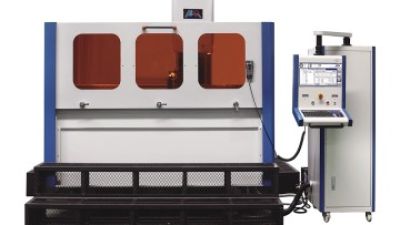
Precision in Motion: The Baqi BQ1612DYB Medium-Speed CNC Wire-Cutting EDM for Versatile Applications
The medium-speed CNC wire-cutting EDM is designed to bring precision and flexibility to demanding machining tasks. Its controlled cutting process helps produce accurate contours and intricate geometries, making it suitable for mold and tooling work as well as components used in medical, aerospace, and automotive manufacturing. By supporting consistent machining across a range of materials and part shapes, the machine can help workshops meet varied production requirements without relying on a single type of application.
Molybdenum wire technology offers an efficient approach to material removal, helping users make better use of stock while maintaining dependable cutting accuracy. CNC control supports repeatable operations and allows complex profiles to be handled with care, from detailed features to carefully defined edges. These capabilities make a medium-speed wire-cutting EDM a practical choice for manufacturers seeking to refine their machining processes, improve consistency, and accommodate changing job demands in industrial production.
FAQS
Match its rated capacity to the steel thickness you cut regularly. Check production capacity too. Maximum thickness may mean slower cuts and rougher edges.
Ask for samples using your material, thickness, and finish requirements. Inspect bevel, dross, and edge roughness. Brochures cannot show your exact results.
Watch a complete cycle, including piercing, repositioning, and cleanup. Higher feed rates may reduce edge quality, especially on thick plate or tight corners. Small details matter.
Confirm the controller works with your workflow, nesting software, and material handling plans. Compare setup time and service needs, not just advertised features.
Measure the machine, sheet-loading area, torch movement, and control access. Check doorways, ceiling height, and delivery routes. Measure twice.
Compare voltage and circuit capacity with your available supply. Confirm requirements with a qualified electrician. Check that the compressor maintains recommended pressure and airflow during cutting.
It supports consistent cuts and can reduce consumable wear. A small compressor tank may cause pressure drops. That can be easy to overlook.
Allow room for exhaust, cable routing, cleaning, and panel removal. Keep hoses clear of sharp edges and hot work. Recheck the layout with the daily operator; I could still miss a low beam.
Conclusion
Choosing the right Plasma Cnc Machine starts with understanding the work your business needs to complete. Consider the materials and thicknesses you cut, the size and shape of typical jobs, and how much production you expect. Compare suitable plasma technologies, then evaluate cutting capacity, precision, speed, and automation features against your quality and output goals.
Before making a decision, confirm that your workshop can accommodate the machine and provide the required power, compressed air, and installation space. Estimate total ownership costs, including setup, consumables, maintenance, and training, and review the machine’s safety features. Finally, assess the supplier’s technical support and service options, and arrange a practical test of your shortlisted machines when possible. A careful comparison helps you choose equipment that fits both your current workload and future business needs.