inquiry
Leave Your Message
0%

Looking to buy an Axis Cnc Machine? Remember, it's more than just grabbing some metal, motors, and software—it's actually a pretty big decision that can really impact your production. Choosing the right machine can bump up your accuracy, cut down setup times, and help you avoid costly rework. But if you pick the wrong one, you might end up with an expensive machine just gathering dust on the shop floor.

Peter Zelinski, the Editor-in-Chief of Modern Machine Shop, often reminds folks of this simple but important point: “A CNC machine isn’t just a standalone asset; it’s part of a larger manufacturing system.” That kind of thinking really matters when you’re weighing your options. When comparing seven key factors—like the machine’s travel, spindle speed, control quality, rigidity, tooling compatibility, operator support, and overall cost—it’s essential to dig deeper. Sure, a machine might look super impressive in the showroom, but will it actually handle your specific materials, tolerances, or batch sizes? Always measure twice—trust me on that.

And experience can often bring out the details that aren’t shown in brochures. For instance, a compact Axis CNC Machine might fit nicely into a tight workshop, but if its working envelope is too small, it could limit your future contracts. Meanwhile, a machine with a powerful spindle might cut aluminum like butter, but it might not give you the finish you need for hardened steel. So, don’t just take their word for it—ask to see samples of actual parts, check how quickly they respond to service needs, and try out the control interface with a real operator. Brochures tend to oversimplify things, so it’s worth digging a little deeper.

In this guide, I’ve put together seven practical tips to help you evaluate suppliers and machine specs. I also cover important practical aspects—like how much space you have, training needs, maintenance access, and what kind of return on investment you can realistically expect. Not all decisions will be perfect, and that’s totally normal. The point isn’t to find the perfect machine, but to pick one that reliably meets the kind of work you actually plan to do.
7 Tips for Buying an Axis CNC Machine?

Define the Production Goals Before Choosing an Axis CNC Machine

7 Tips for Buying an Axis CNC Machine?

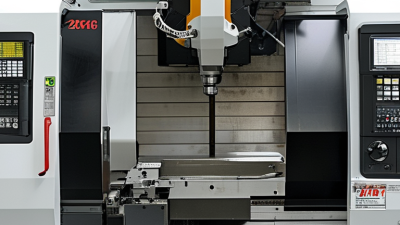
Define the production goals before choosing an axis CNC machine. Start with the part drawings, materials, tolerances, and monthly quantities. A Five Axis Cnc Machine may sound advanced, but it is not always the most practical choice. A three-axis system can handle simple plates efficiently and cost less to operate. Let the work decide.

Measure the smallest features carefully. Check whether your parts need angled holes, deep cavities, or fewer setups. Record the average cycle time, fixture changes, tool consumption, and operator skill level. These details reveal the real production requirement. They also expose hidden costs. Do not rely only on the machine’s advertised travel range. Verify working envelope, spindle speed, table capacity, and control functions with technical documents.

Ask for sample machining data on similar materials. Review surface finish, repeatability, chip control, and inspection results. Speak with operators before making the final decision. They may notice access problems that a purchasing spreadsheet misses. A machine can meet every specification and still frustrate the team. That happened in one workshop I observed. The planned automation saved setup time but created longer tool-change delays. The original assumptions were too optimistic.

Leave room for future parts, but avoid paying for unused capability. Compare training time, preventive maintenance, service response, and available technical support. Request a realistic test cut using your own material and tooling. Watch the process closely. Listen for vibration. Check the finished dimensions. Small observations often reveal more than polished sales presentations.

Compare Axis Configurations for Required Machining Tasks

Buying an axis CNC machine starts with the part, not the machine’s maximum axis count. A three-axis model moves along X, Y, and Z, making it practical for flat plates, pockets, and many prismatic parts. A fourth axis rotates the workpiece, helping you machine several sides without repeated setups. This can reduce alignment errors on a busy shop floor. Tip: Sketch every required surface before comparing machines.

Five Axis Cnc equipment adds two rotary movements, allowing the cutter to approach angled surfaces more directly. This matters for impellers, molds, aerospace parts, and deep cavities. Fewer setups may improve accuracy, but programming becomes more demanding. Check post-processor support, collision simulation, spindle reach, and operator training. A machine with impressive travel can still struggle near fixtures. Tip: Ask for a sample cycle using your material and tooling.

Do not select five axes merely for speed claims. Evaluate tolerance, batch size, fixture changes, and maintenance access. Rotary tables can consume working space, while simultaneous motion may require careful calibration. I have seen buyers underestimate training time. That mistake is expensive. Request test cuts, inspect surface finish, and measure repeatability after warm-up. Also compare service response, documentation, and safety features before signing a purchase agreement.

7 Tips for Buying an Axis CNC Machine: Compare Axis Configurations for Required Machining Tasks

Axis selection should match part geometry, tool-access requirements, setup frequency, and the need for simultaneous machining. More axes can reduce repositioning, but they also increase programming, maintenance, and purchase complexity.

The chart compares common CNC configurations using representative planning values: the number of controlled axes, typical setups required for complex multi-face parts, and the number of tool-access directions available during machining. Actual performance depends on machine design, workholding, software, and part geometry.

Evaluate Work Envelope, Accuracy, and Machine Capacity

7 Tips for Buying an Axis CNC Machine?

Evaluate Work Envelope, Accuracy, and Machine Capacity

A machine’s work envelope must fit your real projects, not just catalog dimensions. Measure the longest, widest, and tallest parts you expect to produce. Include fixture height, tool length, and door clearance. Space disappears quickly.

Ask how accuracy is tested and under what conditions. Positioning accuracy and repeatability are different measurements. Request inspection data from a recent machine, preferably using recognized testing methods. Check performance across the full travel range, not only near the center. Thermal drift also matters during long production cycles. I have seen machines pass a basic test but lose consistency after several hours.

Capacity involves more than maximum table weight. Review spindle power, torque, axis travel, rapid movement, and continuous-duty limits. A heavy part may fit physically but overload the table or reduce cutting stability. Confirm the machine can handle your materials, tooling, and planned feed rates. Leave working margin. Buying at the limit often creates frustration later. Also inspect service access, calibration procedures, and operator training requirements. These details affect reliability as much as raw specifications. When comparing quotes, record every measurement and assumption. My own evaluations have occasionally missed fixture space, so I now verify it with a simple cardboard layout before ordering.

7 Tips for Buying an Axis CNC Machine? - Evaluate Work Envelope, Accuracy, and Machine Capacity

No. Buying Tip Dimension to Evaluate Practical Reference Data How to Verify Buying Implication
1 Match the Work Envelope to the Largest Part X, Y, and Z axis travel; door opening; maximum workpiece height and diameter Select usable travel at least 10–20% greater than the largest planned part dimension. Include fixture height, tool length, clamping space, and chip clearance. Place the actual part and fixture model inside the machine envelope. Check full door, spindle, and tool-changer clearance. Avoids restricted setups, excessive re-clamping, and collisions near the travel limits.
2 Separate Accuracy from Repeatability Positioning accuracy, bidirectional repeatability, backlash, and thermal stability Many general-purpose production machines quote positioning accuracy around ±0.005–0.020 mm and repeatability around ±0.002–0.010 mm, depending on travel, test method, and temperature. Request test results using ISO 230-2 or ASME B5.54 methods. For critical work, use a laser interferometer, ballbar test, or controlled test cut. Choose specifications based on finished-part tolerances, not only the advertised resolution.
3 Match Spindle Power and Torque to the Material Spindle power, peak torque, speed range, taper, and through-spindle coolant capability General vertical machining centers commonly use approximately 5.5–15 kW spindles and speed ranges near 8,000–15,000 rpm. Heavy cutting depends more on available low-speed torque than maximum rpm. Compare torque curves, not only motor horsepower. Review cutting data for the hardest material, largest cutter, and deepest planned cut. Prevents chatter, spindle overload, slow material removal, and premature tool wear.
4 Check Table Load and Workholding Capacity Table size, maximum distributed load, fixture weight, pallet capacity, and clamping access Calculate the combined weight of the workpiece, vise or fixture, pallets, and cutting forces. A practical planning target is to operate below approximately 70–80% of the rated table load. Confirm whether the load rating is distributed or concentrated. Check T-slots, bolt spacing, table deflection, and rotary-table weight if applicable. Provides a safety margin and reduces table deflection during aggressive machining.
5 Decide Whether 4 or 5 Axes Are Necessary Rotary diameter, tilt angle, axis travel, simultaneous-axis capability, and collision envelope A 4-axis setup can machine multiple sides with indexing. A simultaneous 5-axis setup can maintain tool orientation on complex surfaces but requires sufficient rotary clearance, post-processing, and collision-control capability. Simulate the largest fixture and tool assembly. Confirm whether the machine supports indexed positioning only or true simultaneous interpolation. Select extra axes when they reduce setups, improve access, or protect surface quality—not simply because more axes are available.
6 Evaluate Controls, Feedback, and Tool Management Linear scales, encoder feedback, memory capacity, probing, tool measurement, and tool magazine size Closed-loop scale feedback can help control axis positioning errors. Tool magazines commonly range from roughly 12 to 40 tools on general-purpose machines, with larger capacities available for unattended work. Run representative programs, verify probing repeatability, test tool-change recovery, and confirm compatibility with the intended CAM and file-transfer workflow. Improves setup consistency, automation readiness, and operator productivity.
7 Confirm Installation Requirements and Total Capacity Electrical service, compressed air, coolant, chip handling, floor space, foundation, and service access Many industrial CNC machines require three-phase power, commonly in the 208–480 V range, and compressed air near 5.5–7 bar (80–100 psi), but exact requirements vary by configuration. Obtain the machine utility sheet. Check actual amperage, transformer needs, air flow, coolant capacity, shipping weight, floor loading, doorway clearance, and maintenance access. Prevents installation delays and reveals the real cost of accessories, utilities, rigging, and ongoing operation.

Note: Reference ranges are general planning values for small-to-medium industrial CNC machines. Always confirm the final specification, test conditions, and installation requirements for the exact configuration.

Check Control Systems, Software, and Operator Usability

Buying an axis CNC machine should begin with its control system, not its paint or advertised speed. The 2024 Manufacturing Industry Outlook reports that 86% of manufacturing leaders expect smart-factory projects to improve competitiveness. Yet advanced hardware fails when operators cannot understand it. I once treated screen design as a minor detail. That was a costly assumption.

Tip 1: Test the control panel with gloves. Can an operator find feed override, alarms, and reset within seconds? Tip 2: Check alarm messages on a real machine. Clear instructions reduce guesswork. Tip 3: Review software compatibility with CAD/CAM files, simulation tools, and existing shop-floor networks. The 2024 State of Smart Manufacturing Report found that 98% of manufacturers are investing in smart technologies, but integration remains a serious obstacle.

Tip 4: Request a complete cycle simulation. Watch toolpaths, collision warnings, and fixture clearance. Tip 5: Ask whether programs can be edited safely at the machine. Small corrections matter. Tip 6: Measure training time for a new operator, not an expert engineer. Tip 7: Inspect data visibility, including cycle time, downtime, and maintenance alerts. For a 5 Axis Linkage Edm Machine, usability becomes even more important because multiple movements can hide programming errors. Do not trust a perfect demonstration. Test awkward workflows, crowded screens, and recovery after an interrupted cycle. Some systems look intelligent but still leave operators thinking alone.

Assess Spindle Performance, Tooling, and Automation Options

7 Tips for Buying an Axis CNC Machine

Assessing spindle performance should begin with your workpiece, not the machine’s brochure. Map materials, dimensions, tolerances, and daily batch sizes before comparing models. A spindle must match cutting demands, not simply advertise a high speed. Check torque curves across the operating range, especially at low revolutions. Ask for test cuts using your actual aluminum, steel, wood, or composite stock. Watch the surface finish, chip shape, noise, and spindle temperature. Small details matter. If vibration appears during a deep pocket, the machine may need more rigidity or a different toolpath.

Review spindle runout with a measurement report, and confirm how often technicians verify it. Tooling is equally important. Compare taper standards, tool lengths, holder balance, and coolant access before choosing accessories. A short, rigid tool often produces cleaner walls than an unnecessarily long one. Still, my first tooling estimate is often too optimistic. Budget for spare holders, probes, pull studs, and common cutter sizes. Check whether the control system stores tool offsets clearly and supports reliable tool-life tracking. A confusing offset screen can waste more time than a slower cutting cycle.

Automation deserves a practical test, not a sales promise. Inspect chip removal, door access, pallet changes, probing, and recovery after an interrupted cycle. Run a simulated shift with an operator nearby. Measure loading time, idle time, alarms, and manual touches. For lights-out production, verify guarding, sensors, remote alerts, and restart procedures with qualified personnel. Keep the setup understandable. An automated cell that nobody can troubleshoot may reduce confidence instead of labor. Request service records, training details, and realistic response times before signing.

Calculate Total Ownership Costs and Available Support

7 Tips for Buying an Axis CNC Machine?

Purchase price is only the opening figure. Calculate total ownership costs before comparing machines. Include tooling, installation, electrical work, software, operator training, maintenance, energy, coolant, and financing. A simple five-year model often exposes hidden expenses. Service contracts can also change the result. Low-cost coverage may exclude emergency labor or travel.

Support deserves equal attention. Ask for guaranteed response times, local technicians, spare-parts availability, remote diagnostics, and documented escalation procedures.

The U.S. Department of Energy’s Operations & Maintenance Best Practices Guide reports that predictive maintenance can reduce maintenance costs by 25–30% and downtime by 35–45%. Those figures are not guaranteed for every CNC environment. Still, they show why monitoring and planned service matter.

Check the support process in detail. Who answers at 2 a.m.? How quickly can a critical encoder or drive arrive? Request references from similar shops, not only polished case studies.

The Association for Manufacturing Technology has repeatedly identified workforce skills and equipment utilization as major manufacturing concerns in its industry outlooks. Training is therefore part of the machine’s real value. My first calculation would probably miss something. Recheck it with an operator, an electrician, and the maintenance lead. Their practical objections may save more than a small purchase discount.

Verify Safety Standards, Installation Needs, and Future Expandability

7 Tips for Buying an Axis CNC Machine

Safety should be checked before performance claims. Ask for documented conformity, guarding details, emergency-stop testing, electrical requirements, and operator training materials. Standards vary by region, so have a qualified safety professional review the machine before installation. Look closely at access doors, interlocks, chip control, coolant handling, and noise levels. A polished demonstration is not enough.

Tip: Measure the real installation space. Include the machine footprint, control cabinet, service clearance, door width, floor loading, power, compressed air, ventilation, and drainage. During a previous installation, limited rear access made routine maintenance awkward. I should have measured cable routes earlier. Leave room for lifting equipment and safe material movement, not just daily operation.

Tip: Consider expansion while comparing prices. Confirm whether the control system can support probing, additional tooling, rotary work, automation, or software upgrades. Ask which upgrades require factory installation and which can be completed locally. If your plans include a 10 Axis Linkage Edm Machine, verify control compatibility, programming support, and operator training before signing. Future flexibility can reduce replacement costs, but not every upgrade is practical. Request written specifications, service response times, spare-parts availability, and training terms. Small omissions become expensive later.

FAQS

How should I define production goals before choosing an axis CNC machine?

Start with part drawings, materials, tolerances, and monthly quantities. Record cycle times, fixture changes, tool usage, and operator skill. A three-axis machine may handle simple plates efficiently. More axes are not always better. Let the work decide.

When is a five-axis CNC machine practical?

Consider it when parts need angled holes, deep cavities, or fewer setups. It can reduce repositioning and improve access to complex surfaces. However, unused capability increases training, maintenance, and purchase costs. My early assumptions are sometimes too optimistic.

Which machine specifications should I verify?

Check the working envelope, spindle speed, table capacity, and control functions. Do not rely only on advertised travel range. Confirm technical documents against your largest real workpiece. Small differences matter.

How can I evaluate spindle performance?

Match spindle torque and speed to your actual materials and cutting demands. Check torque at low revolutions, not only maximum speed. Request test cuts using your aluminum, steel, wood, or composite stock. Watch surface finish, chip shape, noise, and spindle temperature. Listen for vibration.

What tooling details should I examine?

Compare taper standards, tool lengths, holder balance, and coolant access. Short, rigid tools often produce cleaner pocket walls. Confirm tool-offset storage and tool-life tracking in the control system. Budget for spare holders, probes, pull studs, and common cutters. My first estimate may miss extras.

How should automation be tested?

Test chip removal, door access, probing, pallet changes, and interrupted-cycle recovery. Measure loading time, idle time, alarms, and manual interventions. For unattended production, verify guarding, sensors, alerts, and restart procedures. Keep troubleshooting understandable for the operators. Automation can create delays.

What costs belong in the ownership calculation?

Include installation, electrical work, software, tooling, training, maintenance, energy, coolant, and financing. Add service contracts and possible emergency labor costs. Build a realistic five-year estimate. Then review it again. Hidden costs are common.

How can I judge technical support and maintenance?

Ask about response times, local technicians, spare parts, remote diagnostics, and escalation procedures. Request references from similar workshops. Check how quickly critical drives or encoders can arrive. Review predictive maintenance options and service records. Support is not optional.

Who should join the final machine review?

Speak with operators, electricians, and maintenance staff before signing. Operators may notice poor access or slow tool changes. Electricians can identify installation concerns. Maintenance leads can question service procedures. A spreadsheet cannot notice everything.

Conclusion

Choosing the right Axis Cnc Machine begins with clearly defining your production goals, including material types, part sizes, quantities, and required machining processes. Compare suitable axis configurations based on the complexity of your work, then evaluate the machine’s work envelope, positioning accuracy, load capacity, and overall performance. A practical choice should meet current requirements without creating unnecessary expense or limiting future production.

It is also important to review the control system, software compatibility, and operator interface to ensure efficient daily use. Examine spindle speed, torque, tooling flexibility, chip management, and available automation features. In addition to the purchase price, calculate installation, maintenance, energy, tooling, training, and downtime costs. Finally, confirm safety features, facility requirements, technical support, and expansion options so the machine can operate reliably and adapt as your business grows.
Sophia

Sophia

Sophia is a dedicated marketing professional with extensive expertise in the technical intricacies of the company’s core processing software and hardware solutions. With a strong background in R&D, she plays a vital role in communicating the advanced capabilities of the company’s products, which......
Previous How to Choose the Best Plasma CNC Machine for Your Business