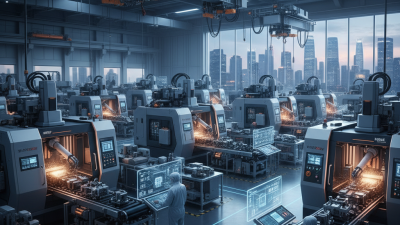
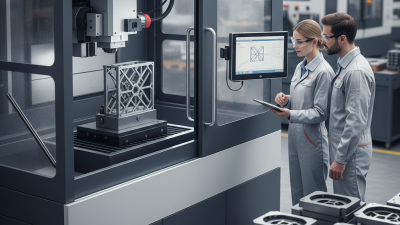
Picking the right automated machine tool in 2026 isn’t just about comparing prices or glitzy specs. Honestly, you need to dig a little deeper—look at accuracy, cycle times, how stable the software is, energy efficiency, easy access for maintenance, and how well you or your team are trained to use it. The most impressive-looking machines in brochures won’t cut it if they don’t support real, measurable productivity.
In this guide, I’ll walk you through some of the top automated systems from big names like FANUC, Siemens, Mazak, Haas Automation, and DMG MORI. We’ll consider how good their CNC controls are, whether they have robotic loading, how they monitor tools, the predictive maintenance features, and how well they can integrate with your existing factory software. If you’re serious about buying, ask for actual cutting trials on materials similar to what you’ll be working with. Small details can really make a difference—like a clear alarm screen that saves you precious minutes during a busy night shift or easily accessible filters that prevent routine maintenance delays.
But beware— rankings aren’t everything. A machine’s real performance depends heavily on how well it’s programmed, installed, the workholding, and your production volume. Sometimes, a pricey model might not do so well in a small shop with limited support. So, it’s smart to compare verified data, check how fast their service response is, look into warranty terms, and see if spare parts are readily available. Independent testing and customer reviews are often more trustworthy than just marketing claims. Also, don’t forget to review safety features carefully, making sure they meet your local requirements. Keep in mind—no machine is perfect. Some might be lightning-fast but a nightmare to set up, while others are easier to operate but lack advanced automation options. The key is finding a balance that matches your capabilities, reliability needs, budget over its lifecycle, and your actual production needs.
This intro should help you get a sense of the main models and what to consider before making your smart investment in 2026.
What Defines an Automated Machine Tool in 2026
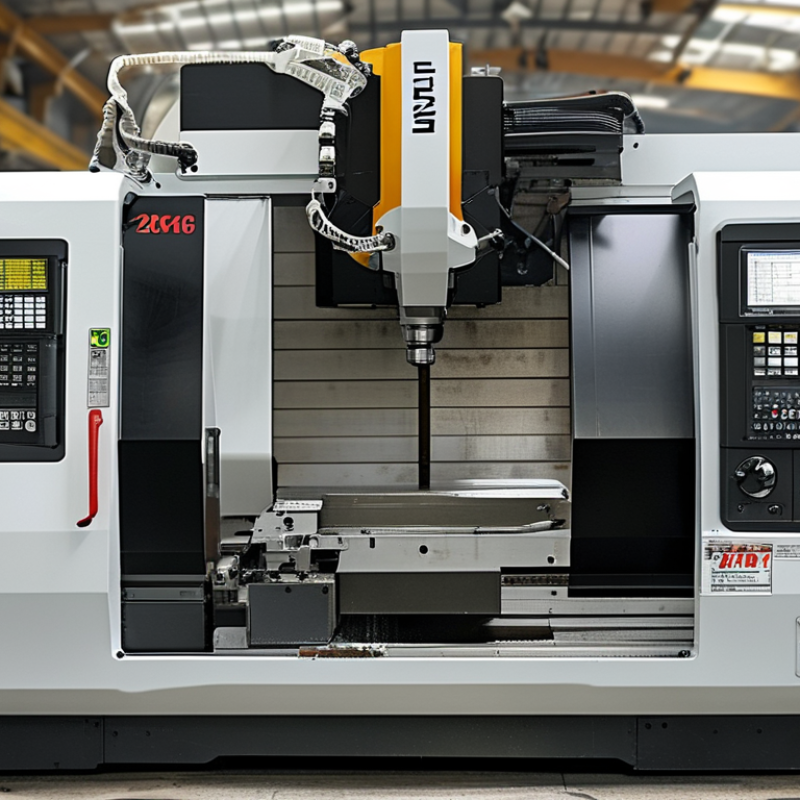
In 2026, an automated Machine Tool is more than a CNC unit with a robotic arm. It senses conditions, makes controlled adjustments, and coordinates several production steps. Load monitoring can detect unusual cutting resistance before a tool breaks. Vision systems can verify part position and surface quality. Automatic tool changers, pallet systems, and guided material handling reduce idle time. However, automation must remain understandable to operators.
A reliable system connects machine data with practical decisions. It may adjust feed rates when vibration rises, then record the event for later review. Clear dashboards should show alarms, tool life, cycle time, and maintenance needs. Safety interlocks, guarded access, and controlled restart procedures are essential. Cybersecurity also matters because connected equipment can expose production data. Small details count. A loose sensor cable can damage confidence in the entire process.
Buyers should test automation with representative materials, tolerances, and shift patterns. A polished demonstration may hide difficult changeovers or weak support procedures. Ask how quickly an operator can recover from a misloaded component. Ask how the system behaves during network loss. No system is truly hands-off. That assumption deserves scrutiny. The best 2026 solutions combine repeatable automation with human judgment, accessible maintenance, and measurable performance records. Some factories may still over-automate simple tasks, creating cost without meaningful productivity gains.
Key Automation Technologies Shaping Machine Tool Selection
In 2026, automated machine tool selection depends on more than spindle speed.
Buyers are examining how systems manage materials, tools, data, and unexpected stoppages. A machining center with robotic loading may suit stable, repeatable batches. A flexible turning cell may perform better when part sizes change weekly. The right choice begins with actual production records, not attractive specifications.
Robotic pallet handling reduces idle time between cycles.
Vision systems can verify part orientation before machining starts. Tool monitoring detects abnormal cutting forces and helps prevent damaged components. Automated tool measurement also supports tighter process control.
For connected factories, machine data should move securely into production software. Useful data includes cycle time, energy use, alarm frequency, and tool life. More data is not always better.
Adaptive control can adjust cutting conditions during changing material loads.
Digital twins may reveal collisions before installation, although their results depend on accurate models. Buyers should test these functions with real workpieces and operators. A short demonstration is not enough. Ask for repeatability records, maintenance access, and recovery steps after a power interruption.
I would also inspect chip removal personally. It is easy to overlook.
A perfect automation plan can still fail when chips block a conveyor or operators cannot reach a service panel. Human oversight remains necessary, especially during low-volume production and unusual jobs.
Top Automated Machine Tool Categories for Industrial Buyers
For 2026 industrial buyers, automated machine tools are grouped by production task, material, and required flexibility. CNC machining centers remain central for milling housings, brackets, and precision plates. Buyers should compare spindle speed, work envelope, tool capacity, and automatic pallet changing. A practical test is simple: watch the machine load a heavy fixture repeatedly. Small delays become expensive across three shifts.
Automated CNC turning centers suit shafts, bushings, and threaded components. Look for bar feeders, parts catchers, and reliable chip control. Swiss-type machines support small, slender parts with close tolerances. For sheet metal, automated laser cutters and press brakes reduce handling between operations. Their value depends on nesting software, sensor accuracy, and quick changeover. Faster is not always better.
Robotic loading systems connect machine tools with inspection stations, conveyors, and material storage. They work well in stable, high-volume production. Flexible cells are more suitable for mixed orders, although programming can take longer than expected.
Cnc Tool Carts
help operators move cutting tools, gauges, and fixtures safely between machines. Buyers should also inspect guarding, emergency controls, maintenance access, and data connectivity. In real workshops, neglected cable routing and difficult cleaning areas often cause avoidable downtime. A pilot run may reveal weaknesses that a specification sheet misses.
How to Compare Accuracy, Speed, Flexibility, and Productivity
What Are the 2026 Top Automated Machine Tools for Buyers?
Accuracy should be checked on real parts, not only in brochures. Request a test cut using your material, drawing, and target tolerance. Measure the first part, then measure the tenth. Thermal drift may appear after several hours. A machine holding ±0.01 mm in ideal conditions may perform differently on a busy shop floor. Record tool wear, surface finish, and repeatability.
Speed is more than spindle rpm. Compare loading time, tool changes, acceleration, and chip removal. Ask for a complete cycle-time study. A faster cutting stage can lose productivity through frequent setup pauses. Automation must also match your product mix. A rigid system may suit high-volume parts, while flexible fixturing supports short runs and frequent design changes. Consider an Automated Deburring Machine when manual finishing creates delays or inconsistent edges.
Productivity depends on stable operation. Review software access, sensor feedback, maintenance intervals, and operator training. Check whether a technician can diagnose a fault without waiting for outside support. Small details matter. Does the control show remaining tool life? Can the system recover after a power interruption? Some buyers overlook these questions. I would also challenge optimistic supplier data, because shop conditions rarely stay perfect. Leave room for coolant variation, staffing gaps, and unexpected rework. A practical scorecard should weight accuracy, speed, flexibility, and uptime against your actual production demands.
Essential Features for Integration With Smart Factories
What Are the 2026 Top Automated Machine Tools for Buyers?
For smart factories, the best automated machine tools are integration-ready, not merely fast. An Automated Tube Cutting Machine should support open communication protocols, such as OPC UA or MTConnect. It should also provide live status data, alarm codes, tool wear, and energy consumption. These details help production teams trace a delayed order to one sensor, spindle, or material batch.
The International Federation of Robotics reported 541,302 industrial robots installed worldwide in 2023. Its World Robotics 2024 report also recorded more than 4.28 million robots operating globally. That scale raises the integration standard. Buyers should check whether a machine connects with manufacturing execution systems, quality software, and warehouse controls without excessive custom coding. Secure user permissions matter, too. A connected machine is not automatically a secure machine.
Data must be useful.
Deloitte’s 2024 Smart Manufacturing and Operations Survey found that 86% of surveyed leaders considered smart manufacturing important for competitiveness within five years. This supports investment, but the report also reflects a practical weakness: many factories still struggle with workforce skills and data quality. Buyers should request a trial using real tubing, mixed diameters, and actual production schedules. During commissioning, inspect cycle-time records beside scrap reports. The numbers may disagree. That uncomfortable gap often reveals poor sensors, weak data definitions, or unrealistic supplier claims.cেnten
Cost, Maintenance, Safety, and Return on Investment Factors
For 2026 buyers, automated machine tools should be judged by total ownership cost, not purchase price alone. The International Federation of Robotics reported 541,302 industrial robot installations in 2023, a 10% annual increase. This growth reflects stronger demand for repeatable production, but automation still needs reliable supervision. A low-cost machine can become expensive when setup time, software licenses, tooling, and operator training are ignored.
Maintenance deserves close attention. Predictive sensors can identify vibration, heat, and lubrication changes before failure. However, sensor data is useful only when technicians act on it. Downtime still wins. Buyers should request mean time between failures, spare-part availability, service response times, and maintenance records. The 2024 U.S. Manufacturing Industry Report from Deloitte found that workforce and technology gaps remain major operational concerns. This makes simple diagnostics and accessible training practical investment factors.
Safety must be engineered into the purchase. Risk assessments should follow recognized principles in ISO 12100 and functional-safety requirements in ISO 13849. Guarding, interlocks, emergency stops, and safe access can increase initial costs. Safety costs money. Accidents cost more, including production delays and lost trust. ROI calculations should compare labor savings, scrap reduction, cycle-time gains, energy use, maintenance, and financing. The calculation is rarely clean. A 15% capacity increase may disappoint if demand remains unstable, while a slower machine may pay back through lower scrap and steadier quality. Decision teams should test sample parts under real shift conditions, not rely on showroom demonstrations.
What Are the 2026 Top Automated Machine Tools for Buyers?
Cost, maintenance, safety, and return-on-investment benchmarks for common automated machine-tool categories.
How to read this chart: The figures are non-brand-specific 2026 buyer benchmarks in thousands of U.S. dollars. Purchase cost excludes facility preparation, tax, tooling, and software. Annual maintenance represents typical preventive service, inspection, lubrication, and replacement consumables. Actual ROI depends on utilization, labor savings, part mix, automation level, and operator training.
For safety and ROI, buyers should prioritize enclosed work zones, interlocked doors, emergency stops, light curtains where applicable, documented risk assessments, and service support. Well-utilized automated systems commonly target a payback period of approximately two to five years.
High-Precision BQY630 Medium-Speed CNC Wire EDM: Features, Applications, and Supplier Selection Guide
# High-Precision BQY630 Medium-Speed CNC Wire EDM: Features, Applications, and Supplier Selection Guide
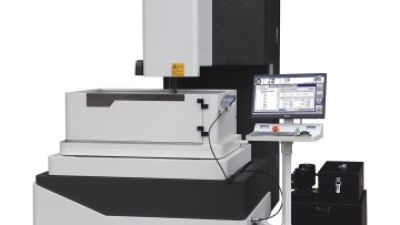
The BQY630 medium-speed CNC wire EDM is designed for precision cutting of hardened steels, carbide, copper, and other conductive materials. Its molybdenum wire system supports repeated wire use, helping reduce operating costs while maintaining stable cutting performance. CNC interpolation, adjustable wire tension, dielectric filtration, and controlled flushing contribute to accurate profiles, narrow kerfs, and consistent surface quality. Following ISO 230-2 testing principles, buyers should verify positioning accuracy, repeatability, straightness, taper capability, and surface-finish data under actual working conditions.
Demand for reliable precision machining continues to expand alongside industrial automation. The International Federation of Robotics’ *World Robotics 2024* report recorded 541,302 industrial robot installations worldwide in 2023, highlighting the growing need for accurately produced components and tooling. A BQY630 machine can support mold and die production, progressive tooling, medical components, aerospace structures, automotive parts, general machining, and defense-related manufacturing. Its medium-speed configuration offers a practical balance between cutting efficiency, operating cost, and adaptability for diverse batch sizes.
When selecting a supplier, evaluate machine rigidity, servo response, control-system usability, wire transport stability, filtration design, energy consumption, and technical support. Request verified test cuts using comparable materials and geometries, along with clear information about installation, training, spare parts, software updates, and warranty coverage. A supplier with documented quality management, application engineering capability, and responsive after-sales service can provide more dependable long-term performance than a supplier competing only on initial price.
FAQS
: It senses conditions, adjusts processes, and coordinates multiple production steps. It is more than a machine with a robotic arm.
Load monitoring detects unusual cutting resistance before a tool breaks. The system can reduce feed rates when vibration increases.
Clear dashboards should show alarms, tool life, cycle time, energy use, and maintenance needs. Useful data supports practical decisions.
No system is truly hands-off. Operators still manage misloaded parts, difficult changeovers, and controlled restarts.
Check guarded access, safety interlocks, emergency stops, and restart procedures. Test what happens after a door opens during machining.
Use real materials, mixed sizes, required tolerances, and actual shift patterns. A polished demonstration may hide slow changeovers.
The machine should enter a controlled state and preserve important records. Ask how operators recover without guessing.
Integration-ready equipment shares status, alarms, tool wear, and energy data through open communication standards. Excessive custom coding can create future problems.
Cycle-time records may disagree with scrap reports. This gap can expose weak sensors, unclear data definitions, or unrealistic claims.
Yes. Automating simple tasks may add cost without meaningful productivity gains. The numbers matter more than impressive movement.
Conclusion
In 2026, an Automated Machine Tool is defined by its ability to perform machining tasks with minimal manual intervention while using connected sensors, adaptive controls, robotics, and software-driven monitoring. Buyers should evaluate automation technologies such as robotic loading, automatic tool changing, machine vision, real-time condition monitoring, and data analytics. Key categories include automated CNC systems, robotic machining cells, flexible manufacturing systems, and integrated multi-process equipment. Selection should balance accuracy, processing speed, production flexibility, and overall productivity according to the application.
For smart-factory integration, essential features include industrial connectivity, standardized data exchange, remote diagnostics, production traceability, and compatibility with manufacturing execution systems. Buyers should also consider installation costs, energy use, operator training, maintenance requirements, safety functions, and system expandability. A reliable investment should reduce downtime, improve consistency, support changing production demands, and deliver measurable long-term returns rather than focusing only on the initial purchase price.