
aerospace industry
-
01

Fearless Hard Materials
Aerospace applications extensively utilize high-temperature alloys (such as Inconel nickel-based alloys), titanium alloys, and intermetallic compounds. These materials are challenging to process with conventional machining methods, but the dielectric erosion principle of wire cutting is independent of material hardness, enabling effortless handling. -
02

The artistry of stress relief
Aerospace components often feature thin walls and complex shapes, making them highly susceptible to deformation from mechanical cutting stresses. Wire cutting virtually eliminates macroscopic cutting forces, ensuring the original form and dimensional stability of the parts to a great extent. -
03

Perfect sharp corners and flow channels
capable of machining tiny internal sharp corners and complex shaped grooves that mechanical cutting tools cannot reach, which is crucial for fluid channels in combustion chamber injection holes and precision valve sleeves.

Turbine Disk and Blades (Tenon Machining)
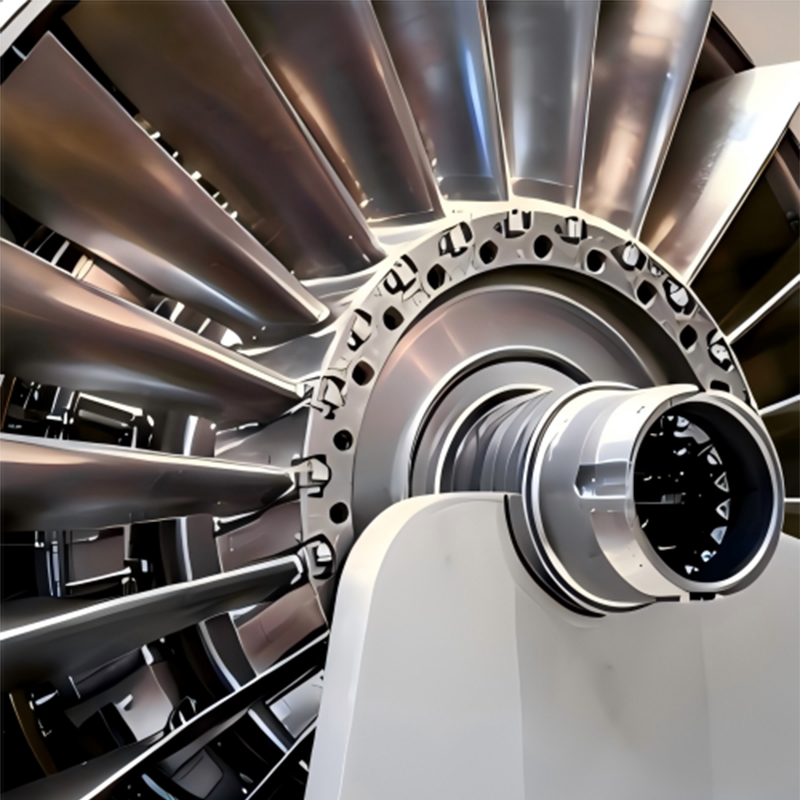
The edge of the turbine disk requires machining of Fir tree shape or Dovetail tenon groove for connecting the blades. These slots feature complex shapes and high precision requirements, with materials often being difficult-to-machine nickel-based superalloys. Wire cutting enables one-time forming and allows for precise assembly of wear-resistant coated blades with the turbine disk in different materials.

Rocket Engine and Combustion Chamber
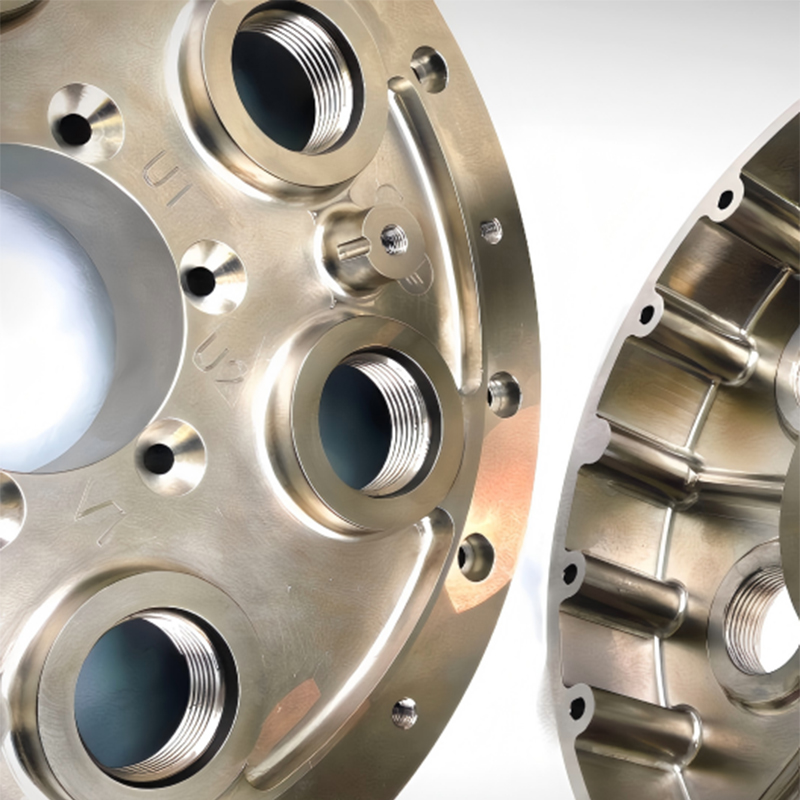
Taking the niobium alloy injector panel of the attitude control engine as an example, it is equipped with numerous micro-cooling holes and injection holes of varying angles. Wire cutting can directly produce these irregular-shaped holes, ensuring precise fuel injection angles. For regeneratively cooled combustion chambers, the inner wall of the shell features hundreds of slender cooling channels milled into it. After sealing, wire cutting serves as a reliable method for cutting complex inlet liquid collection chambers.

Precision Valves and Actuators
The working pressure of aerospace hydraulic systems is extremely high, requiring not only the valve core and valve sleeve to withstand high pressure but also to ensure minimal internal leakage. Wire cutting can create micro-meter precision non-standard throttling grooves and pressure equalization grooves on heat-treated valve sleeves, which are difficult to achieve through mechanical machining.

Thin-Walled Profiled Structural Components
In aerospace applications, thin-walled profiled supports made of titanium alloy are commonly used. Wire cutting is employed for blanking or cutting complex profiles, as the absence of cutting force helps prevent workpiece deformation and tool deflection during clamping, ensuring uniform thickness in thin-walled areas.
◈ Unlocking difficult-to-machine materials: It grants designers greater freedom in material selection, freeing them from the constraints of machinability.
◈ Achieve extreme geometric structures: Make it possible to "cut complex shapes into hard metals," such as extremely narrow gaps and tiny sharp corners.
◈ Ensure reliability under extreme conditions: The processed key components, such as valve cores and turbine discs, effectively reduce stress concentration points like microcracks, ensuring long-term stable operation under high temperature and high pressure.

NEED CUSTOM Products?
At ZHEJIANG BAQI Conveyor, our culture drives innovation, excellence, and trust
moving your business forward with every solution.